

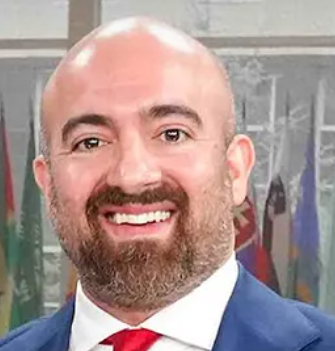

Mike Benz Explains How USAID Built Brazil’s Censorship Apparatus
Mike Benz on USAID’s “Truman Show” in Brazil: Institutional Influence, Censorship, and the First Post-USAID Election
Analysis by Hotspotnews
Benz’s Core Claims
Benz describes pre-2025 Brazil as a “full-on Truman Show.” He asserts that USAID (and related entities such as the National Endowment for Democracy) funded or influenced media outlets, universities, constitutional lawyers, LGBT and identity-focused activists, and staffers connected to the Supreme Court (STF) and the Superior Electoral Court (TSE). Walking a city block in São Paulo or Brasília, he says, would reveal a 360-degree view of institutions “funded and puppeteered” by USAID without the public realizing it. He suggests grantees were sometimes instructed to remove USAID logos to obscure the links.
A central element is the TSE’s approach to “disinformation.” After Bolsonaro’s 2018 victory, the court (with Alexandre de Moraes prominent) treated disinformation as a threat to free and fair elections not only during campaign periods but at any time about almost anything, on the theory that it could pollute the information ecosystem years later. Benz states this framework was advanced with USAID support and that USAID “flooded the zone.” He has previously testified before Brazilian parliamentary committees and cited images of de Moraes participating in training involving CEPPS (Consortium for Elections and Political Process Strengthening), a USAID-linked consortium, and NED (which he describes as CIA-created and heavily USAID-funded).
He further argues that USAID spending in Brazil rose sharply after Bolsonaro’s 2018 win—from roughly $32 million in 2018 to about $69 million in 2019, with later peaks near $87 million—because the agency viewed Bolsonaro as a populist threat (“Trump of the tropics”) and redirected resources toward civil-society, media, and “disinformation” programming intended to constrain him. In Benz’s broader framework, this fits a pattern in which U.S. foreign-assistance tools shifted from Cold War anti-communism toward countering right-wing populism, sometimes in ways that aligned with the interests of certain corporate or philanthropic donors in areas such as climate policy, pharmaceuticals, or technology regulation. He notes that even after USAID’s operational reduction, the “ghost” of those institutional and legal changes remains, including through the TSE/STF apparatus.
What Public Records and Reporting Confirm
Official U.S. foreign-assistance data (ForeignAssistance.gov) do show a marked increase in USAID outlays to Brazil coinciding with the start of Bolsonaro’s term, consistent with the order-of-magnitude figures Benz cites. Much of the documented spending went to health (including HIV/AIDS and COVID response), environment/Amazon-related work, education, and social assistance rather than overt electoral projects.
CEPPS, funded in significant part by USAID, did engage with Brazilian electoral authorities. It produced or contributed to materials on combating disinformation (a guide cited by the TSE in connection with its 2022 strategic planning) and participated in events and discussions with the TSE and related actors. U.S. congressional materials and Brazilian reporting have noted CEPPS and other organizations (including some with NED or State Department ties) collaborating on information-integrity initiatives. These partnerships existed; their scale, intent, and effect on outcomes are disputed.
Points of Contention and Fact-Checks
Brazilian fact-checking outlets (Estadão Verifica, Aos Fatos, and others) have examined Benz’s claims and generally found them lacking in publicly available documentary proof for the strongest versions. There is no clear public record in USAID databases of direct funding of TSE or STF staffers as employees or of payments that would place American personnel inside the courts. Specific allegations about particular Brazilian media outlets or fact-checkers (such as Lupa) receiving USAID money have been denied by the organizations and not confirmed in the aid data. The “Fake News Bill” was not passed by Congress in the relevant period. No credible evidence has emerged of electronic-voting fraud or of USAID funds altering ballot totals in 2022. Claims that “if USAID did not exist, Bolsonaro would still be president” are interpretive causal assertions rather than demonstrated findings.
Benz himself has at times framed parts of the case in rhetorical or pattern-based terms (“would anyone be surprised if…”) and has noted limits on what he can publicly detail. Critics argue this turns correlation (funding increases + institutional partnerships + censorship activity) into a coordinated regime-change operation without the intermediate evidence of intent and operational control. Supporters see the combination of spending surges, CEPPS-TSE collaboration, documented training contacts, and the subsequent expansion of judicial content-moderation powers as sufficient to establish a soft-power interference pattern.
Analysis and Implications
The interview is best understood as part of Benz’s longer-running argument about a “censorship industrial complex” in which U.S. democracy-promotion and development agencies, civil-society grantees, and partner governments co-evolve tools for managing online speech that later become difficult to unwind. In the Brazilian case, the TSE’s permanent anti-disinformation posture and de Moraes’s expansive use of judicial power (including platform bans and content orders) became highly visible domestically and internationally, drawing criticism from figures such as Elon Musk. Whether USAID was the decisive architect or one significant funder among several (including domestic actors, European partners, and private philanthropy) remains the core disagreement.
The 2026 first-round result—Bolsonaro’s son leading but short of 50%, with a competitive runoff—provides a natural test of Benz’s “clockmaker’s dilemma”: institutional and legal changes can outlast the original funding stream. Mandatory voting and the consolidation of other right-leaning candidates behind Flávio are also relevant variables independent of any residual U.S. influence. The broader Latin American picture Benz sketches (a rightward shift in several countries after USAID’s reduction) is observable in recent election cycles, though local economic conditions, crime, and incumbency fatigue are concurrent explanations.
For readers evaluating the claims, the most concrete public anchors are the documented funding increase after 2018, the existence of CEPPS-TSE information-integrity partnerships, and the real expansion of judicial speech regulation in Brazil. The leap from those facts to a comprehensive, logo-concealed “Truman Show” that determined electoral outcomes requires accepting pattern evidence and Benz’s interpretation of intent over the narrower picture presented by aid databases and Brazilian fact-checkers. The interview is therefore valuable as a clear statement of one influential view of how foreign-assistance tools intersected with Brazil’s institutional battles over speech and elections, while leaving substantial room for verification of the more sweeping operational claims.
#USAID #MikeBenz #BrazilElection2026 #Censorship #TSE #AlexandreDeMoraes #FlavioBolsonaro #Lula #TrumanShow #FreeSpeech #Democracy #ForeignAid #CEPPS #NED
Key sources for the analysis:
• Interview video: Brazil’s 1st Election After USAID (Mike Benz channel)
• RealClearPolitics coverage of related remarks: Mike Benz on USAID and Brazil’s “Truman Show”
• Official U.S. aid data: ForeignAssistance.gov
• Brazilian fact-checks: Estadão Verifica, Aos Fatos (on Benz claims about USAID/TSE)
• Election results: TSE / Brazilian electoral authorities (1st round Oct 4, 2026: Flávio Bolsonaro 47.03%, Lula 45.16%)
• CEPPS–TSE collaboration references: CEPPS materials and Brazilian reporting on disinformation guides/events
These cover the interview claims, funding data, partnerships, and independent verification points.