


A Stark Contrast: Flávio Bolsonaro Builds Bridges in France While Lula Declares War at Home
By Hotspotnews
As Brazil hurtles toward the decisive 2026 presidential election, two radically different paths are crystallizing before the nation’s eyes.
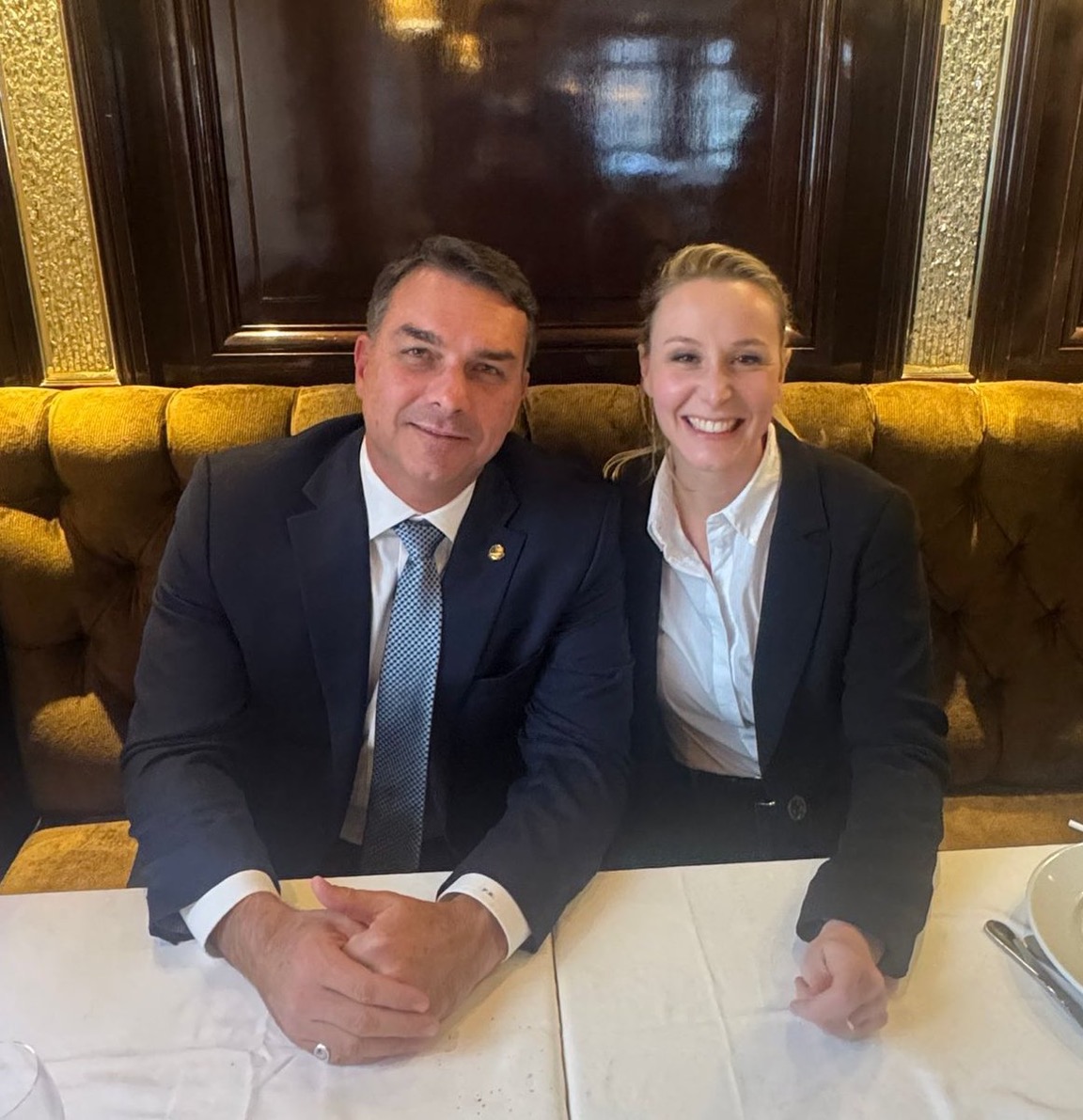
On one side, Senator Flávio Bolsonaro, the clear frontrunner of the conservative movement and leading pre-candidate in most credible polls, traveled to France to address the **Institut de Formation Politique** (IFP)—a respected academy that has quietly trained generations of principled conservative leaders across Europe.
In a poised and forward-looking speech, Flávio presented Brazil not as a country in permanent crisis, but as a sleeping giant ready to awaken under conservative leadership. He spoke of Brazil’s unmatched capacity to become a global leader in clean energy, food production, and strategic commodities—resources the free world desperately needs in an era of supply-chain fragility and geopolitical tension. He called on young conservatives to enter politics fearlessly, to defend family, faith, freedom, and national sovereignty with the same conviction that once turned Brazil’s right-wing movement into a major electoral force.
The trip was more than symbolic. By sharing the stage with figures such as Marion Maréchal and engaging with influential voices tied to Europe’s resurgent conservative network—including proximity to media and business magnate Vincent Bolloré—Flávio is methodically constructing the international alliances that a future conservative government in Brazil will rely on. This is classic statecraft: building relationships today that deliver partnerships, investment, and respect tomorrow.
The message was unmistakable: a conservative Brazil would be a reliable, prosperous partner to nations that share its values—not an ideological battleground or a perpetual petitioner for handouts.
Meanwhile, thousands of kilometers away in Salvador, President Lula da Silva marked the 46th anniversary of the Workers’ Party (PT) with rhetoric that could scarcely have been more different.
Gone was any remnant of the once-celebrated “Lulinha paz e amor” image. In its place came open calls for confrontation. Lula described the 2026 election explicitly as **“war”**—a “political war” with no room for compromise. He instructed party militants to “escrachar” opponents, to aggressively rebut every critique, and to prepare for total, unrelenting battle. “Preparem-se. Essa eleição vai ser uma guerra,” he declared, adding that the left must become even more combative because the opposition, in his words, “é desaforada” (outrageous, shameless).
The juxtaposition is almost theatrical in its clarity.
While Flávio Bolsonaro crosses oceans to inspire the next generation, forge strategic ties, and project Brazil as a powerhouse of production and stability…
Lula remains at home, framing the democratic process itself as armed conflict, rallying his base to escalation rather than persuasion, and choosing the language of permanent struggle over any vision of national renewal.
This is not merely a difference in tone. It is a fundamental clash of worldviews.
One offers construction: rebuilding institutions, attracting capital, restoring pride, and positioning Brazil as a respected global player.
The other offers destruction: endless polarization, scorched-earth tactics, and a view of politics as existential warfare rather than democratic competition.
Conservatives across Brazil—and increasingly around the world—see the moment clearly. The left is doubling down on division because it has no positive agenda left to sell. The right, by contrast, has both a record to defend and a future to build.
Flávio’s appearance in France was a small but significant step on a much larger journey. It signals to Brazilians weary of chaos and to international partners hungry for reliable allies that a conservative victory in 2026 is within reach—and that it would mean strength, not strife; prosperity, not perpetual conflict; pride restored, not pride weaponized.
The choice Brazilians will face next year could not be starker:
War at home and weakness abroad,
or
Renewal, dignity, and Brazil respected once again on the world stage.
The conservative wave continues to rise.
And Flávio Bolsonaro is already leading it forward. 🇧🇷