

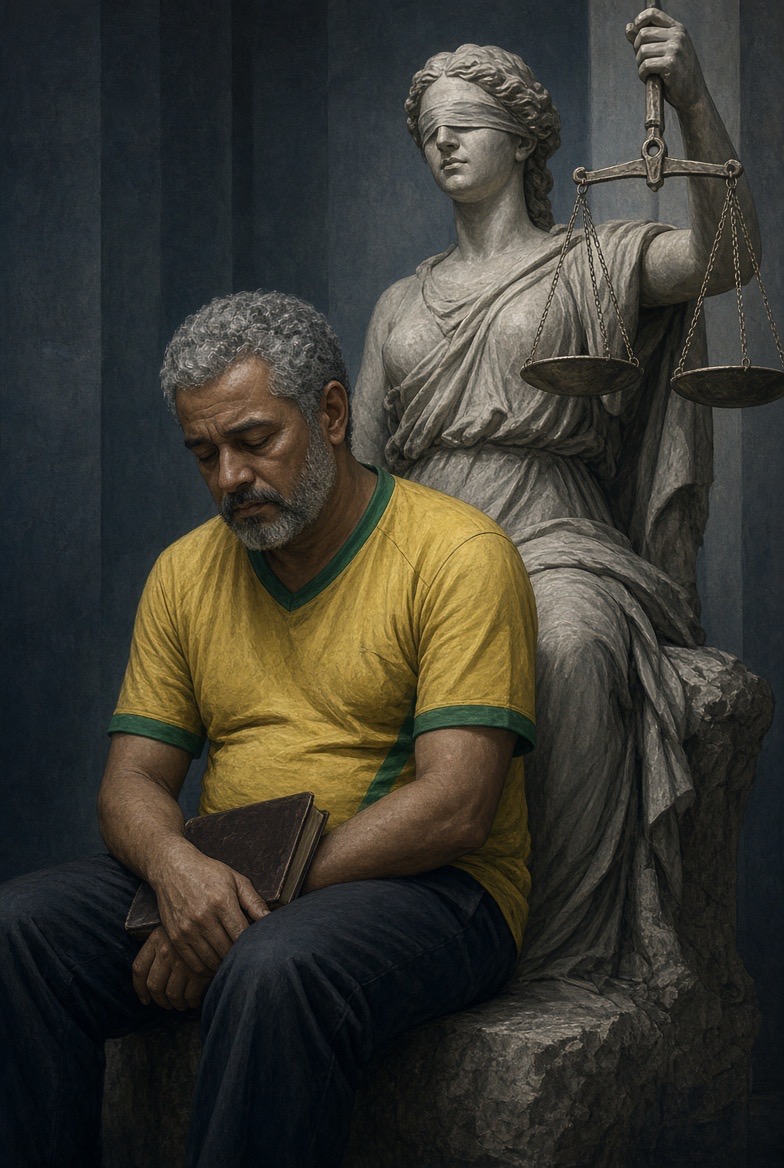

BRAZIL: ANOTHER DEATH BY TYRANNY
By Hotspotnews
The Man Who Wrote the Record Before He Died
Sílvio de Melo Rocha was sixty-two years old when he died on October 23, 2026. He was a lawyer from the interior of Minas Gerais, a man who had spent most of his adult life in Monte Azul after growing up in Uberlândia. He left a wife and three children. He also left a book and a fourteen-year prison sentence.
In January 2023 he had gone to Brasília. Like thousands of others, he had spent weeks in the camps that formed outside military headquarters after the presidential election. Those who were there later described a shared belief that they stood under the protection of the Army. They expected the institutions to receive their protest. What they encountered, in Rocha’s account and in the accounts of many others, was something else: a movement of people guided toward the Praça dos Três Poderes, followed by mass arrests.
Rocha was among those detained. He remained in prison for 171 days. While he was inside, doctors diagnosed leukemia. The disease had not been present, or at least not known, before his arrest. He was eventually transferred to house arrest only because his condition had deteriorated to the point that continued detention in a regular facility was no longer viable. He spent roughly four months hospitalized in the Santa Casa of Montes Claros. He underwent a bone-marrow transplant. The transplant was rejected. Complications followed. Family members later said he had told them he would rather die than return to prison. On the evening of October 23 he died.
The Supreme Federal Court, under the reporting of Minister Alexandre de Moraes, had convicted him of crimes that included the violent abolition of the democratic state, an attempt to overthrow the government, and qualified damage to public property. The total sentence was fourteen years. The accusation against him included the claim that he had helped raise money for the rental of a bus that carried protesters to Brasília. Rocha and his co-defendant, the lawyer Aline Leal Bastos Morais de Barros, maintained that they had not participated in the destruction inside the buildings. The court did not accept that distinction.
Before his health collapsed, Rocha wrote a book titled Oito de Janeiro: Relatos de um Patriota Preso. In it he described the daily life of the camps: how people ate, how they washed, the psychological strain of waiting for more than sixty days, and the conviction, widely held among those present, that the military would not abandon them. He described the walk from the camp to the Praça dos Três Poderes and what he called a prepared trap that drew people who had come only to protest into the buildings themselves. He wrote of men, women, the elderly, children, and people in wheelchairs being met with tear gas and force. The book presents these events as the exercise of a constitutional right to demonstrate against what its author regarded as electoral fraud. The judicial record presents the same sequence as criminal conduct against the democratic order.
Groups that have tracked the cases of those charged after January 8 count Rocha as the thirteenth person connected to those proceedings to die. The circumstances of each death differ. Some occurred in custody; others, like Rocha’s, occurred after release on health grounds. What the count reflects is a pattern of prolonged detention, delayed or contested medical care, and sentences measured in years for conduct that many of the defendants continue to describe as protest. Whether every individual entry on that list meets the same legal or medical criteria is disputed. The existence of the list itself is not.
Rocha’s death closed one case and left the others open. The book remains. It is the account of a man who was arrested, held for months, diagnosed with cancer while imprisoned, released only because he was too ill to stay, and who used the time he had left to write down what he had seen. Those who regard the January 8 prosecutions as ordinary criminal justice will read his story as the consequence of participating in an attack on the seats of power. Those who see something different will read it as the record of a man whose final months were shaped by the same system that locked him up, and who spent what strength remained trying to leave a version of events that the court had already rejected.
He is buried in Monte Azul. The sentence stands. The book stands. The question of which account will be treated as history remains unanswered.
.Rest in Peace… you are free now