

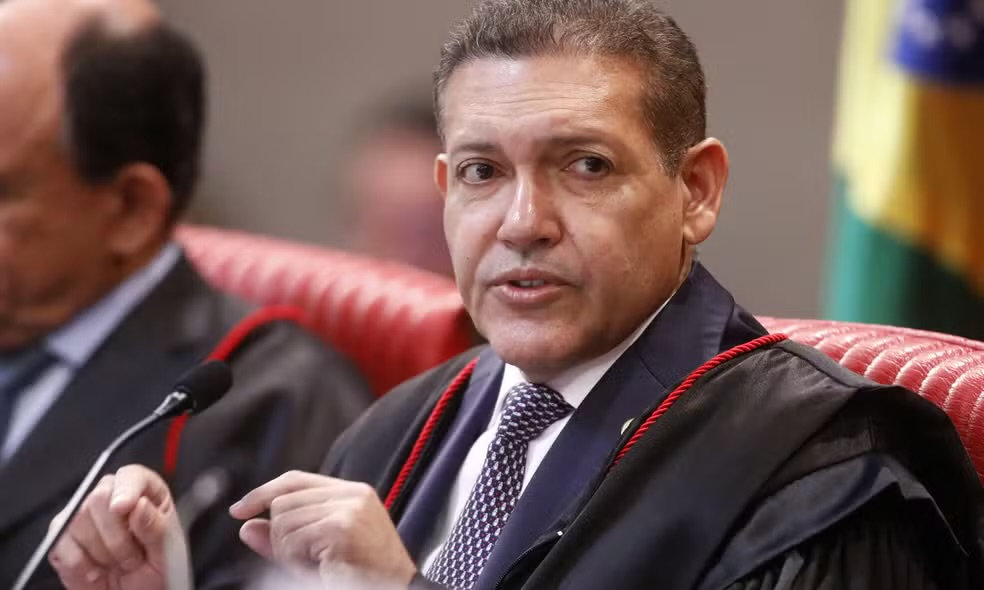

TSE Chief’s Whiskey Summit with Lula Raises Serious Conflict of Interest Concerns Ahead of 2026 Elections
By Hotspotnews
In a move that should alarm anyone who values judicial independence and electoral fairness, Supreme Court Minister Kassio Nunes Marques — the man now presiding over Brazil’s Superior Electoral Court (TSE) — reportedly met privately with President Luiz Inácio Lula da Silva at the Palácio da Alvorada. According to accounts, the encounter was “regada a uísque” — lubricated with whiskey — at the minister’s own request.
This is not some routine courtesy call. Nunes Marques occupies one of the most powerful positions in Brazilian democracy right now. As TSE president, he will oversee the rules, disputes, and integrity of the 2026 presidential election, a race in which Lula himself is a central figure seeking re-election. A private, informal drinking session between the referee and one of the players is the very definition of a conflict of interest.
Conservatives and rule-of-law advocates have long warned about the excessive politicization of Brazil’s judiciary. Here we have a justice originally nominated by Jair Bolsonaro now sharing whiskey with the very politician his court will help regulate. The optics are terrible. Even if no explicit agreements were reached — and we have only anonymous “interlocutors” assuring us the chat was “beneficial” — the appearance of coziness undermines public confidence in the entire electoral process.
How can ordinary voters trust that decisions on campaign advertising, polling institutes, social media content, or candidate eligibility will be made with cold neutrality when the judge in charge has enjoyed a private fireside chat with the incumbent? In any serious democracy, such a meeting would trigger immediate calls for recusal or at minimum full transparency and disclosure of what was discussed. Yet in Brazil’s current climate, it is presented as sophisticated “balancing.”
This episode fits a troubling pattern. Time and again, institutions meant to check power instead appear to embed themselves within it. A Bolsonaro appointee who once represented a counterweight to activist judging now risks being absorbed into the system he was expected to restrain. The left has spent years accusing conservatives of threatening democracy; meanwhile, private whiskey diplomacy between high justices and ruling-party politicians proceeds without apology.
The Brazilian people deserve better. Elections are the foundation of representative government. When the guardians of that process dine and drink privately with one side, faith in the outcome erodes — regardless of who ultimately wins. Nunes Marques owes the country a full explanation and a commitment to recuse himself from any matters touching the Planalto’s interests. Anything less invites the suspicion that 2026 will be decided not in the ballot box, but in backroom conversations over glasses of whiskey.
The public is watching. Judicial independence is not a slogan — it demands distance, especially from those whose political futures hang in the balance.