

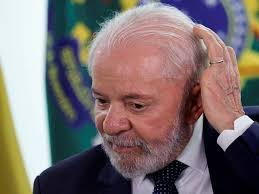

Brazil’s Under Lula A Mixed Economic Report Card with growing concerns
By Hotspotnews
As 2025 draws to a close, Brazil’s economic performance under President Luiz Inácio Lula da Silva’s third administration continues to show a blend of robust recovery in key areas and deepening concerns over fiscal management, institutional tensions, and public spending priorities. The Lula government has persistent deficits, rising debt, and recent controversies—including alleged judicial interference in Central Bank decisions, high costs of international travel, and scrutiny over First Lady expenses—have intensified debates about governance and accountability.
The labor market remains a highlight, with unemployment lows around 5.5% in late 2025, as they say, expanded social transfers like Bolsa Família, and strong services sector performance. GDP growth, after about 3.4% in 2024, is expected to slow to 2.2–2.5% in 2025 amid high interest rates, yet this still outperforms many regional neighbors. Inflation has cooled to roughly 4.5% by November, though still high and above the Central Bank’s target, prompting sustained tight monetary policy.
Fiscal woes persist as a core challenge. The excessive amount o November’s primary deficit of R$14.4 billion added to a year-to-date shortfall of R$61.3 billion, pushing public debt-to-GDP toward 79%. Critics highlight spending growth exceeding revenue gains despite record tax collections, with state-owned enterprises contributing deficits. Analysts warn of risks to sustainability without stronger consolidation.
Brazil’s Taxes: How Many There Are and How They Affect Businesses and Everyday People
Brazil has one of the most complicated tax systems in the world. There are **more than 60 different taxes, fees, and contributions** (some studies say around 60–90). These come from the federal government, states, and cities. Examples include:
– Income tax for people (IRPF) and companies (IRPJ)
– Sales taxes on goods (ICMS – state level) and services (ISS – city level)
– Federal taxes on products (IPI) and company revenue (PIS and COFINS)
– Many smaller fees and contributions
The total amount of taxes Brazilians pay is about **32–34% of the country’s GDP** – one of the highest levels in recent years.
How This Affects Businesses
– Too much paperwork: Companies spend over 1,500 hours a year just dealing with taxes – the worst in the world. This time and money could be used to grow the business or hire people instead.
– High costs*: Many taxes are added at every step of production, making things more expensive and harder to compete with other countries.
– Uncertainty: Rules are confusing, so companies often end up in long court fights over taxes.
– Less growth and investment: All this makes it harder to start or expand a business and scares away foreign investors.
How This Affects Everyday People
– Taxes hidden in prices: Most taxes are on things you buy (food, clothes, electricity, phone bills), not on your salary. Poor families feel this more because they spend almost all their money on these basics.
– Less money in your pocket: Everyday items cost more because of all the built-in taxes.
– Complicated for individuals too: Even regular people need help (and pay for it) when filing income tax or dealing with property taxes.
– Feeling of unfairness: Many people think they pay a lot but don’t see great schools, hospitals, or roads in return.
The government has made some changes recently, like raising the amount you can earn without paying income tax and starting to tax dividends (money from investments), which makes the system a little fairer for workers.
Brazil has way too many taxes, and the system is very complicated. This slows down business growth and makes daily life more expensive, especially for lower-income families. The ongoing reform is a step in the right direction, but it will take years to feel the full improvement and no guarantees that the next government will keep them. Hopefully not
Adding to these concerns is a high-profile controversy involving the Supreme Federal Court (STF) and the Central Bank’s autonomy. In late 2025, the liquidation of Banco Master—a mid-sized lender amid fraud allegations—drew extraordinary judicial scrutiny. STF ministers scheduled confrontations involving bank executives and Central Bank officials, raising fears of interference in regulatory decisions. Financial markets and associations like Anbima have defended the Central Bank’s independence, arguing that overriding technical interventions could erode investor confidence and introduce uncertainty into Brazil’s financial system.
President Lula’s intense international agenda has also faced criticism for excessive costs. In 2025 alone, his travels—often with large delegations—have contributed to government spending on official trips surpassing previous records, with reports of over R$50 million in accommodation and logistics for international missions since 2023. While the administration frames these as efforts to rebuild Brazil’s global ties and attract investment, opponents question the scale amid domestic fiscal pressures.
Further scrutiny has fallen on First Lady Rosângela “Janja” da Silva, whose active public role has sparked debates. Guidelines from the Federal Attorney General’s Office allow her voluntary participation in representational duties without salary, but lawsuits and congressional inquiries have demanded transparency on travel reimbursements and expenses. Critics argue some trips and initiatives overstep traditional ceremonial boundaries, while supporters praise her engagement on social issues.
The administration is weaker on fiscal discipline, transparency, and institutional balance for detractors. In a country prone to economic cycles, navigating these trade-offs will define Lula’s legacy as Brazil heads into a pivotal electoral year.