

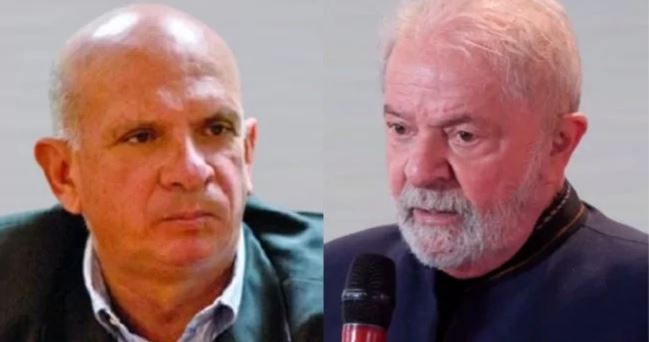

Carvajal’s Allegations: Former Venezuelan Intelligence Chief Names Lula in Illegal Financing Network
Disclaimer:
The claim that he is currently naming Lula in his U.S. cooperation, or that he has handed over new proof specifically about Lula, rests on statements by Brazilian journalist Elisa Robson, who says she interviewed him in New York.
By Hotspotnews
Hugo Armando Carvajal Barrios, the former head of Venezuela’s military intelligence under Hugo Chávez and briefly under Nicolás Maduro, has once again become a central figure in claims linking the Brazilian president Luiz Inácio Lula da Silva to illicit funding from Caracas. Now imprisoned in the United States after pleading guilty to narcotrafficking and narcoterrorism charges, Carvajal is cooperating with American authorities. According to journalist Elisa Robson, who says she has spoken with him directly in New York, he continues to identify Lula by name as part of a broader criminal network of left-wing leaders financed by the Venezuelan regime.
Background on Carvajal
Carvajal, widely known as “El Pollo,” served as director of Venezuela’s Military Intelligence Directorate during key years of the Chávez government and held senior roles under Maduro. Long accused by U.S. prosecutors of involvement in the Cartel de los Soles — a drug-trafficking organization allegedly embedded in the Venezuelan military — he was extradited from Spain in 2023. In June 2025 he entered a guilty plea in a Manhattan federal court. Reports from Spanish outlet The Objective and others indicate he has been providing information and documents in an effort to reduce his sentence, with the primary focus on Maduro, drug routes, and the regime’s criminal apparatus.
The 2021 Statement
The accusations regarding Lula are not new. While detained in Spain in 2021, Carvajal submitted a written statement to a Spanish judge. In it he asserted that the governments of Chávez and Maduro had illegally financed left-wing political movements and parties across Latin America and Europe for at least 15 years. He specifically named Lula da Silva and Brazil’s Workers’ Party (PT), along with Néstor Kirchner of Argentina, Evo Morales of Bolivia, Gustavo Petro of Colombia, and parties such as Podemos in Spain. Carvajal claimed that, in his capacity as intelligence chief, he had received multiple reports documenting these transfers. Spanish media, including OK Diario, published details of the document at the time. Related Spanish investigations, particularly those involving Podemos, were later archived for insufficient evidence. Lula’s representatives have consistently denied receiving any such funds.
Recent Claims from New York
In October 2025, Brazilian journalist Elisa Robson — author of a book examining Carvajal’s statements on Latin American financing networks — reported that she had interviewed him while he was held in the United States. According to Robson, Carvajal again named Lula explicitly, describing him as part of a “criminal group” of left-wing leaders who rose to power with the help of illicit resources from Venezuela’s state oil company. She has stated that he insists he possesses supporting documents and intends to provide them to U.S. authorities. These accounts have been amplified by Brazilian conservative media and politicians, though major fact-checking organizations (including UOL Confere, Agência Lupa, and Estadão Verifica) note that no public U.S. court filings or Department of Justice materials have yet confirmed that Lula or the PT appear in Carvajal’s formal cooperation statements.
The Role of PDVSA
Central to the allegations is PDVSA (Petróleos de Venezuela, S.A.), Venezuela’s state-owned oil and natural gas company. Created in 1976 following the nationalization of the oil industry, PDVSA was for decades the economic backbone of the country and one of the world’s largest energy firms. Under Chávez and Maduro it was transformed into a political instrument: a primary source of hard currency that the regime allegedly used to subsidize allies, fund international projects, and, according to critics and former officials, channel money to friendly parties abroad. The company has also been at the heart of massive corruption scandals, the collapse of Venezuelan oil production, and accusations linking regime officials to drug trafficking and money laundering. In Carvajal’s narrative, PDVSA served as the main financial conduit for the long-term support of left-wing political movements in the region.
Broader Context and Implications
The claims touch on long-standing debates about the São Paulo Forum (Foro de São Paulo), the regional coordination mechanism of left-wing parties co-founded by Lula and Fidel Castro in the early 1990s. Supporters of the allegations argue that Carvajal’s position inside the Venezuelan intelligence apparatus gave him unique visibility into these financial flows and that his cooperation with U.S. authorities could eventually produce documentary evidence. Critics counter that his statements, especially the 2021 letter, have not been independently verified and that his status as a convicted participant in the very criminal networks he describes affects his credibility. As of now, the most concrete public record remains the 2021 Spanish statement; the substance and extent of any new material he may be providing to American prosecutors have not been fully disclosed in open court.
Whether or not additional evidence surfaces, the episode has revived scrutiny of historical ties between the Venezuelan regime and Brazilian left-wing politics, and of the use of state oil revenues as a tool of regional influence.
Sources referenced: Interviews and statements by Elisa Robson; reporting by The Objective on Carvajal’s cooperation with U.S. authorities; the 2021 written submission to the Spanish judiciary as reported by OK Diario; public records of Carvajal’s 2025 guilty plea.
#Carvajal #Lula #Venezuela #PT #PDVSA #ForoDeSaoPaulo #NarcoEstado #ElPollo #Maduro #Brasil