


China’s Stealthy Grip on America’s Food Supply: A National Security Wake-Up Call By Hotspotnews
‘Lula Hans out Brazil without thinking of sovereignty
For too long, Americans have watched as foreign powers quietly infiltrate critical sectors of our economy, and few threats are more alarming than the growing Chinese influence over our meat supply. Through backdoor partnerships, state-backed financing, and strategic alliances, the Chinese Communist Party (CCP) has positioned itself to manipulate U.S. beef prices, squeeze American ranchers, and potentially hold our food security hostage.
The epicenter of this interference is JBS, the Brazilian meat giant that now controls a massive share of U.S. beef processing. JBS, along with other Brazilian firms like Marfrig (which owns National Beef), dominates roughly 85% of the American beef market when combined with domestic players like Tyson and Cargill. This “Big Four” cartel has been accused of driving up consumer prices while crushing family ranchers through unfair practices.
What many don’t realize is the deep ties between these Brazilian conglomerates and Chinese interests. Brazil’s state-owned development bank, BNDES, poured billions into JBS starting in 2007 under a “National Champions” policy aimed at turning Brazilian firms into global powerhouses. These low-interest loans—totaling billions—funded JBS’s aggressive acquisitions of American companies, including Swift Foods and Smithfield operations, allowing it to seize control of U.S. processing plants.
While BNDES itself is Brazilian, the broader picture reveals China’s fingerprints. China has become the dominant buyer of Brazilian beef and soybeans, importing massive volumes that fuel Brazil’s export-driven agriculture. JBS has signed major deals to supply China, including partnerships with Chinese firms like WH Group and Alibaba, ensuring steady flows of meat to feed China’s growing demand. This dependency gives Beijing leverage: by directing purchases or applying pressure on Brazilian exporters, China can influence global prices and supply chains that directly impact American consumers and producers.
Even more concerning are reports of indirect Chinese financing and influence flowing through these channels. Brazilian meat giants have expanded aggressively into the U.S. market, often using funds tied to questionable loans later linked to bribery scandals involving BNDES. The result? Foreign entities—proxies with ties to adversarial regimes—now process much of the beef on American dinner tables.
Who allowed this to happen? The blame falls on decades of weak oversight from Washington. Successive administrations failed to scrutinize foreign acquisitions in strategic industries like food processing. The Committee on Foreign Investment in the United States (CFIUS) has reviewed some deals, but many slipped through as “non-sensitive” investments. Lax antitrust enforcement let consolidation reach dangerous levels, turning a vital sector over to unaccountable foreign powers. Past leaders prioritized short-term trade deals and globalization over protecting national security, allowing Brazilian firms—bolstered by state subsidies and increasingly aligned with Chinese markets—to entrench themselves.
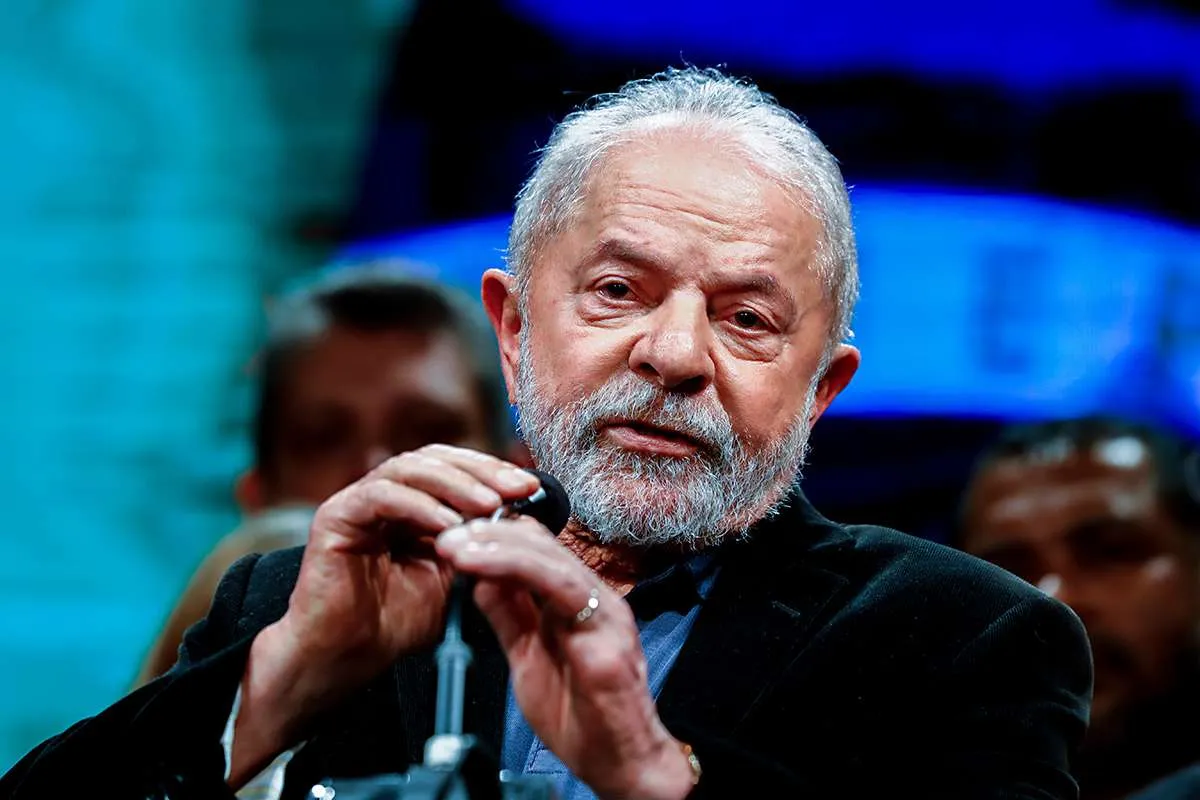
A key enabler on the Brazilian side was former President Luiz Inácio Lula da Silva, whose administrations (2003–2010) not only knew about but actively drove the BNDES funding that empowered JBS’s global expansion. Lula’s “national champions” policy was rooted in economic nationalism and a desire to elevate Brazil’s global standing, create jobs, boost exports, and counterbalance U.S. dominance in international markets. By subsidizing select companies with public funds, Lula aimed to foster Brazilian multinationals that could compete worldwide, but this came at the expense of transparency and opened doors to corruption and foreign influence—particularly as Brazil deepened trade ties with China under his watch. Here’s a timeline and progression of how Lula’s admin allowed this to unfold:
– 2003–2004: Policy Foundations Laid: Lula’s first term begins with a focus on developmentalism through BNDES. The bank, under Lula-appointed leadership, shifts toward aggressive industrial policy to support “strategic sectors” like agribusiness. This sets the stage for subsidizing companies like JBS, with the goal of promoting economic growth, reducing poverty via job creation, and enhancing Brazil’s export prowess—especially to emerging markets like China, which Lula courted early through diplomatic visits and trade pacts.
– 2005–2006: National Champions Policy Takes Shape: BNDES formalizes the “national champions” strategy, prioritizing low-interest loans and equity investments for firms poised for global expansion. JBS, already a growing meat processor owned by the Batista brothers, emerges as a beneficiary due to its export potential. Lula’s administration justifies this as necessary for Brazil to build economic sovereignty and compete against foreign giants, amid booming commodity demands from China (Brazil-China trade triples during Lula’s terms).
– 2007: JBS IPO and Initial BNDES Infusion: JBS goes public on the Brazilian stock exchange, with BNDES providing around R$1 billion in loans and acquiring a significant equity stake (starting at about 13%). This funding directly enables JBS’s first major U.S. acquisition: Swift & Company for $1.4 billion, marking entry into American beef processing. Lula’s government promotes this as a win for Brazilian jobs and global influence, ignoring risks of over-reliance on state funds and potential corruption.
– 2008–2009: Escalating Support Amid Global Crisis: As the financial crisis hits, BNDES ramps up lending under Lula’s directives to stimulate the economy. JBS receives billions more, including $2.8 billion in 2009 for acquiring Pilgrim’s Pride (a U.S. chicken giant) and parts of Smithfield. BNDES’s stake in JBS climbs to over 20%, making it the largest shareholder. The rationale: Protect Brazilian industries, expand exports (especially to China, now Brazil’s top trade partner), and create a “Brazilian powerhouse” to secure food supply chains globally—while critics later reveal bribes facilitated these deals.
– 2010: Peak Expansion and Lula’s Exitc By the end of Lula’s second term, total BNDES support to JBS/J&F reaches around R$12.8 billion (2005–2013, with the bulk under Lula). This cements JBS’s dominance, controlling key U.S. assets. Lula hands off to successor Dilma Rousseff, but the policy continues briefly. The “why” boils down to Lula’s leftist vision: Use state power for industrial policy, foster alliances with BRICS nations like China for mutual growth, and prioritize short-term economic gains over long-term risks like foreign leverage or domestic corruption scandals that erupted later.
These steps under Lula weren’t accidental—they were deliberate policy choices that prioritized Brazil’s rise as an export giant, heavily tied to Chinese demand, over safeguards against misuse of public funds or geopolitical vulnerabilities.
President Trump’s recent directive to the Department of Justice to launch an antitrust investigation into the Big Beef cartel is a bold and necessary step. By targeting potential collusion that harms ranchers and inflates prices, this probe shines a light on the cartel-like behavior squeezing American agriculture. But it must go further: scrutinize foreign ownership, trace funding sources, and demand transparency on how Chinese demand and financing indirectly shape U.S. markets.
This is not just about economics—it’s about sovereignty. When a hostile foreign power can influence the companies that control our food supply, we risk blackmail in times of crisis, manipulated shortages, or economic warfare. American ranchers deserve fair markets, consumers deserve affordable food, and the nation deserves control over its sustenance.
The time for complacency is over. Congress, the DOJ, and the administration must act decisively: break up monopolistic control, restrict foreign ownership in critical food infrastructure, and prioritize American producers. Our food security is too important to leave in the hands of Beijing’s proxies. Wake up, America—before it’s too late.
Where Is Brazil’s Sovereignty?
Brazil proudly flies the flag of national sovereignty—its constitution enshrines independence, self-determination, and non-intervention as core principles. Yet in practice, especially under President Luiz Inácio Lula da Silva’s administrations, economic decisions have increasingly entangled the country with China in ways that raise serious questions about real autonomy.
The core issue isn’t outright territorial loss or military occupation—it’s economic dependency and strategic leverage. China is Brazil’s largest trading partner, buying roughly one-third of its agricultural exports (soybeans, beef, corn, and more) and driving massive growth in agribusiness. This trade boom has enriched sectors like JBS, but it also creates vulnerability: Beijing can influence prices, supply chains, and policy by shifting purchases or applying pressure. When China sneezes economically, Brazil catches a cold—especially as forecasts predict slower Chinese growth ahead.
Lula’s foreign policy frames this as “active non-alignment” and South-South cooperation—positioning Brazil as a leader in the Global South via BRICS, G20, and multilateral forums. He courts China for investment in infrastructure, energy, technology, and green projects, while rejecting formal entry into China’s Belt and Road Initiative to signal independence. Xi Jinping publicly affirms support for Brazil’s “national sovereignty” and “legitimate rights,” and recent high-level calls (including in early 2026) reinforce deepening ties, with visa waivers and trade pacts.
But critics see a subtler erosion:
– **Trade Overdependence**: Brazil’s agriculture has boomed on Chinese demand, but this concentration risks “overdependence.” Diversification efforts lag, and industry complains about importing more Chinese manufactured goods (solar panels, electronics, vehicles) while exporting raw commodities—mirroring classic dependency patterns.
– **Indirect Influence via BNDES and JBS**: State-backed financing helped Brazilian giants like JBS expand globally, including into U.S. markets, but much of that growth ties back to feeding China’s appetite. As Brazil’s top beef/soy exporter to China, JBS becomes a conduit for Beijing’s leverage over global food chains.
– **Regional Ripple Effects**: Chinese investments in Brazilian energy/infrastructure (e.g., near Itaipu dam) indirectly affect neighbors like Paraguay’s energy security, potentially compromising broader South American sovereignty.
– **No Classic “Debt Trap”**: Unlike some nations, Brazil avoids heavy Chinese debt loads—BNDES loans were domestic, and China focuses on trade/investment rather than predatory lending here. Still, growing reliance on Chinese capital in strategic sectors sparks fears of conditional influence, opaque deals, and reduced bargaining power.
Under Jair Bolsonaro (2019–2022), rhetoric was anti-China at times, but economic reality (agribusiness pressure) kept trade flowing. Lula’s return has accelerated engagement, with critics arguing it prioritizes short-term gains and ideological alignment over safeguarding long-term independence.
Brazil’s sovereignty isn’t “lost”—the country retains strong institutions, a diversified economy, and diplomatic maneuvering room. But true autonomy weakens when one partner dominates key exports and investments. As Lula pushes “multi-alignment,” balancing Washington, Beijing, and the Global South, the question lingers: How much leverage is Brazil willing to trade for growth? Without diversification and safeguards, the risk is clear—economic decisions increasingly made with Beijing’s interests in mind, not just Brasília’s. For a nation that champions sovereignty in rhetoric, the reality demands vigilance.