


Trump Treasury’s Global Crackdown on Political Terrorism Funding Could Deliver a Major Wake-Up Call to Brazil’s Authoritarian Left
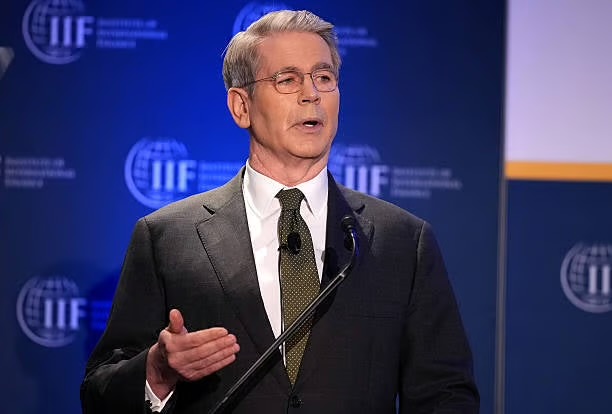
In a bold move underscoring President Donald Trump’s commitment to economic statecraft and national security, Treasury Secretary Scott Bessent announced that the U.S. will deploy the full arsenal of American financial authorities to dismantle networks funding political terrorism and violence—wherever they hide. Speaking at the Ministerial on the Resurgence of Political Terrorism, Bessent made clear: illicit funding will be exposed, enablers pursued, and distant jurisdictions held accountable. While the announcement is global in scope, its ripples could prove especially disruptive for Brazil under President Lula da Silva’s increasingly repressive regime.1
For years, conservatives have watched with alarm as Brazil’s Supreme Federal Court, led by figures like Justice Alexandre de Moraes, has waged a campaign of censorship, arbitrary arrests, and politicized prosecutions against opponents of the left-wing establishment. Former President Jair Bolsonaro—a staunch Trump ally and defender of Brazilian sovereignty—has been hounded by these forces, alongside journalists, activists, and everyday citizens guilty of nothing more than exercising free speech. Social media crackdowns, passport seizures, and bank freezes have become tools of political warfare, not justice. This is the very definition of political persecution enabled by institutional power, and it fits squarely into the pattern of far-left authoritarianism that the Trump administration is now targeting at its financial roots.3
The indirect effects on Brazil could be profound. American financial sanctions and designations have teeth that extend far beyond U.S. borders. Banks and businesses worldwide that interact with the dollar system must comply or face exclusion—a devastating prospect for an economy like Brazil’s, heavily reliant on international trade and investment. Entities or individuals even tangentially linked to funding networks that sustain political violence, censorship operations, or radical leftist agitation could find themselves isolated. Brazilian companies dealing with sanctioned parties risk losing access to U.S. markets, while compliance costs skyrocket as global institutions scramble to avoid Treasury scrutiny.
This isn’t abstract. The Trump administration has already demonstrated resolve by sanctioning de Moraes and his inner circle for human rights abuses and suppression of dissent. Designating major Brazilian criminal organizations as terrorist entities further signaled that Washington will not tolerate chaos that spills across borders. Extending this framework to broader “political terrorism” financing—explicitly including far-left networks that have historically plagued Latin America—puts Lula’s allies on notice. Funds flowing to propaganda machines, activist fronts masquerading as NGOs, or operations that enable street violence and institutional overreach could dry up under American pressure.4
For Brazilian conservatives and freedom-loving citizens, this represents a beacon of hope. Trump’s America is rejecting the weak, accommodationist policies of the past that allowed leftist regimes to erode democracy under the guise of “institutions.” By defending the integrity of the global financial system against those who weaponize it for ideological ends, the U.S. is indirectly bolstering the rule of law and free expression abroad. Bolsonaro’s movement, rooted in patriotism, anti-corruption, and traditional values, stands to gain as the playing field levels. Lula’s government, already strained by economic challenges and public discontent, may face heightened internal pressure to dial back its authoritarian excesses or risk further isolation.
Critics on the left will decry this as “interference,” but that’s predictable hypocrisy from those who cheered foreign meddling when it targeted conservative leaders. True sovereignty means respecting democratic norms—not using courts as bludgeons against political rivals. The resurgence of far-left political terrorism, from historical Latin American insurgencies to modern transnational networks, demands a firm response. Brazil’s flirtation with censorship and selective justice has invited exactly this kind of scrutiny.
As President Trump restores American strength and prioritizes allies who share our values, Brazil faces a choice: embrace accountability and reform, or double down and pay the price in the financial arena. Secretary Bessent’s announcement isn’t just policy—it’s a warning shot for global elites who thought they could suppress liberty without consequence. For Brazil’s embattled conservatives, it may just be the external leverage needed to reclaim their nation’s future.