

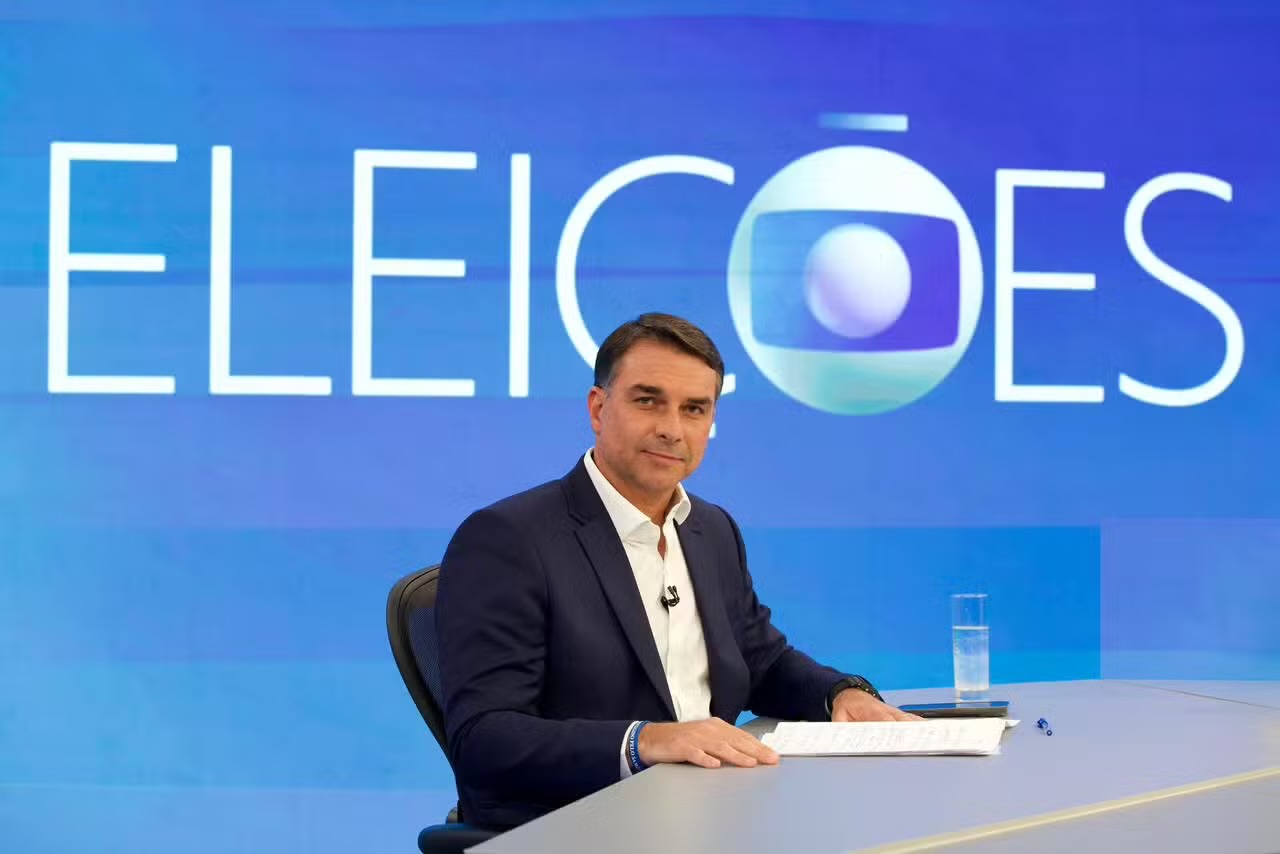

Flavio TV Globo Appearance set the pole position
By Hotspotnews
Flávio Bolsonaro walked into Jornal Nacional on Friday night, August 28, 2026, knowing the country would be watching. One day after Lula’s appearance, the PL candidate faced Renata Vasconcellos and César Tralli in a 40-minute sabatina that mixed tight media training with the heaviest questions of his campaign. The result was one of the most talked-about nights of the race so far: controlled on the surface, explosive underneath.
The opening salvo was Dark Horse. Vasconcellos pressed him on Daniel Vorcaro and the tens of millions that flowed toward the Jair Bolsonaro biopic. Flávio stuck to the script his team had drilled for two weeks: private money, private film, producer already submitted the books, now please look at Lula’s own meetings with the same banker. He did not linger. He pivoted. That pattern—short answer, then attack—became the rhythm of the night.
He then delivered the line his base wanted to hear and his critics immediately dissected: he would respect the election result, but he would not lose. “Vou ganhar no primeiro turno.” I will win in the The First round. He walked back an earlier claim that Brazilian voting machines were made by a Venezuelan company—“Falei errado”—while still calling his father’s conviction a “farsa” and promising amnesty or a presidential pardon for 8 January defendants during the transition. Some clips circulating afterward even captured him calling the events a “golpe da Disney.” It was vintage Bolsonaro-family defiance wrapped in a calmer delivery.
Security and the “tesouraço” gave him his most energetic stretches. He repeated the promise of deep cuts in taxes, bureaucracy and waste starting in January 2027, classification of major factions as narcoterrorists, longer sentences for street crime, and a harder line that he has sold as “Bukele-style” order. He named a future health minister and talked about modernizing the SUS. He also wrote cue words on his hand—another family tradition that instantly became a talking point.
New details that emerged overnight made the interview even richer. Preliminary ratings suggested it may have been the lowest-rated sabatina of Globo’s series, trailing even Renan Santos, while Lula had led the pack the night before. Fact-checkers examined nine claims and found a mixed scorecard: four true, three partial, one false, one unverifiable. The trouble spots were Vorcaro/Master, Pix, climate (extreme events exist, he said, but not exclusively human-caused), voting machines and 8 January. Columnists at O Globo split the difference: good form, thin content. Average score around 2.4 out of 5. Almost every review noted the same thing—he looked rehearsed and unusually calm, yet still would not explain the money trail or his old connection to Adriano da Nóbrega.
One of the sharpest angles was tactical. Lula had not spoken Flávio’s name once the previous night. Flávio answered by naming Lula 17 times, using the incumbent as a shield whenever the questions got tight, especially on tariffs. He even publicly said his brother Eduardo had been wrong to thank Donald Trump for the levies. That combination—deflection plus a small family correction—gave commentators hours of material.
For the campaign, the night was a high-wire act that mostly held. Supporters saw a candidate who refused to be rattled, who kept returning to crime, debt and “the last obstacle against dictatorship.” Critics saw a polished evasion that never quite closed the file on Vorcaro, the militia past or the climate file. Both sides agreed on one point: Jornal Nacional still matters. For 40 minutes the entire country watched the son try to look presidential without sounding like a carbon copy of the father.
The interview did not end the Dark Horse controversy and it did not produce a single defining policy breakthrough. What it did produce was a vivid snapshot of Flávio 2026: coached, combative, confident on camera, and still carrying the heaviest baggage of any candidate in the field. That tension—the polished delivery versus the unanswered questions—is exactly why the clip reels kept rolling into Saturday.
Sources: Estadão, O Globo, G1, Folha de S.Paulo, UOL, Agência Lupa, contemporaneous social-media commentary.
#FlavioBolsonaro #JornalNacional #Eleicoes2026 #SabatinaJN #DarkHorse