

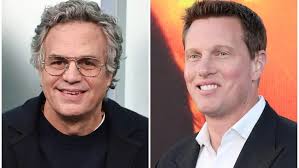

Hollywood’s Activist Overreach: Why Paramount’s Response to Mark Ruffalo Was Necessary
By Hotspotnews
Jason Miller’s recent post correctly spotlighted a revealing moment in Hollywood’s ongoing self-inflicted struggles. When Paramount pushed back against actor Mark Ruffalo’s social media attack on the proposed Paramount-Warner Bros. Discovery merger, it did more than defend a business deal. It drew a line against the kind of political rhetoric that has steadily eroded public trust in the entertainment industry.
Ruffalo, long an outspoken opponent of the roughly $110 billion transaction, shared a video of Oracle executive Safra Catz discussing technologies provided to Israel and then framed the merger in stark terms. He described Larry Ellison’s involvement as funding the acquisition with “profoundly scary technologies,” linked it to what he called a “genocide” built on an “apartheid system of oppression powered by Oracle,” and labeled Ellison a classic oligarch consolidating power at the expense of workers. Paramount responded that applying words like “genocide” and “apartheid” to a corporate transaction invokes antisemitic tropes and cheapens the real suffering those terms are meant to describe. The company called for lowering the temperature and judging the deal on its legal and competitive merits rather than underlying bias.
Ruffalo rejected the antisemitism charge as appalling and dishonest, insisting that criticizing Israeli policies, military technology contracts, or executives is not the same as attacking Jewish people. He reiterated concerns about job losses, media concentration, editorial independence, and foreign investment influence. Those economic and antitrust arguments deserve debate. Multiple state attorneys general are already challenging the merger on competition grounds. Job projections in the tens of thousands and questions about control over major outlets like CNN and HBO are legitimate subjects for scrutiny.
What crossed a line was the leap from business criticism to loaded historical and geopolitical language. Injecting charged terms about genocide and apartheid into a merger dispute does not clarify the antitrust issues. It polarizes. It invites the exact accusation Paramount leveled. Jason Miller was right to highlight the exchange as an example of unhinged rhetoric that distracts from the actual stakes.
This episode fits a larger pattern that has transformed Hollywood. For decades the industry sold a fantasy of glamour, talent, and larger-than-life figures. Stars were idols partly because audiences saw the work more than the private opinions. Social media, constant visibility, and frequent political advocacy changed that. When high-profile actors live in mansions, drive luxury cars, and simultaneously lecture on inequality, foreign policy, or corporate power, many viewers respond with skepticism rather than admiration. The myth dissolves. Stars become ordinary people with opinions—and those opinions are judged. Luxury paired with activism invites charges of hypocrisy for some, and the public no longer grants automatic deference.
Awards shows illustrate the fatigue. Oscars and festivals like Cannes have long included moments of political speech, but the cumulative effect of activist statements, identity messaging, and culture-war framing has left many viewers feeling lectured rather than entertained. Ratings declines reflect multiple forces, including streaming and shorter attention spans, yet the perception of politicization is one reason people tune out. When celebration of cinema turns into a platform for causes, the pleasure diminishes. Boycotts and avoidance follow for those who simply want stories, not sermons.
The same dynamic affects theatrical attendance. Why leave home and pay premium prices to support figures or studios perceived as oppositional? Streaming answered that question by delivering choice and convenience directly into living rooms. Audiences gained control. They can select what aligns with their tastes without the friction of theaters or the cultural signaling of red carpets. This shift is structural. Production has contracted in traditional hubs, jobs have been lost, and mid-budget films have become scarcer. Streaming economics, high costs, runaway production, franchise fatigue, and fragmented attention all play roles. Celebrity activism is not the sole cause, but it accelerates audience disengagement among those who feel the industry prioritizes messaging over entertainment.
In this environment the proposed merger is an adaptation, not a conspiracy. Media companies face thinner theatrical returns, debt pressures, and the need for scale in a platform-dominated market. Consolidation is a predictable corporate response when the old model of reliable theatrical dominance no longer delivers. Whether this particular deal serves workers, competition, or creative diversity remains an open question for regulators and the market. Framing opposition primarily through geopolitical invective, however, does not strengthen the case against it. It weakens public patience for any Hollywood intervention in business matters.
Jason Miller’s post performed a public service by drawing attention to Paramount’s refusal to accept the framing. Pushback of this kind is overdue. Hollywood cannot lecture audiences on power and inequality while resisting scrutiny of its own political habits and then expect the old magic of unexamined stardom to return. Evolution in distribution, audience habits, and the relationship between celebrities and the public is already underway. Attempts to freeze the industry in place through activist pressure will not restore the fantasy era. Markets adapt to what people actually watch and pay for. When stars and studios treat every corporate decision as a moral crusade, they invite the very critical eyes that have demystified them.
The public is not obligated to subsidize lectures. Entertainment that prioritizes story, craft, and broad appeal still finds audiences. The rest is noise. Paramount’s statement, and Miller’s decision to amplify it, correctly identified when that noise becomes counterproductive.
#Hollywood #MarkRuffalo #Paramount #WarnerBros #MediaMerger #CelebrityActivism #Antisemitism #StreamingEra #IndustryEvolution
Source: Jason Miller’s X post of August 23, 2026, sharing New York Post reporting on Paramount’s response to Mark Ruffalo’s social media comments regarding the proposed Paramount-Warner Bros. Discovery merger.