


Milei’s Bold Stand Against Lula: A Necessary Warning for Brazil’s Future
By Hotspotnews
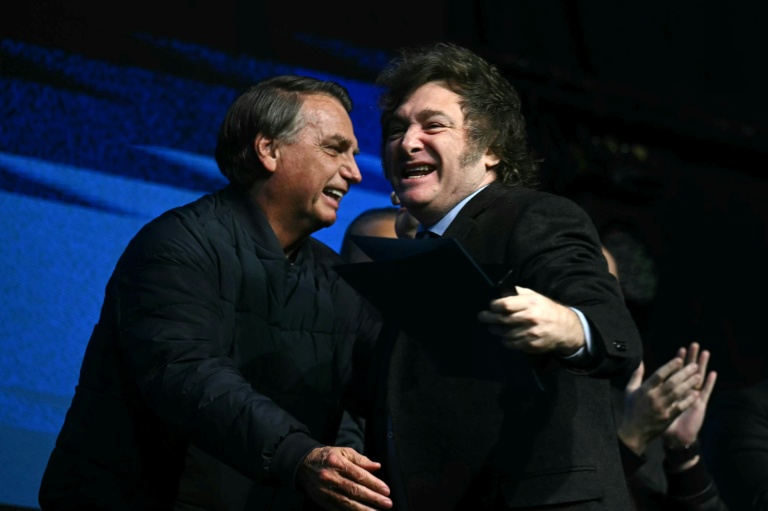
In a dramatic escalation of ideological warfare in South America, Argentine President Javier Milei delivered a blistering, unapologetic assault on Brazilian President Luiz Inácio Lula da Silva and the leftist establishment during a high-profile visit to São Paulo. Speaking at the Liberal Party (PL) national convention on July 25, 2026, Milei threw his full support behind Senator Flávio Bolsonaro’s official presidential candidacy, framing the October elections as a clear choice between liberty and the return of failed socialist policies.
Milei did not hold back. He repeatedly referred to Lula as a “presidiário” (convict), “ladrão” (thief), and “delinquent.” He denounced the Brazilian government as “thieving socialists” and “socialist garbage,” warning Brazilians not to let their future be stolen. Drawing on Argentina’s painful experience under Peronist and Kirchnerist rule, Milei declared that 21st-century socialism leads only to poverty and totalitarianism. He positioned Flávio Bolsonaro as the only candidate capable of stopping Lula, confronting organized crime and drug trafficking networks, and steering Brazil away from the same destructive path that once nearly destroyed Argentina.
The Argentine leader also targeted Supreme Federal Court Justice Alexandre de Moraes, calling him “bald trash” (or “lixo careca”) for blocking Milei’s planned visit to former President Jair Bolsonaro. Bolsonaro remains under house arrest, serving a lengthy sentence of more than 27 years after being convicted in connection with an alleged coup attempt following the 2022 elections—a prosecution that conservatives across the region view as selective justice and political persecution by an activist judiciary.
The next day, in a radio interview on Argentina’s Radio Mitre, Milei doubled down rather than retreat. He accused the Brazilian government of actively interfering in Argentina’s 2023 presidential election by sending advisors to support his opponent, Sergio Massa. He further claimed that Brazil had financed 25 percent of a broader “anti-Argentina campaign.” Milei highlighted what he described as glaring hypocrisy: Lula was able to visit Cristina Kirchner, who is under house arrest in Argentina, while Milei himself was denied access to his friend and ideological ally Jair Bolsonaro. “They played against me in 2023… Now they didn’t let me see my friend Jair Bolsonaro, who is unjustly imprisoned, but the ex-convict was able to visit Cristina Kirchner,” he stated.
These remarks triggered an immediate and severe diplomatic response. Brazil recalled its ambassador to Buenos Aires for consultations—one of the strongest formal protests available—and summoned the Argentine ambassador in Brasília. Brazilian officials described Milei’s words, delivered on Brazilian soil, as an unprecedented affront to the president, the judiciary, democratic institutions, and the Brazilian people. Relations between the two largest economies in South America, already cool due to deep ideological differences, have reached their lowest point in decades.
From a conservative perspective, Milei’s intervention was both courageous and necessary. Lula carries the baggage of his own past conviction and imprisonment on corruption charges (later annulled on procedural grounds by the same judicial system now active against Bolsonaro). His Workers’ Party has long been associated with the São Paulo Forum, a network of leftist leaders that Milei and others credit with spreading failed economic models across the continent. Milei’s own government in Argentina has pursued aggressive fiscal adjustment, deregulation, and a defense of individual liberty after years of inflation, poverty, and state overreach. Brazilians watching Argentina’s attempted turnaround have every reason to listen when Milei warns against repeating those mistakes.
Is this affecting Lula’s campaign?
The timing is significant. Flávio Bolsonaro’s formal nomination comes as Brazil heads toward October elections. Recent polling prior to the Milei visit showed Lula holding a lead: in first-round scenarios around 40 percent to Flávio’s 28–32 percent, and in runoff simulations roughly 45–48 percent to 37–43 percent. Lula’s approval has improved modestly in recent months amid targeted social programs and economic messaging, while Flávio has faced internal family tensions and association with external factors such as U.S. tariff disputes.
No major new public polls have yet captured the full impact of Milei’s appearance, given how recent the events are. However, the episode injects high-octane energy into the conservative base. It reinforces narratives of judicial overreach, political persecution of the opposition, and the international left’s coordinated efforts. By openly linking Lula to past interference and personal hypocrisy, Milei has handed the Brazilian right powerful talking points that resonate with voters skeptical of the Workers’ Party’s governance record and its alliances.
Lula’s camp and allied media have attempted to frame Milei’s visit as illegitimate foreign meddling, hoping to rally nationalist sentiment and portray the opposition as dependent on outsiders. Yet this cuts both ways. Conservatives note that leftist leaders have a long history of cross-border ideological support—exactly the kind of involvement Milei is now calling out. The strong diplomatic reaction may even amplify Milei’s message rather than silence it, painting the Brazilian government as thin-skinned and intolerant of criticism.
For Flávio Bolsonaro, association with a sitting president who is actively implementing free-market reforms offers a clear contrast to Lula’s record. Whether this translates into measurable gains in the polls will depend on how effectively the Brazilian right capitalizes on the moment and whether undecided or center-right voters view Milei’s bluntness as refreshing honesty or diplomatic excess. What is already clear is that the ideological battle lines have been drawn more sharply. Milei has forced the conversation onto the failures of socialism, the double standards of progressive justice, and the high stakes for Brazil’s economic and institutional future.
In the end, Milei’s intervention serves as a wake-up call. Brazilians will decide their own path in October, but they now have an unmistakable warning from a neighbor who lived through the consequences of the left’s policies—and is determined not to let silence enable their return next door. The conservative case is straightforward: freedom, fiscal responsibility, and equal application of the law matter more than diplomatic niceties when the alternative is another cycle of stagnation and institutional capture.