


New Master Scandal Exposes Insider Dealing at the Heart of Lula’s Government
By Hotspotnews
The latest revelations from Brazil’s Federal Police investigation into the Banco Master collapse have landed like a bombshell on President Luiz Inácio Lula da Silva’s administration. What began as a banking insolvency case has now pulled in one of Lula’s closest political allies and raised serious questions about influence-peddling, undeclared favors, and the cozy relationships that continue to define the Workers’ Party style of governance.
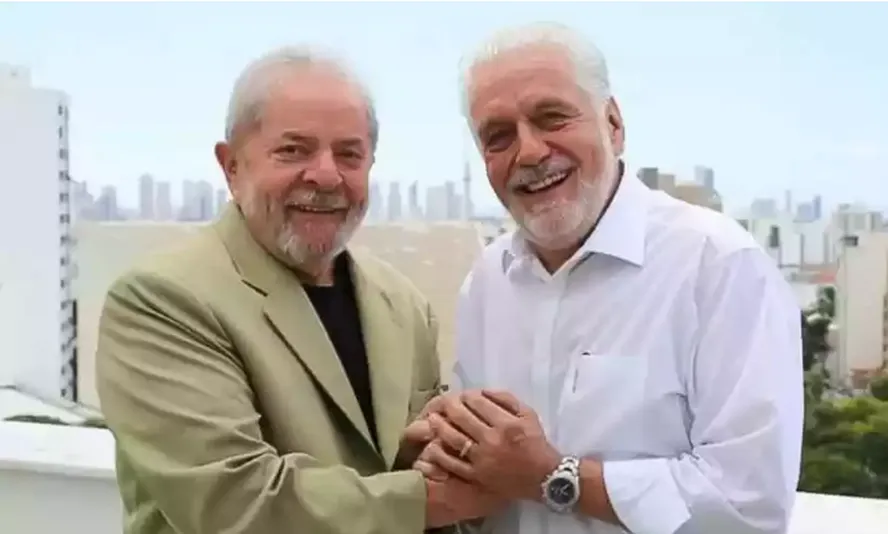
According to police reports made public this week, investigators documented dozens of audio calls—74 in total spanning more than five hours—between Senate government leader Jaques Wagner and Augusto Lima, a former partner of the bank’s ex-controller Daniel Vorcaro. The contacts went far beyond ordinary lobbying. Family visits, shared hospitality, discussions of private aircraft, and alleged negotiations involving a luxury apartment in Salvador form part of the picture. Messages recovered from Vorcaro’s own devices show the banker treating proximity to the federal government as a marketing asset and instructing that such information be passed along to Lula and the allied base, with Wagner identified as a key channel.
Wagner, a longtime PT figure and trusted lieutenant of the president, has denied wrongdoing and insists the contacts were legitimate. That defense rings hollow against the volume of evidence now in the public domain. When a government leader maintains this level of private communication with executives of a bank later found to be riddled with irregularities, the appearance of impropriety is not a partisan invention—it is an institutional problem.
This is not an isolated episode. It fits a familiar pattern under Lula’s return to power: powerful interests seeking access, political operators facilitating it, and accountability lagging far behind. Brazilians who watched the previous PT administrations unravel under corruption scandals have every reason to demand better. The Master case demonstrates once again how easily public trust erodes when personal networks substitute for transparent rules.
Conservative voices have long warned that concentrated power plus weak institutional checks invites exactly this kind of insider dealing. Taxpayers and ordinary depositors ultimately bear the cost when poorly supervised financial institutions collapse and political connections are later revealed. The fact that these details are emerging while the same political group holds the presidency only sharpens the urgency for thorough, independent investigation free from partisan interference.
The Brazilian people deserve a government that prioritizes clean administration over loyalty networks. The Master revelations should not be dismissed as opposition noise. They are a test of whether Lula’s coalition is capable of self-scrutiny or whether it will once more circle the wagons. Accountability is not optional in a democracy.