

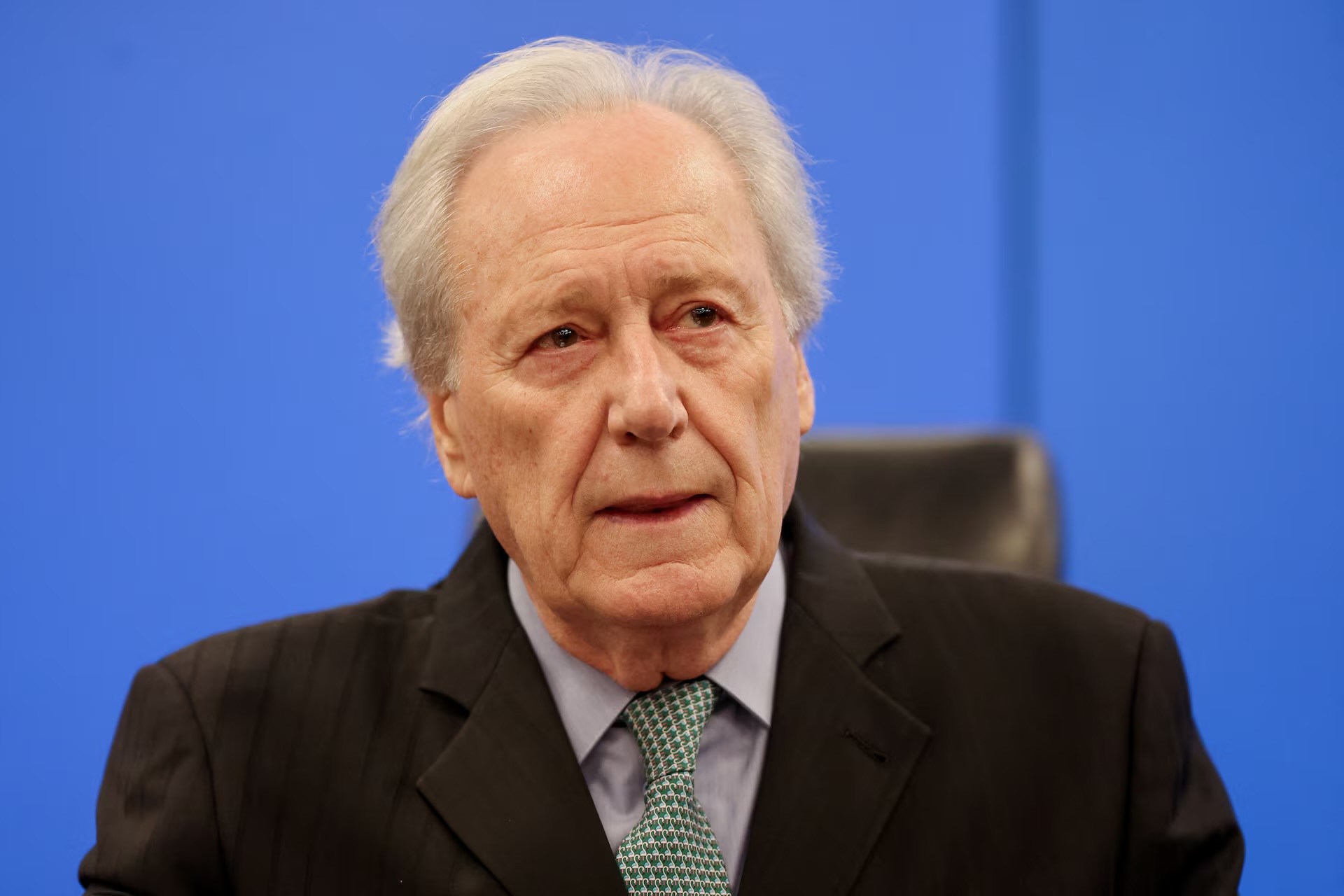

Ricardo Lewandowski’s Resignation: A Portrait of Political Chaos or Personal Choice in Brazil’s Justice Ministry
by Hotspotnews
In a move that has ignited fresh debates about the stability of President Luiz Inácio Lula da Silva’s administration, Brazil’s Minister of Justice and Public Security, Ricardo Lewandowski, officially resigned on January 9, 2026. The announcement came via a formal letter delivered to President Lula on January 8, sparking immediate reactions from across the political spectrum. Notably, Brazilian Deputy Giovani Cherini, a prominent figure in the right-wing Partido Liberal (PL) from Rio Grande do Sul, took to social media to lambast the departure as emblematic of the “chaos of the left,” pointing to unfulfilled security reforms and escalating crime rates as evidence of governmental failure. Cherini’s post, which included a video clip emphasizing his critique, quickly garnered thousands of likes and reposts, reflecting broader opposition sentiments that the resignation underscores deeper systemic issues in Lula’s left-leaning government.
### Background on Ricardo Lewandowski
Ricardo Lewandowski, a 77-year-old jurist with a distinguished career, is no stranger to Brazil’s highest echelons of power. A former justice of the Supreme Federal Court (STF), where he served from 2006 to 2023 and even presided as chief justice from 2014 to 2016, Lewandowski retired from the bench before being tapped by President Lula to lead the Ministry of Justice and Public Security in February 2024. His appointment followed the departure of Flávio Dino, who moved to the STF, and was seen as a strategic choice to bring judicial gravitas to a portfolio grappling with complex challenges like organized crime, public safety, and human rights.
Lewandowski’s tenure, spanning nearly two years, was marked by a mix of achievements and controversies. He inherited a ministry under scrutiny following the previous administration’s policies under Jair Bolsonaro, which had halted key initiatives such as Indigenous land demarcations. Under Lewandowski, the ministry resumed these efforts, issuing 21 declaratory ordinances and signing multiple ratification decrees in 2024 and 2025. He also advanced policies on police accountability, including regulations for body cameras worn by state security forces, with 11 states participating and over R$155 million invested. Additionally, he pushed for an ordinance promoting the progressive use of force, encouraging less-lethal equipment to reduce police lethality.
However, his time in office was not without setbacks. Early in his term, the escape of two inmates from a maximum-security federal prison in Mossoró, Rio Grande do Norte, drew sharp criticism and highlighted vulnerabilities in the penal system. Clashes with state governors, particularly those on the political right, over federal oversight of security policies further strained relations.
### The Resignation Letter: Personal Reasons Amid Broader Constraints
In his resignation letter addressed to President Lula, Lewandowski formally requested exoneration from his post effective January 9, 2026. The document, released by the ministry, emphasized personal and family motivations as the primary drivers for his exit. “I present my request for exoneration from the position of Minister of State for Justice and Public Security, for reasons of a personal and family nature, as of January 9, 2026,” he wrote.
Yet, the letter also alluded to the challenges he faced, stating that he performed his duties “with zeal and dignity, demanding the best possible performance from myself and my collaborators in favor of those we serve, considering the political, situational, and budgetary limitations of the circumstances we went through.” This nod to “political, situational, and budgetary constraints” has fueled speculation that his departure was influenced by more than just private matters. Sources close to the matter revealed that Lewandowski had discussed family pressures with Lula in late December 2025 during a chance meeting at a São Paulo airport, though he did not specify a timeline then.
Lewandowski expressed gratitude for the opportunity to continue serving the nation post-STF retirement under Lula’s “inspiring leadership, always committed to the progress and well-being of all Brazilians.” The conversation between the two men leading up to the resignation was described as cordial by allies on both sides.
### Stalled Reforms and Public Security Challenges
A key point of contention highlighted by critics like Deputy Cherini is Lewandowski’s inability to push through major legislative reforms. In his social media post, Cherini noted that Lewandowski admitted to political and budgetary limitations in his letter and departed without approving the Public Security Constitutional Amendment Proposal (PEC da Segurança) or the anti-faction bill. These initiatives were central to addressing Brazil’s surging crime rates, which have plagued urban centers and fueled public discontent.
The PEC da Segurança aimed to foster integrated actions among federal, state, and municipal authorities but faced backlash from governors who viewed it as an overreach on state autonomy. It remains under review in the Chamber of Deputies, with expectations of modifications before passage. Similarly, the anti-gang bill, designed to impose harsher penalties on criminal organizations, advanced through Congress but requires final review in the Lower House. Delays in submitting these proposals were attributed to resistance from the Chief of Staff Office and broader governmental hurdles.
Lewandowski’s opposition to splitting the Justice and Public Security portfolio into separate ministries—publicly supported by Lula and other cabinet members—added to his frustrations. He argued that insufficient federal funding made a new standalone Ministry of Public Security unfeasible. This policy divergence reportedly contributed to his decision, catching even close aides by surprise as it interrupted his scheduled vacation through January 12.
### Reactions from Across the Political Divide
The resignation has elicited polarized responses. Opposition figures, including Cherini, framed it as a symptom of broader dysfunction in Lula’s administration. “Portrait of the left’s chaos, while the country sinks into criminality,” Cherini declared, using a stylized spelling of “criminalidade” perhaps to evade platform filters. Social media replies to his post echoed this sentiment, with users likening the exit to “rats abandoning a sinking ship” or pointing to early scandals like the Mossoró prison break.
On the government side, officials have praised Lewandowski’s contributions. President Lula, who had anticipated the move and attempted to persuade him to stay longer, has not publicly commented extensively, but allies described the transition as smooth. The ministry’s executive secretary, Manoel Carlos de Almeida Neto, has been appointed as interim minister to ensure continuity, with other secretaries expected to remain in place during the handover.
### Implications for Lula’s Government and Brazil’s Security Landscape
Lewandowski’s exit comes at a precarious moment for Brazil, with public security remaining a top voter concern amid reports of rising violence and organized crime. The vacancy opens the door for potential restructuring, including the debated portfolio split, which could redefine federal approaches to law enforcement and justice.
For Lula’s administration, this marks another high-profile departure in a term already navigating economic pressures and political polarization. As the search for a permanent successor begins, the focus will be on whether the new minister can revive stalled reforms and restore public confidence. While Lewandowski’s letter frames his departure as a personal chapter’s close, the political ripples suggest it may signal deeper challenges ahead for Brazil’s governance.