

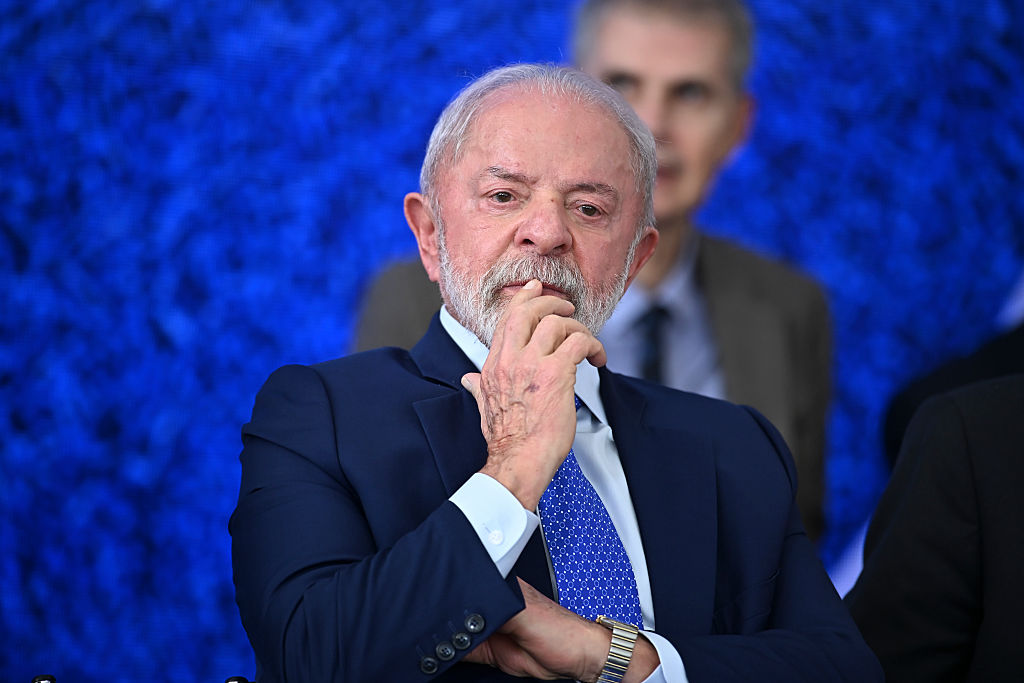

Shield of the Americas Gains Momentum While Lula makes Excuses in Isolation
By Hotspotnews
Just days after its dramatic launch at Trump National Doral on March 7, 2026, the **Shield of the Americas** is already proving itself as the most serious hemispheric security initiative in a generation. What began as a bold proclamation from President Donald Trump has rapidly coalesced into a functioning coalition of seventeen nations committed to crushing narco-terrorism and rolling back socialist influence that fuels migration crises and cartel violence.
Argentina’s Javier Milei, El Salvador’s Nayib Bukele, Ecuador’s Daniel Noboa, Panama, Paraguay, Costa Rica, the Dominican Republic, Honduras, Guyana, Bolivia, Chile under its incoming conservative leadership, and a growing bloc of Caribbean partners have all formally joined the **Americas Counter-Cartel Coalition**. The White House wasted no time: Kristi Noem was swiftly reassigned from Homeland Security to serve as the inaugural Special Envoy for the Shield, giving the effort a dedicated point person at the highest level. Secretary of State Marco Rubio and Defense Secretary Pete Hegseth stood shoulder-to-shoulder with Trump at the signing, vowing “offensive” operations, precision strikes, and unrelenting pressure on the cartels that treat national borders as mere suggestions.
Trump’s message was unapologetic. He offered American missile capability and lethal support to any partner willing to fight. He tied the Shield directly to expelling Chinese economic and political footholds in the region. He even signaled that Havana’s communist regime is “at the end of the line” and that consolidation after the earlier Venezuela operation continues apace. This is not talk. It is action architecture being built in real time.
Meanwhile, Brazil under President Lula da Silva remains on the outside looking in—no invitation, no participation, no interest. Brazilian conservatives, led by figures like Eduardo Bolsonaro, have been blunt: Lula’s government is viewed as too compromised, too ideologically sympathetic to the leftist networks that enable crime and chaos, and too comfortable with endless multilateral hand-wringing instead of decisive results.
Lula’s defenders reflexively fall back on the sovereignty card. Joining, they insist, would mean handing Brazil over to American imperialism. That argument is not merely tired—it is dishonest.
The Shield is voluntary. Every participating nation retains full control of its territory, laws, and decisions. Milei is not surrendering Argentine sovereignty by coordinating with Bukele. Noboa is not becoming a U.S. vassal by accepting intelligence and operational support to dismantle narco gangs. These are strong, nationalist leaders choosing effectiveness over isolation. Sovereign countries cooperate every day—through Interpol, through joint naval patrols, through BRICS summits—without anyone losing independence. Pretending otherwise is intellectual sleight of hand.
Worse, Brazil’s real sovereignty is already in tatters because of internal enemies the government refuses to confront with the necessary force. The PCC and Comando Vermelho do not respect borders. They operate prisons as military bases, control ports, dominate favelas, and ship poison north to American cities. They are transnational criminal enterprises with armies, money-laundering empires, and political influence. Refusing proven tools to dismantle them—tools that have worked dramatically in El Salvador—is not defending sovereignty. It is ceding sovereignty to gang leaders.
Lula’s hypocrisy is glaring. His administration turned down U.S. requests to designate PCC and CV as terrorist organizations, insisting they are merely “common criminals” who deserve dialogue and “social” solutions. Yet the same government welcomes massive Chinese investment that grants Beijing strategic control over key infrastructure, purchases Russian energy without hesitation, and maintains cordial ties with Maduro’s Venezuela even as it exports crime and refugees. Sovereignty objections appear only when the partner wears a MAGA hat or speaks Spanish with a conservative accent.
The Shield of the Americas is not about domination; it is about survival. It treats drug cartels and the socialist regimes that shelter or enable them as the existential threats they are. It rejects the failed dogma that has allowed narco-states to metastasize while politicians debate root causes for decades.
Brazil’s absence is a choice. It is a choice to prioritize ideological solidarity with the global left over the safety of Brazilian families living under gang rule. It is a choice to let rhetoric about “imperialism” substitute for actual governance. And it is a choice the rest of the hemisphere is moving forward without.
While the Shield rises—intelligence flowing, operations planning, strikes being prepared—Lula’s Brazil stands alone, waving the flag of sovereignty to cover policy paralysis. History will record which path delivered security and which delivered excuses. The early returns are already in.