

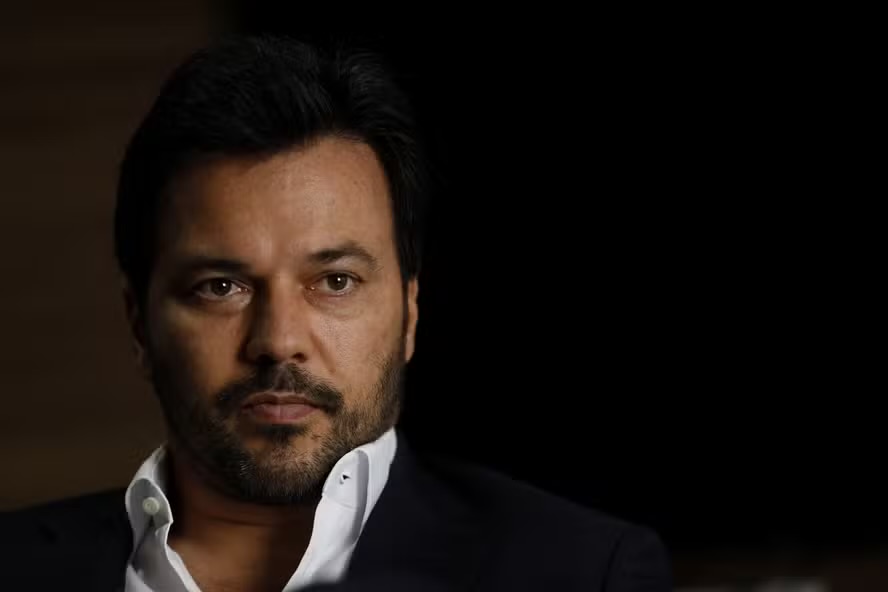

The Unmasking of Fábio Faria: From Bolsonaro’s Cabinet to the STF’s Inner Circle – A Calculated Betrayal of Conservative Principles. Unforgivable
By Hotspotnews
For years, conservatives in Brazil placed their hopes in Jair Bolsonaro’s administration as a genuine break from the corrupt, establishment-driven politics that had long plagued the nation.
The promise was clear: drain the swamp, confront the activist judiciary, and restore sovereignty to the people rather than elite networks. Fábio Faria, appointed Communications Minister in 2020, initially appeared to fit that mold—a young, connected figure from the Progressistas party who brought media savvy and a veneer of loyalty to the conservative cause. Yet, as the dust settles on recent revelations tied to the Banco Master scandal, it has become painfully evident that Faria was never truly one of us. He wore the conservative mask only as long as it served his ambitions, discarding it the moment the political winds shifted and greater personal gains beckoned from the corridors of the Supreme Federal Court (STF).
The timeline of Faria’s pivot reveals a pattern of opportunism, not principle. During the 2022 election campaign, he publicly championed the “radiolão” scandal, alleging irregularities in radio insertions that favored the opposition. He held press conferences decrying what he called a “grave fact” threatening electoral integrity. But almost immediately, he backpedaled—privately telling STF contacts it had been a “grave error” to push the issue toward delaying the vote. He expressed deep regret for his involvement and distanced himself from the controversy. This was no mere tactical retreat; it was the first clear signal that Faria prioritized preserving his relationships with judicial power brokers over standing firm with Bolsonaro’s fight against perceived institutional bias.
As Bolsonaro’s re-election prospects dimmed in late 2022, Faria’s behavior grew even more telling. He abandoned plans to run for Senate, remained in the cabinet until the end of the term, then seamlessly transitioned into family media empires (via his marriage into the Abravanel clan behind SBT) and lucrative private consulting roles tied to major financial interests. These moves were not accidental. They positioned him comfortably outside the incoming administration’s crosshairs while keeping doors wide open to the very STF figures conservatives had long criticized for overreach.
The most damning evidence emerged in February 2026, when recovered WhatsApp messages—analyzed by the Federal Police in the Banco Master probe—exposed Faria’s role as a political intermediary. In conversations with banker Daniel Vorcaro (owner of the scandal-plagued Banco Master), Faria offered to arrange informal, off-premises meetings between Vorcaro and STF Justice Dias Toffoli. The goal? To mend a personal fallout stemming from Vorcaro’s investment fund acquiring Toffoli’s former stake in the Tayayá resort, and to discuss a high-stakes indemnity lawsuit linked to decades-old government price controls on sugarcane ethanol. Vorcaro reportedly shared expectations that Toffoli might shift his vote in a case potentially worth up to R$1.5 billion for interests tied to Vorcaro’s Usina Alcídia. Faria positioned himself as the trusted “ponte” (bridge), facilitating access and influence in a matter that could deliver massive financial windfalls—precisely the kind of elite horse-trading conservatives have railed against for years.
This was no isolated lapse. Faria had long cultivated close ties with STF ministers, including Toffoli and Gilmar Mendes, through organized dinners that mixed Bolsonaro administration figures with judicial heavyweights. What once passed as pragmatic networking now appears as calculated cultivation of influence on the “other side.” He allegedly shared details from ministerial meetings with these contacts, acting as an informal conduit that undermined the government’s internal cohesion and fed sensitive information into the very institution Bolsonaro publicly battled.
Why the sudden—and complete—abandonment of conservative fidelity? The answer lies in cold self-interest. By late 2022, with defeat looming and investigations mounting, Faria had little to lose by hedging his bets. Loyalty to Bolsonaro offered diminishing returns; proximity to the STF, however, promised protection, business opportunities, and enduring power in Brasília’s interconnected elite. He knew the court held sway over futures—investigations, relatorias, procedural decisions—and aligned himself accordingly. In doing so, he shed any pretense of ideological commitment, revealing the mask for what it was: a temporary costume worn to gain entry into the conservative movement, only to be discarded when the establishment’s rewards proved more enticing.
True conservatives demand better. We supported Bolsonaro because he represented an authentic challenge to cronyism, judicial activism, and backroom deals. Faria’s actions betray that vision entirely. He did not merely drift; he actively facilitated the very networks of influence and potential vote-trading that erode public trust in institutions. His story serves as a stark warning: opportunists can infiltrate even the most principled movements, wearing the right rhetoric until self-preservation calls for a different path.
The conservative cause in Brazil will endure only if we remain vigilant against such figures. Accountability must be demanded—no exceptions for former ministers, no leniency for those who trade principles for personal gain. Fábio Faria’s unmasking is not just a personal failing; it is a reminder that the fight against corruption requires constant scrutiny, even within our own ranks. Until the system purges these betrayals, the swamp will never truly be drained.