

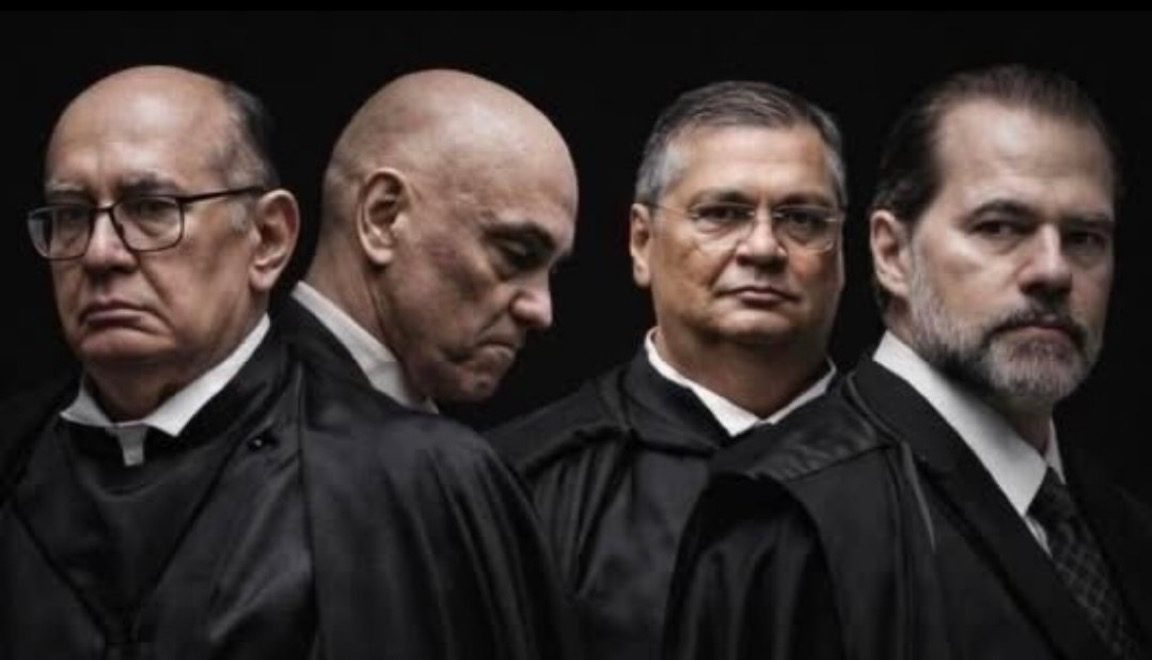

The Shadow Over October: What Brazil’s Supreme Court Could Still Do
By Hotspotnews
Brazil heads into the first round of its presidential election on October 4 with the two leading candidates locked in a statistical dead heat. The latest AtlasIntel/Bloomberg survey, released today, shows Luiz Inácio Lula da Silva at 44.1 percent and Flávio Bolsonaro at 41.7 percent in the first round. In a simulated runoff the same poll gives Flávio a razor-thin 47.2 percent to Lula’s 46.8 percent — well inside the margin of error. Another poll released the same day, Futura/100% Cidades, actually places Flávio ahead in the second-round scenario. The numbers are close enough that a handful of institutional decisions could decide who takes the oath of office.
That is the backdrop against which Eduardo Bolsonaro and commentator Paulo Figueiredo stood in Washington this week and told American officials that Brazil’s Supreme Court is preparing to annul the election if Flávio wins. Eduardo stated that Alexandre de Moraes “would not hesitate to annul a Brazilian election.” Figueiredo added that no one should expect justices who face possible legal consequences from a Bolsonaro victory to accept the result “gladly.” Those statements were made on the record to Brazilian reporters covering their meetings at the State Department and White House.
The immediate trigger is the Banco Master scandal. Federal Police extracted messages from the phone of banker Daniel Vorcaro that reference Moraes. On September 15 the full Supreme Court convened to decide whether to open an investigation into one of its own members. After hours of public shouting between justices, Flávio Dino requested more time to study the file. Under current court rules that request can freeze the case for up to 90 days — past both the first and second rounds of voting. The session ended without a decision on the merits.
Brazilian law gives the Supreme Court the last word on electoral disputes. The Superior Electoral Court organizes and certifies the vote; the Supreme Court can review those decisions when constitutional questions or claims of grave irregularity are raised. In theory the Court could entertain post-election challenges arguing that the campaign itself, or the conduct of certain justices, tainted the process. No such challenge has been filed because the election has not happened. The legal pathway exists.
Flávio Bolsonaro has said on national television that he will respect the certified result. His brother Eduardo and Figueiredo have simultaneously argued that a Flávio victory could be recast by some justices as “continuation of the coup” — language already used inside the Court during the September 15 session when Moraes and Gilmar Mendes accused André Mendonça of serving a political group.
The facts on the table are therefore these: a tight race, an unresolved internal crisis at the country’s highest court that has been postponed until after the vote, public statements by two prominent opposition figures warning of judicial nullification, and a constitutional architecture that does give the Supreme Court the power to review election outcomes. Whether that power will be used remains unknown. What is known is that the institution now sits at the center of the campaign it is supposed to referee.
Sources: AtlasIntel/Bloomberg poll (17 September 2026); Futura/100% Cidades poll (17 September 2026); UOL report on Washington statements; Correio Braziliense; CNN Brasil coverage of the September 15 STF session and Dino’s request for more time.
#Eleicoes2026 #STF #FlavioBolsonaro #Brasil #DemocraciaEmRisco #SupremoTribunalFederal