


Brazil’s Descent into Judicial Despotism: The Sham Prosecution of Eduardo Bolsonaro
By Hotspotnews
In a nation once hailed as the beacon of South American democracy, Brazil is witnessing the grotesque spectacle of a judiciary weaponized against its political foes. A recent segment on the Etropoles television program laid bare what can only be described as “surprising atrocities” perpetrated by Supreme Court Justice Alexandre de Moraes. This isn’t mere legal maneuvering—it’s a blatant assault on free speech, due process, and the very fabric of conservative values that have long resisted the encroachments of leftist authoritarianism.
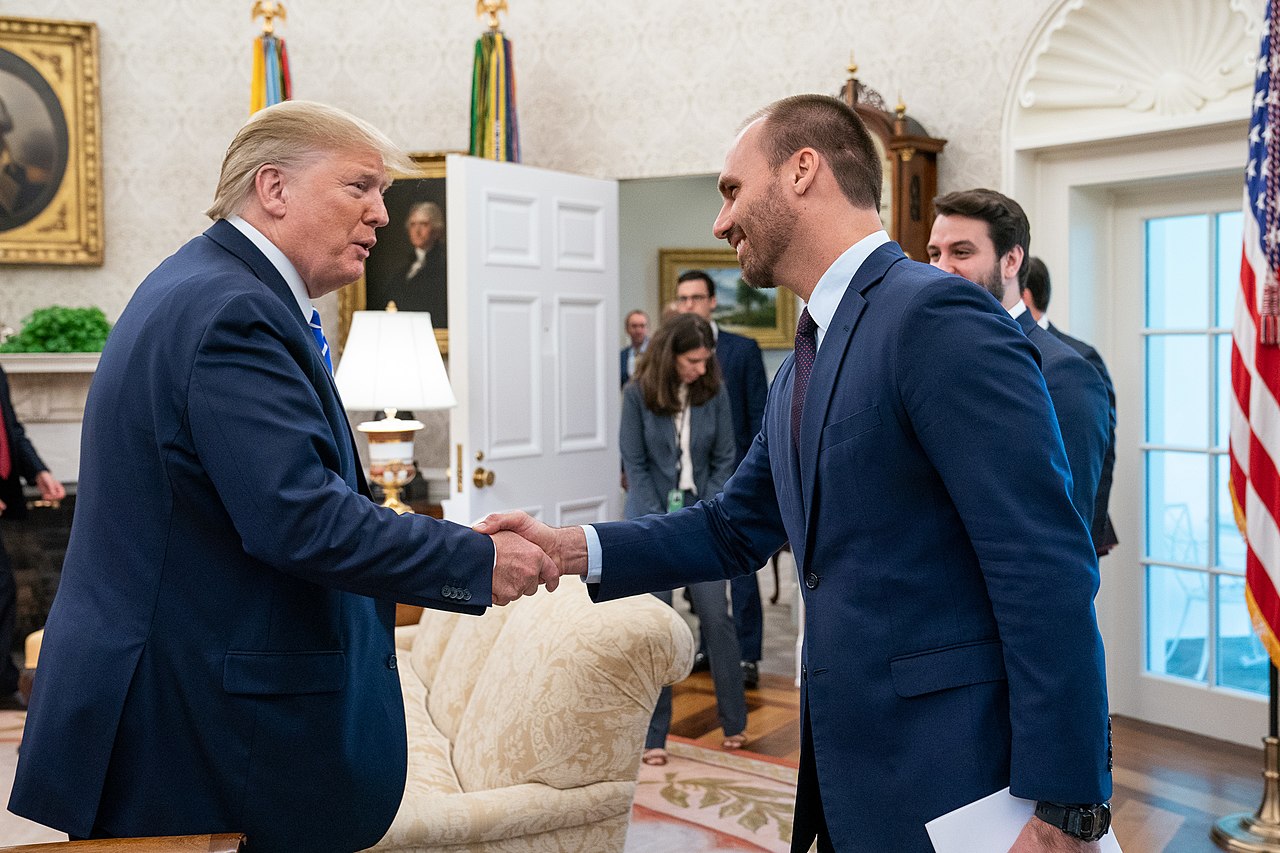
At the heart of this farce is Eduardo Bolsonaro, the fiery son of former President Jair Bolsonaro and a staunch defender of liberty in a hemisphere plagued by socialist experiments. Eduardo stands accused of inciting U.S. sanctions under the Magnitsky Act against Moraes himself—a charge as absurd as it is revealing. For daring to highlight the justice’s alleged abuses of power, including the censorship of social media platforms and the imprisonment of political dissidents, Eduardo now faces prosecution from the very man he criticized. It’s a circular firing squad of irony, where the accuser sits in judgment over his own tormentor.
Let’s cut through the fog of judicial legalese: the Magnitsky Act is a tool for holding human rights abusers accountable, a mechanism born from American conservative principles of transparency and justice. Moraes, no stranger to controversy, has himself been flagged under this act for his role in suppressing free expression in Brazil. Reports of his orders to block accounts, raid homes, and silence opposition voices echo the tactics of dictators, not democrats. Yet here he is, presiding over a case against a lawmaker who merely pointed out the emperor’s nakedness. The Etropoles hosts rightly decried this as an outrage, emphasizing that any U.S. tariffs on Brazilian goods stemmed from official trade policies, not some shadowy influence peddled by Eduardo. To suggest otherwise is not just dishonest—it’s a desperate ploy to criminalize dissent.
This isn’t an isolated incident; it’s the culmination of a broader war on conservatism in Brazil. Recall the house arrest imposed on Jair Bolsonaro himself in 2025, a move that reeks of political vengeance rather than legal necessity. The Bolsonaros have been the bulwark against the return of Lula da Silva’s corrupt regime, a government that cozies up to globalist elites while Brazilians grapple with economic stagnation and rising crime. Under Moraes’ watchful eye, investigations into January 8th protesters—many peaceful patriots echoing the spirit of American conservatives on January 6th—have morphed into show trials. Social media platforms, once vibrant forums for debate, are now neutered by decrees that would make China’s censors blush.
From a conservative standpoint, this is textbook tyranny: the fusion of judicial and executive power to crush ideological opponents. It’s the same playbook we’ve seen in the United States, where Big Tech and activist judges collude to silence voices like those of Donald Trump. But in Brazil, the stakes are existential. The Bolsonaro movement represents not just populism, but a genuine reclamation of sovereignty—from globalist trade deals that hollow out national industries to cultural Marxism that erodes family values and religious freedoms. Eduardo’s “crime”? Exercising the right to petition foreign allies for accountability, a right enshrined in international law and the American tradition of checks and balances.
The replies to the Etropoles clip flood with righteous fury: calls for Bolsonaro’s immediate release, declarations of the proceedings as “illegal,” and demands for Moraes’ impeachment. This grassroots backlash is the silver lining—a reminder that the Brazilian people, much like their American counterparts, will not be cowed by black-robed oligarchs. Conservatives worldwide should take note: when justices like Moraes equate criticism with insurrection, it’s a signal that the rule of law is buckling under the weight of personal vendettas.
It’s time for Brazil’s patriots to rise. International pressure, from the U.S. Congress to freedom-loving allies in Europe, must amplify these voices. Domestically, the opposition must rally behind the Bolsonaros, exposing every procedural sleight-of-hand in this kangaroo court. Justice delayed is justice denied, but in the fight against despotism, delay can be turned into defiance. Eduardo Bolsonaro is no criminal; he’s a hero in the making, a testament to the unyielding spirit of conservatism. Let the world watch—and let the tyrants tremble. Brazil’s future hangs in the balance, and it demands nothing less than victory for the free.