

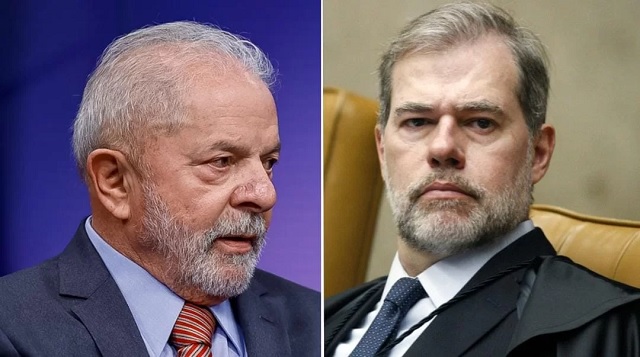

The Erosion of Justice: Dias Toffoli’s Tangled Web of Corruption and Disrespect for Brazil’s Highest Court
By Hotspotnews
In the hallowed halls of Brazil’s Supreme Federal Court (STF), where the scales of justice are meant to balance impartially, a shadow of corruption has cast a long and disgraceful pall. At the center of this scandal stands Justice Dias Toffoli, a figure whose actions—or inactions—betray not just the principles of judicial integrity but the very foundation of a free and accountable society. As conservatives around the world watch with growing alarm, the revelations surrounding Toffoli’s family dealings with dubious financial entities linked to organized crime demand a resounding denunciation. This is not merely a Brazilian affair; it is a global warning about the perils of unchecked power in the hands of the elite.
Let us be clear: the facts paint a damning picture. Toffoli’s family, through their ownership stake in a luxury resort in Paraná, engaged in a multimillion-real transaction with funds represented by Silvano Gersztel, a man now under federal investigation for money laundering tied to the notorious Primeiro Comando da Capital (PCC), one of Brazil’s most dangerous criminal syndicates. This deal, consummated in 2021, saw Gersztel acting on behalf of investment funds that poured tens of millions into the property, effectively making them business partners with Toffoli’s brothers and cousin. And yet, as the Federal Police’s Operation Carbono Oculto unfolds, exposing layers of illicit schemes involving fuel barons and hidden assets, Toffoli remains the rapporteur for related cases, including the explosive Operation Compliance Zero probe into Banco Master. Is this justice? Or is it the epitome of corruption, where personal ties blur the lines of impartiality?
From a conservative perspective, this scandal exemplifies the rot that festers when leftist ideologies infiltrate institutions meant to safeguard the rule of law. Toffoli, a holdover from the Lula era and a vocal defender of progressive policies, has long been criticized for decisions that seem to favor political allies over constitutional principles. His refusal to recuse himself from cases with glaring conflicts of interest is nothing short of a slap in the face to the Brazilian people, who deserve judges untainted by the whisper of scandal. This is not just incompetence; it is a deliberate disrespect to the court, eroding public trust in the STF and turning it into a tool for the powerful rather than a bulwark against tyranny.
Corruption, as we conservatives know all too well, thrives in the absence of accountability. The PCC’s tentacles reaching into high finance and now, apparently, the judiciary’s family circles, should horrify anyone who values law and order. How can a justice preside over investigations into money laundering when his own kin have profited from entities entangled in the very same web? This isn’t a mere oversight—it’s a systemic failure that echoes the worst excesses of socialist regimes, where the elite operate above the law while ordinary citizens suffer under oppressive regulations and economic mismanagement. Brazil’s judiciary, once a beacon of hope post-Lava Jato, now risks becoming a laughingstock, undermined by figures like Toffoli who prioritize personal networks over public duty.
The world must take note: this is not an isolated incident but part of a broader pattern in Latin America, where judicial overreach and corruption go hand in hand with left-wing populism. Conservatives globally—from the United States to Europe—stand united in calling for reform. Toffoli must step aside from these cases immediately, and a full, independent investigation into his family’s dealings should be launched without delay. Anything less is an affront to democracy itself. Let this be a rallying cry: No more impunity for the powerful. Restore integrity to the courts, or watch as the foundations of society crumble under the weight of unchecked corruption.
In the end, justice delayed is justice denied. For Brazil and the world, the time to denounce Toffoli’s behavior is now. Let us demand better—not just for today, but for the generations who will inherit the consequences of our silence.