

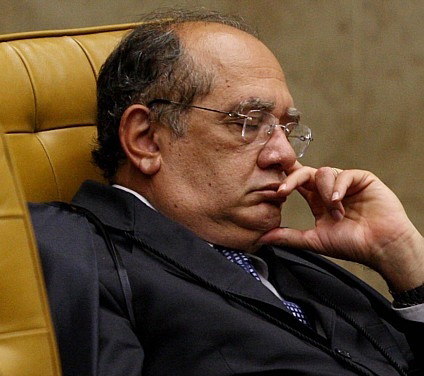

Sunlight or Self-Defense? Gilmar Mendes, the Master Paper, and a Court That Forgot Whose Money It Is
By Hotspotnews
Brazil’s highest court is not arguing about sugar prices from the 1980s. It is arguing about who gets to turn old industrial grievances into present-day claims on the Treasury, and whether a handful of justices in a small chamber can lock in that transfer while a failed banker’s phone records sit in the background.
Justice Gilmar Mendes has now moved to take the sugar-and-ethanol indemnity fight out of the Second Chamber and put it before the full Supreme Court. The legal hook is Theme 826, the Court’s own binding rule that a mill is not entitled to compensation unless it proves real, plant-by-plant harm. The political hook is Banco Master and Daniel Vorcaro, who bought discounted court paper and needed friendly rulings to cash it at face value. The fiscal hook is not a rounding error. The budget-risk annex attached to the budget guidelines law puts the sector’s claims near 103 billion reais. Other official estimates have run as high as 145 billion. That is not a lawsuit. That is a shadow budget.
What the case actually is
Decades ago the old Sugar and Alcohol Institute set prices. Mills later sued the Union for losses. Some judgments aged into precatórios, the Brazilian name for court-ordered public debt. Financiers then did what financiers do: they bought the paper cheap and waited for Brasília to pay expensive.
Master’s bet was simple. If the Court treated generic sector studies as enough proof, the credits would hold. If the Court enforced individual expert evidence, the paper would shrink. Vorcaro did not leave that question to doctrine. Messages and contracts now in public view show a success-fee arrangement that could reach 427 million reais with the circle nicknamed the “Turma do KN,” tied to lawyer Camilla Ramos and federal appellate judge Newton Ramos, and treated in the banker’s chats as a channel associated with Justice Kassio Nunes Marques. Kassio has said he never authorized anyone to speak in his name. The nickname exists anyway. So does the contract.
In the Second Chamber, Kassio, Dias Toffoli and Edson Fachin lined up for recognition of the debt. Gilmar and André Mendonça lined up against it and lost. Kassio had first declared himself barred, then changed his mind. Toffoli had voted the other way in an earlier round. That is not the picture of a settled legal principle. It is the picture of a five-person room where one flipped vote moves billions.
What Gilmar says he wants
Gilmar’s public case is conservative in the old sense of the word: rules first, Treasury second, improvisation last.
He says Theme 826 already decided the method. Prove the damage at the plant, or do not collect. He says the Court has been talking out of both sides of its mouth, and only the full bench can force a single line. He says a liability this large would crowd out ordinary spending and threaten the fiscal target, because precatórios do not arrive as one dramatic check. They accumulate, with interest, until the discretionary budget is the residual.
That argument is not new for him. He has said blocking these payments was a priority when he ran the Solicitor General’s office a quarter-century ago, and that he has voted the same way on Alcídia, Raízen, Jalles Machado and a separate request to release more than five billion. Vorcaro himself complained in 2024 that Gilmar was “against me in a case they are using to wreck all my precatórios.” If the only test is whether Gilmar adopted the banker’s line after the April 2024 meeting in his chambers, the voting record says no.
What Gilmar may also want
Intentions in Brasília are rarely single-use.
First, the chamber math is against him. A 3-2 loss stays a loss unless the electorate changes. The full Court is a different electorate. Moving the case is the most direct way to reopen a result he could not win in the smaller room.
Second, the Master file has become a map of approaches to the Court. Once “Turma do KN” and the 427 million reais fee entered the news, leaving the file inside a chamber that includes Kassio was institutionally radioactive. Sending it upstairs is a way to say the Court will not let a tainted five-vote split become national law.
Third, Gilmar is protecting a record that is not clean enough to ignore and not dirty enough, on this specific vote, to treat as a sale. He met Vorcaro. An ex-brother-in-law had a professional link to the banker. A former associate’s office later appeared in a separate precatório purchase. Those facts are why critics will never give him the benefit of the doubt. They are also why a public, full-court fight over method is more useful to him than another quiet chamber session. If he is going to be accused of proximity, he would rather be accused while voting to make the taxpayer harder to collect from.
Fourth, there is a bureaucratic war inside the Court. André Mendonça holds the Master investigation. Other justices demanded the full police drive after suspecting the file was being read through one rival. Gilmar’s move on the mills case does not resolve that fight, but it does pull the money question out of the same fog.
None of that requires a morality play in which Gilmar is the last honest man in the building. It requires only the observation that his incentive now points toward a broader vote, a stricter proof rule, and a public paper trail.
The conservative objection that still stands
A serious conservative position does not begin with team jerseys on the Court. It begins with the nature of the claim.
The state should not write nine-figure checks because a consultancy produced a sector average. If a mill lost money under a dead price regime, it can prove the loss the way any plaintiff proves a loss. Generic harm is how a legal market becomes a political market. Discounted paper in private hands, success fees in friendly offices, and chamber majorities that wobble after private conversations is how a republic starts paying ransom to its own docket.
The National Council of Justice has already ordered the cancellation of about 4.7 billion reais in related precatórios and the return of the money to the single Treasury account, on the ground that blocked or premature paper was being issued before the case was truly final. That is the right instinct. A court order is not a bond until the case is over.
Consequences if the full Court takes the case and holds the line
If the plenary applies Theme 826 with a spine, a large book of paper reprices overnight. Mills and funds that bought hope rather than proof take the loss they priced in when they bought cheap. The Union gains fiscal space. Interest stops compounding on claims that should never have been liquid. Lower courts receive a message they have been waiting to ignore: no more assembly-line indemnities.
Political consequences follow. Kassio’s recusal history becomes harder to treat as a footnote. Toffoli’s change of position becomes a vote that has to be explained in the open. The Master investigation loses one of its easiest remaining paydays. The secondary market for judicial credits gets a reminder that Brazilian public debt is not a vending machine.
Consequences if the chamber result stands or the plenary blinks
Then the precedent is that a generic study plus a three-justice majority can open a corridor toward more than 100 billion reais. Other sectors will read the lesson. Other funds will buy the next distressed judgment. Other law firms will write the next success fee. The discretionary budget — police, vaccines, roads, the unglamorous work of government — becomes the adjustment variable.
Institutional consequences are worse than the line item. A Court already split over who may read a police hard drive cannot also look like a clearinghouse for purchased litigation. Every recusal that arrives late, every meeting that is admitted after the messages leak, every chamber vote that moves after a private dinner, teaches the public the same lesson: the law is downstream from access.
The cost of pretending this is only about Gilmar
Gilmar is convenient because he is powerful, old in the job, and not innocent of the Court’s culture of audiences and institutes. Using him as the whole story is a way to avoid the simpler facts. A banker built a book of public credits. A fee contract priced the lobbying. A small bench split 3-2. The taxpayer was the counterparty who never sat at the table.
A conservative reading does not need Gilmar to be a hero. It needs the full Court to do the one thing a high court is for: apply its own rule in the open, on a claim large enough to distort the budget, before another round of interest turns a weak indemnity into a national obligation. If Theme 826 means anything, it means this case does not belong in a five-vote room with a nickname problem. It belongs in the sunlight, with the bill attached.
#STF #GilmarMendes #CasoMaster #Precatorios #BancoMaster #Vorcaro #TurmaDoKN #KassioNunes #Tema826 #ContasPublicas #PlenarioSTF #CNJ #SegundaTurma #Uniao #Usinas
Sources
• Valor Econômico — Gilmar sending the sugar-ethanol precatório case to the full Court; fiscal-target warning; LDO risk near R$103.4 billion
• Estadão — plenary request; Theme 826; Raízen case; Vorcaro message that Gilmar was “against me”
• Folha de S.Paulo — chamber split, Vorcaro lobbying, April 2024 meeting
• Veja — question of order to uniformize indemnity rules
• Correio Braziliense — R$103.4 billion exposure and conflicting chamber rulings
• Gazeta do Povo — Gilmar’s long-standing opposition dating to his time at the AGU; estimates up to R$145 billion
• JOTA — timing after questions about Kassio’s vote; Camilla Ramos–Vorcaro messages on the 3-2 result
• CartaCapital — Gilmar confirming the Vorcaro meeting and his later vote against Master
• Metrópoles — R$427 million success-fee contract and “Turma do KN”
• G1 / TV Globo — CNJ cancellation of about R$4.7 billion in Master-linked precatórios
• Revista Oeste — CNJ order to return funds to the Treasury
• CNN Brasil, BBC News Brasil, Agência Brasil — Mendonça–Moraes fight over the Master file, secrecy, and competing accusations
• Folha — Mendonça–Vorcaro meeting notes and Instituto Iter
• Gilmar Mendes’s own public posts — Theme 826, votes on Alcídia, Raízen, Jalles Machado, and STP 976
No court has issued a final criminal judgment against any justice in this file. The sources above document the money, the votes, the meetings, and the competing accusations.