

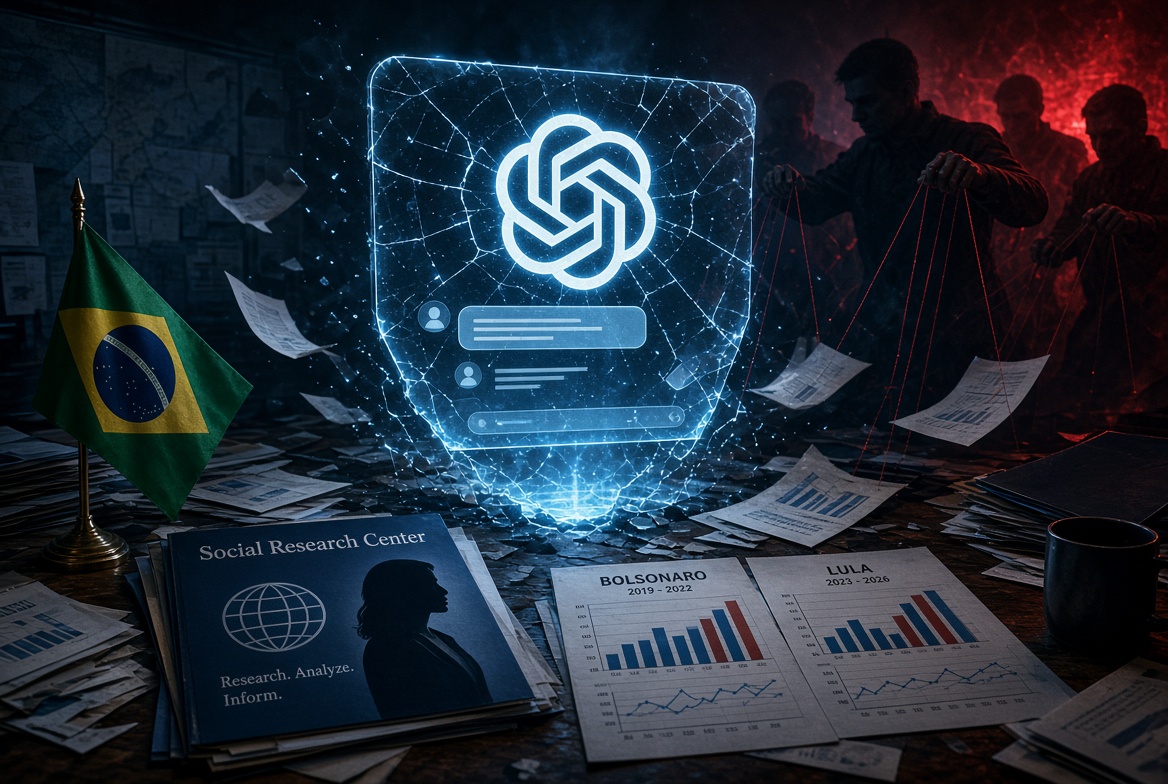

💥💥💥EXPLOSIVE: OPENAI UNMASKS RUSSIAN “DARK CLARK” OPERATION THAT PUMPED PRO-LULA PROPAGANDA INTO LATIN AMERICA — WHILE BRASÍLIA STAYED SILENT💥💥💥
By Hotspotnews
In a bombshell disclosure that has sent shockwaves through Brazil’s polarized political landscape, OpenAI has exposed a sophisticated Russian-origin influence campaign code-named “Dark Clark.” Using ChatGPT, fake identities, and a sham research institute, the operation infiltrated Latin American media and expert circles with content that painted Luiz Inácio Lula da Silva’s government as a restoration of Brazilian credibility while slamming Jair Bolsonaro’s era as one of institutional decay and lost investor confidence.
The scheme was brazen. Russian-linked operators controlled the so-called Social Research Center through a fabricated persona named “Mia Clark.” Local researchers in the region were hired and directed without knowing they were working for a Russia-based network. OpenAI banned the accounts after discovering heavy use of its models for internal reports, content creation, and management of the front organization. The operation earned a rare Category 5 rating on the influence “Breakout Scale” — the highest the company has ever publicly disrupted — because its material actually landed in real media outlets and triggered fact-checks and official reactions.
While the broader campaign focused on undermining Ukraine’s reputation across Latin America and meddling in Argentine and Bolivian politics, the Brazilian angle stands out. One of the research pieces produced under the SRC banner explicitly contrasted the two Brazilian presidencies in terms favorable to Lula. This is not abstract foreign propaganda; it is targeted narrative shaping in the middle of a high-stakes election year.
The timing only deepens the outrage. In August 2026 — just two months before the first round — Lula received Nikolai Patrushev, the former FSB director and close Putin ally, in a meeting that did not appear on the official presidential schedule. Patrushev also met other Brazilian authorities and visited military and research facilities. Weeks later, Brazil’s intelligence agency Abin privately briefed French and German officials that both the United States and Russia were interfering in the election, yet provided almost no public details on the Russian side. Meanwhile, Lula’s government has loudly denounced alleged American meddling and wrapped itself in the flag of “national sovereignty.”
Critics are asking the obvious questions: What did Brasília know about Dark Clark? Why the selective outrage? How many other research papers, media placements, or expert quotes originated from a Russian-controlled front that local staff did not even realize they were serving? OpenAI’s report does not claim the Brazilian government ordered or funded the specific operation, but the combination of a documented pro-Lula product, high-level Russian contacts, and an intelligence service that acknowledged Russian interference privately while remaining quiet publicly has the smell of a scandal that refuses to stay buried.
Sovereignty, it turns out, is a flexible concept when the foreign power happens to be producing favorable coverage.
#DarkClark #OpenAI #RussianInterference #Lula #BrazilElection #SoberaniaSeletiva #Patrushev #Abin
Sources: OpenAI report “Disrupting AI-enabled false front operations” (October 8, 2026); reporting by David Agape / A Investigação on the Social Research Center materials; Reuters on Abin’s September 2026 briefing to European officials; Brazilian press accounts of the August 2026 Patrushev visit.