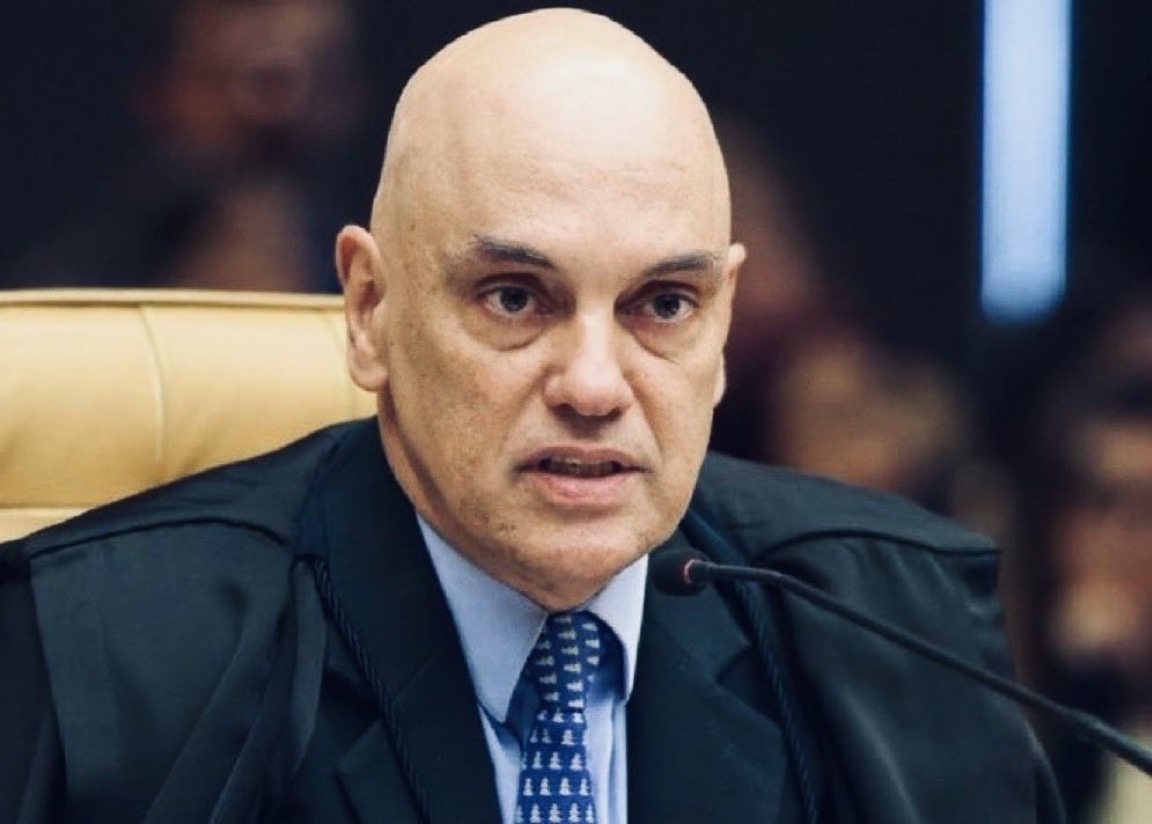
Alexandre 2de Moraes Crosses Another Line: Silencing Bolsonaro to Rig the 2026 Elections
By Hotspotnews
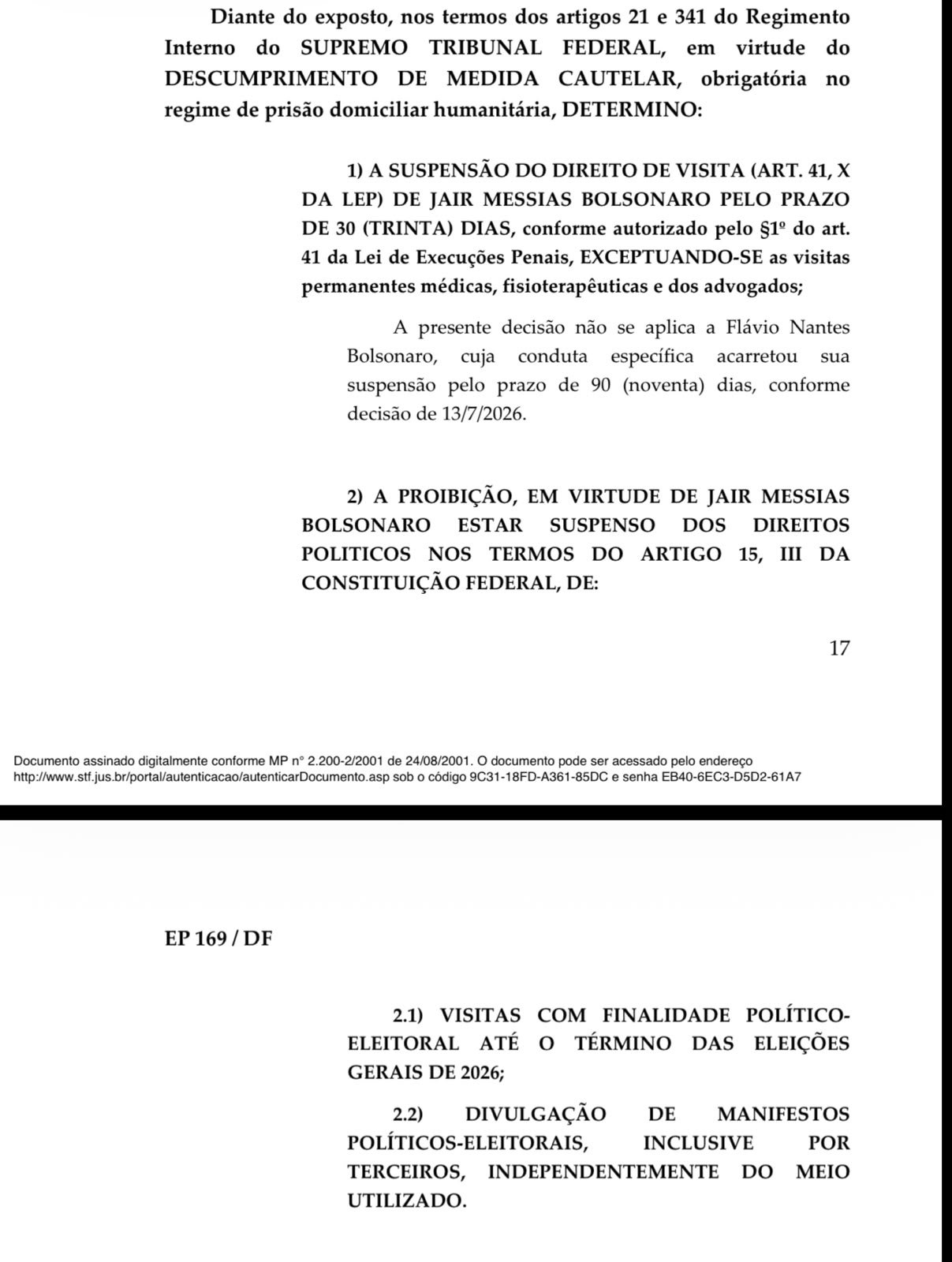
In a stunning display of judicial overreach, STF Minister Alexandre de Moraes has issued yet another order designed to keep Jair Bolsonaro out of Brazilian politics until after the 2026 general elections. The latest ruling, handed down in the context of Bolsonaro’s humanitarian house arrest, explicitly bans him from receiving political visits and from issuing or allowing any political-electoral manifestos — even through third parties — until the votes are cast and counted.
This is not subtle. It is a direct attempt to decapitate the bolsonarista movement at the precise moment when millions of Brazilians are looking for leadership against the failures of the current administration.
The document, a page from an official STF decision, leaves little room for doubt. Bolsonaro’s right to visits is suspended for 30 days (with narrow exceptions for medical care and lawyers), and the political restrictions are even more severe. Any contact with political purpose is forbidden until the end of the 2026 elections. The dissemination of political messages is likewise prohibited. This comes on top of Bolsonaro’s already suspended political rights under the Constitution — a status his supporters have long argued stems from politically motivated convictions rather than ironclad justice.
The Real Motive Is Transparent
Conservatives have warned for years that the Brazilian judiciary, led by figures like Moraes, would not stop at convictions. They would use every lever of power to neutralize the most popular opposition figure in the country. The timing of this latest order confirms it.
Bolsonaro is not a free man. He is serving a lengthy sentence under house arrest after being convicted in proceedings widely viewed on the right as lawfare. Yet even in this restricted state, the regime cannot tolerate the possibility that he might influence candidates, energize supporters, or expose the weaknesses of the current government. The solution? Turn house arrest into political solitary confinement until the ballots are printed.
The hypocrisy is glaring. When Luiz Inácio Lula da Silva was imprisoned years ago, his party and allies treated his cell as a de facto campaign headquarters. Statements were issued, messages were amplified, and the machinery of the left continued operating without the same level of judicial strangulation. Bolsonaro, by contrast, is being told he cannot even discuss politics with visitors or allow others to speak on his behalf in electoral terms. One rule for the establishment, another for the outsider who threatens it.
This Is Not Justice — It Is Electoral Engineering
Brazil’s Supreme Court has increasingly acted as a super-legislature and super-executive rolled into one. Decisions that would be unthinkable in a functioning separation of powers are now routine when the target is Jair Bolsonaro or his movement. Moraes’ order does not even pretend to be narrowly tailored to prison security. It is explicitly aimed at “political-electoral” activity through the end of the next national vote.
This is not the behavior of a neutral arbiter protecting democracy. It is the behavior of an institution that fears the verdict of the people. If bolsonarismo is so dangerous that its leader must be gagged until after the election, then the real danger is not Bolsonaro — it is the erosion of basic political freedoms under the guise of “institutional defense.”
Supporters of this order will claim it is simply enforcing the rules for a convicted man. But rules applied selectively and timed for maximum political impact are not rules. They are weapons. When the same institutions that rushed to convict Bolsonaro on expansive interpretations of the law simultaneously shielded or downplayed misconduct by their political allies, the claim of impartial justice collapses.
The Stakes for 2026 and Beyond
Brazilian conservatives have already absorbed multiple blows: ineligibility rulings, investigations, asset freezes, and now this direct ban on political expression during house arrest. The message is clear — participate in politics only on terms approved by the STF. Dissent is tolerated only when it is harmless.
The response from the right must be equally clear. This latest decree should be treated as further evidence that the current system is rigged against any genuine opposition. Bolsonaro’s supporters should document every restriction, publicize every hypocrisy, and prepare to fight these measures in every available forum — legal, political, and cultural.
Democracy is not preserved by silencing the most popular voice in the country until after the election. It is preserved by allowing the people to hear all sides and decide for themselves. Alexandre de Moraes’ order does the opposite. It reveals a judiciary more interested in protecting its own power than in letting Brazilians choose their future freely.
The 2026 elections are approaching. The attempt to lock Bolsonaro out of them until they are over should alarm every Brazilian who still believes in free political competition — regardless of party. The gavel has spoken, but the people have not yet had their say.