

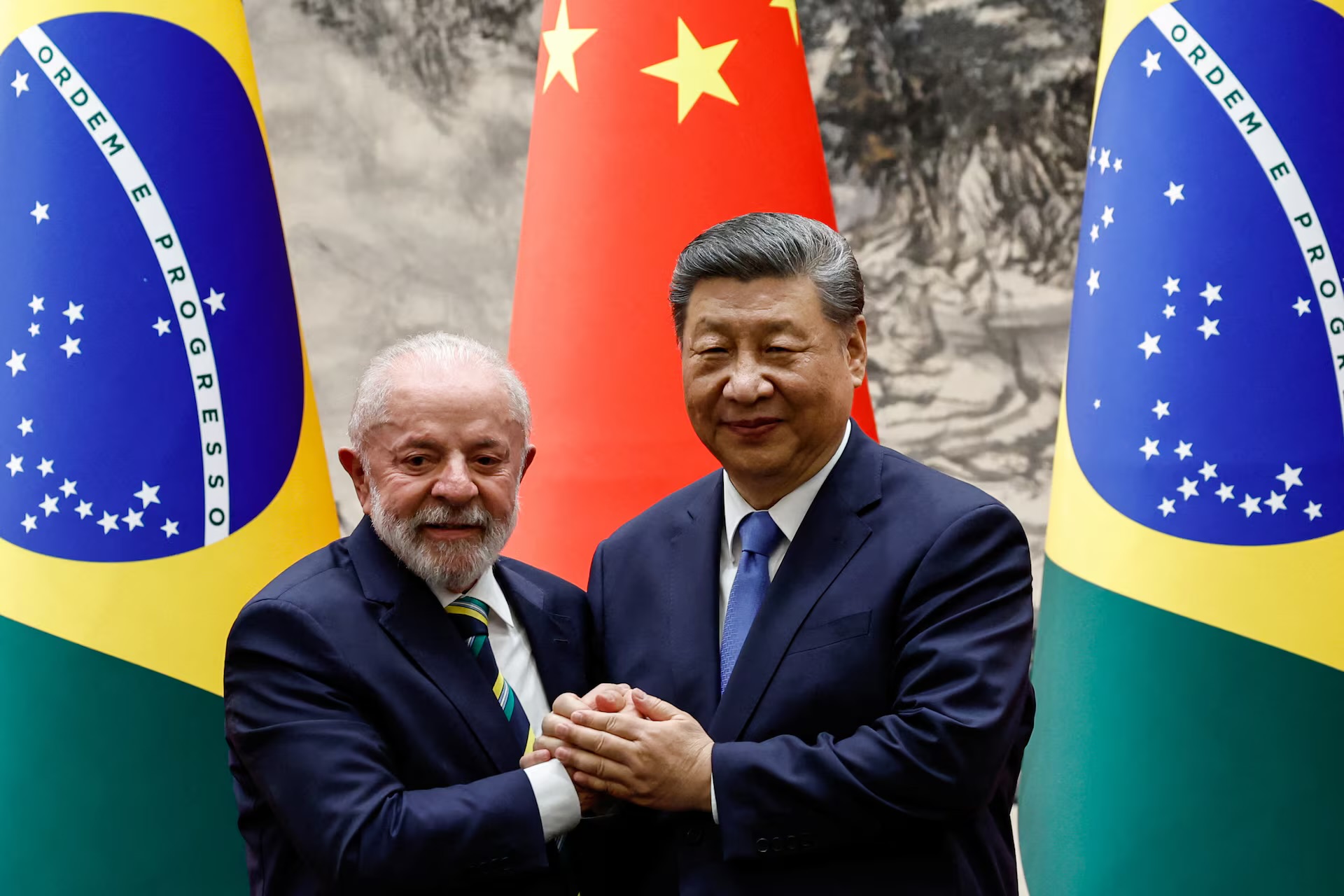

America Must Respond Firmly as Lula Courts Beijing
By Hotspotnews
The Trump administration is rightly preparing a measured response after Brazil’s leftist government under Luiz Inácio Lula da Silva blocked two senior U.S. State Department officials from entering the country. Riley Barnes and Samuel Samson sought to hold discussions on election integrity, religious freedom, and free expression ahead of Brazil’s October presidential vote. Brasília framed the visit as a threat to its electronic voting system and an act of interference. In reality, Lula’s government is shielding a process long criticized by Brazilian conservatives and simply refuses outside scrutiny that might expose vulnerabilities.
This is not an isolated diplomatic spat. It fits a pattern of Lula’s administration prioritizing political control over transparency while simultaneously courting America’s primary strategic competitor. Just days after the visa denials and amid new U.S. tariffs targeting unfair Brazilian trade practices, Chinese President Xi Jinping held a lengthy call with Lula. Beijing offered explicit support for Brazil’s “sovereignty” and opposition to “external interference.” The two leaders also agreed to accelerate talks on a Mercosur-China trade deal and expand cooperation in critical minerals, artificial intelligence, and other high-tech sectors.
China’s move is textbook opportunistic expansion. As Washington applies pressure through legitimate tariffs and potential targeted sanctions, Beijing steps in with political cover and economic inducements. The result is a clearer path for China to deepen its foothold in Latin America’s largest economy—precisely when the region’s resources and markets matter most to American interests. Lula gains short-term political insulation and diversified export options. The United States faces a more entrenched China-Brazil axis that undercuts leverage, normalizes anti-American rhetoric, and risks turning Brazil into a reliable partner for Beijing’s broader Global South agenda.
The consequences extend beyond trade statistics. A Brazil that feels emboldened by Chinese backing is less likely to cooperate on issues ranging from counternarcotics to democratic norms. It signals to other regional governments that resisting U.S. pressure carries fewer costs when Beijing is ready to fill the gap. Domestically in Brazil, the episode strengthens Lula’s narrative against his main challenger, Flávio Bolsonaro, while further polarizing an already tense election season. For American conservatives, the pattern is familiar: left-wing governments in the hemisphere invite Chinese influence, erode institutional transparency, and then cry interference when Washington notices.
President Trump’s team is studying options that reportedly include individual sanctions on Brazilian officials. That approach is both proportionate and necessary. Tariffs already demonstrate economic consequences; targeted measures against those responsible for blocking legitimate U.S. diplomatic engagement would reinforce that sovereignty cuts both ways. America cannot outsource the defense of free and fair elections or the containment of Chinese influence to the goodwill of a government that views scrutiny itself as a threat.
A firm, consistent response serves long-term U.S. interests. It reminds Brasília that access to the American market and partnership are not unconditional. It also makes clear to Beijing that attempts to exploit hemispheric divisions will meet resistance. Hesitation would only invite further erosion of American standing in a region critical to energy, migration, and great-power competition. The choice is straightforward: act decisively now, or manage a more complicated and costly China-aligned Brazil later.