


Double Standards in Brazilian Justice: Lula’s Carnival Propaganda Gets a Pass While Bolsonaro Was Barred
By Hotspotnews
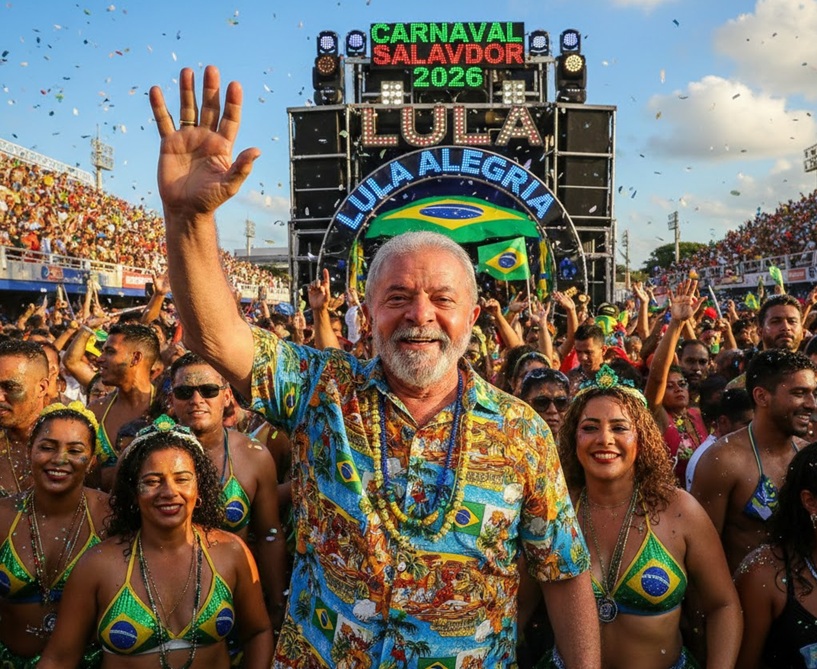
In a blatant display of selective enforcement that has become all too familiar in Brazil’s politicized institutions, the federal government is funneling public money to fund what amounts to an extended campaign ad for President Luiz Inácio Lula da Silva—disguised as a Carnival parade. The Acadêmicos de Niterói samba school has chosen to dedicate its 2026 Carnival enredo entirely to Lula’s life story, portraying him as a heroic figure rising from humble beginnings to lead the nation. And who is helping pay for this glowing tribute? Taxpayers, through a R$1 million grant from Embratur, the government’s tourism promotion agency.
This isn’t subtle cultural celebration—it’s state-sponsored hagiography in an election year. The enredo will parade Lula’s biography down the Marquês de Sapucaí, complete with imagery and lyrics exalting his political journey, just months before Brazilians head to the polls in October 2026. Critics rightly call it premature electoral propaganda, using public funds to burnish the image of an incumbent president seeking another term.
The funding comes as part of a broader R$12 million package distributed equally among the 12 Grupo Especial samba schools. On the surface, that sounds fair. But when one school independently decides to turn its slot into a personal tribute to the sitting president—who happens to control the very agency writing the checks—the line between neutrality and abuse of power vanishes. The money isn’t earmarked for “Lula promotion,” but the end result is the same: public resources amplifying a candidate’s narrative at a time when electoral rules demand strict impartiality from the state.
Compare this to what happened to former President Jair Bolsonaro. In 2023, the Superior Electoral Court (TSE) declared him ineligible until 2030 for allegedly abusing institutional power. His offense? Holding a meeting with foreign ambassadors in 2022 where he questioned the integrity of Brazil’s electronic voting system—using official channels to spread concerns about election fairness. No direct campaign spending, no massive public grants, yet the courts deemed it an intolerable misuse of state resources to influence voters.
Now look at Lula’s case. Government money flows to a major cultural event that will literally chant his praises and display his image to millions. Technical auditors at the Tribunal de Contas da União (TCU) initially flagged the payment to Niterói as a potential violation of administrative impartiality and morality principles, recommending suspension due to the clear risk of promoting a public figure in an election cycle. Yet the responsible minister quickly overruled the caution, allowing the funds to proceed while ordering further explanations.
This is the definition of a two-tiered justice system. When a conservative leader uses public platforms to voice legitimate democratic concerns, it’s branded as abuse and punished with years of ineligibility. When a leftist incumbent benefits from public dollars fueling a massive, nationwide spectacle in his honor right before reelection, it’s waved through as “artistic freedom” and “tourism promotion.” The hypocrisy is staggering.
Defenders claim the grant is neutral since every school gets the same amount, and the theme choice belongs to the school. But that defense crumbles under scrutiny. The state doesn’t fund private political rallies or candidate biographies—why should it subsidize one just because it’s set to samba rhythms? In an election year, when every public action by the executive carries electoral weight, this funding smells like a calculated move to keep Lula’s image front and center without technically violating campaign finance rules.
Brazil deserves better than this double standard. If using state resources to promote a political narrative disqualifies one leader for years, it should apply equally—or not at all. Until the courts and oversight bodies apply the law consistently, regardless of who holds power, public trust in institutions will continue to erode. The Carnival of 2026 may dazzle with lights and drums, but the real spectacle is the ongoing farce of unequal justice in Brazil.