

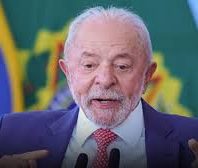

Lula’s Billion-Dollar-a-Day Giveaway: Classic Populist Recklessness
By Hotspotnews
President Lula da Silva’s government is burning through roughly R$ 1.4 billion every single day on a flurry of subsidies, debt forgiveness schemes, student aid, fuel handouts, housing incentives, credit for truckers and drivers, and other targeted “benefits.” In just the first five months of 2026, that adds up to an eye-watering R$ 215 billion in off-budget spending — equivalent to about 1.6% of Brazil’s GDP. Economist Marcos Mendes identified 33 such measures, with 96% routed through creative financial channels, subsidized loans via public banks, and extra-budgetary mechanisms that largely bypass the government’s own fiscal framework. This isn’t prudent governance—it’s election-year bribery dressed up as compassion.
The timing tells the real story. 2026 is a presidential election year, with voting set for October. Lula, seeking an unprecedented fourth term at age 80, faces clear political headwinds: polls showing a tightening race against challengers, elevated rejection ratings, and voter frustration over rising food prices that have outpaced general inflation in major cities like São Paulo. Working families feel the squeeze on purchasing power while the broader economy cools. In response, the PT government has unleashed these “bondades” (giveaways) to deliver immediate, visible relief to key voter bases — debtors, students, drivers, and low-income groups — in hopes of boosting short-term popularity and securing re-election.
The official line is that these programs provide essential economic support and social protection amid external pressures. In reality, this is textbook clientelism: using state resources to buy loyalty in a rigid budget where over 90% of spending is mandatory, leaving little room for discretionary action without fiscal sleight-of-hand. Only a tiny fraction (around 4%, or R$ 9 billion) hits the formal spending cap, allowing the government to claim fiscal compliance while expanding the public debt and future liabilities. The extra spending already exceeds new revenues projected for the period, shifting the burden onto tomorrow’s taxpayers through higher borrowing, potential inflation, or austerity later.
Conservatives have long warned that this brand of economic populism leads to the same dead end: distorted incentives, ballooning public debt, and eventual pain for ordinary citizens. By directing massive resources to favored groups right before the election, Lula’s team is repeating a familiar Latin American pattern — and one seen in Brazil under multiple administrations. Handouts may create a temporary sugar high in approval ratings and consumption, but they erode market discipline, crowd out private investment, and undermine the credibility needed for sustainable growth. Food inflation hitting vulnerable households hardest exposes the irony: the very people these programs target end up paying the long-term price through weaker economic fundamentals.
What Brazil needs is not more creative accounting and redistribution to win votes, but structural reforms: spending restraint, tax simplification, reduced bureaucracy, and policies that reward work, productivity, and private enterprise. Responsible leadership confronts trade-offs honestly instead of kicking the can down the road. Lula’s daily billion-dollar spree is a textbook example of why fiscal conservatism matters. Voters may get temporary relief now, but the permanent consequences — higher debt, slower growth, and diminished opportunities — will linger long after the election. Brazil deserves better than this predictable cycle of populism.