


Title: The Banco Master Collapse and the Limits of What We Actually Know
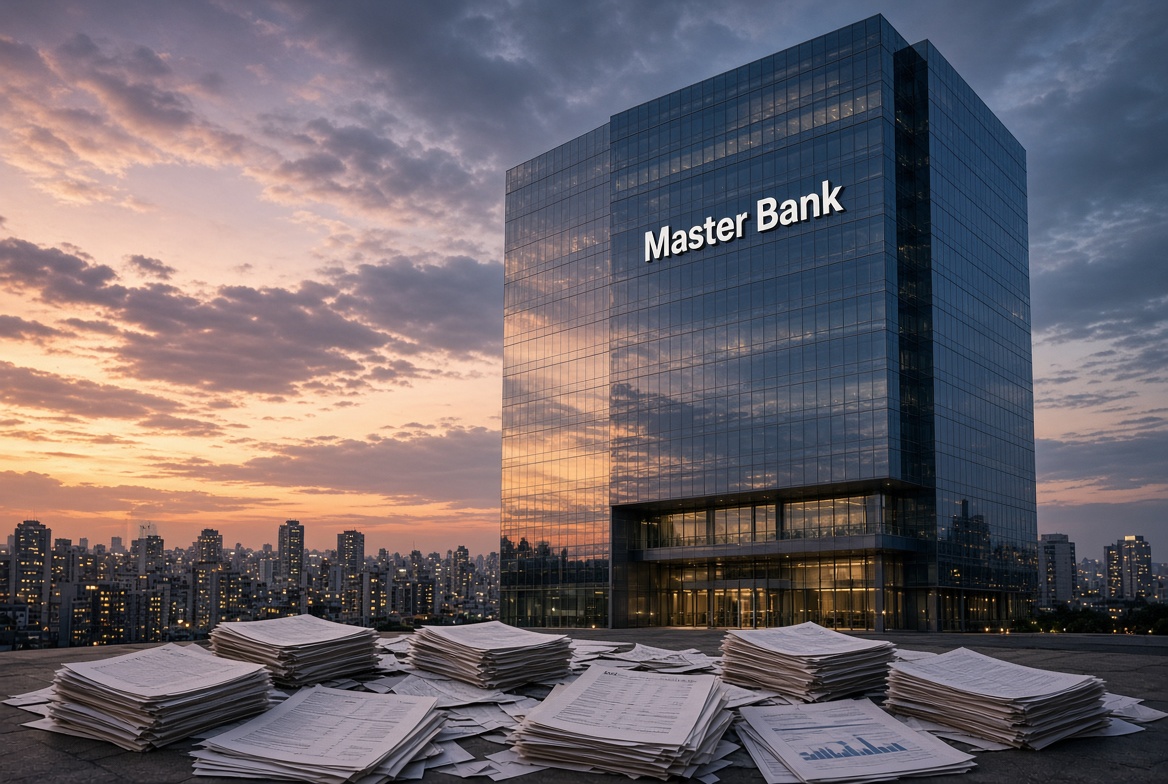
The liquidation of Banco Master in late 2025 stands as one of the largest financial scandals in recent Brazilian history. Controlled by Daniel Vorcaro, the bank was placed under extrajudicial liquidation by the Central Bank after investigators identified massive irregularities, including the sale of roughly R$12 billion in credit portfolios to the Banco de Brasília (BRB) that allegedly lacked real backing. Federal Police operations followed, leading to Vorcaro’s arrest and a series of inquiries into suspected fraud, asset inflation through investment funds, and the circulation of “rotten” securities.
Political connections emerged quickly. Records and messages show Vorcaro and associates held an off-agenda meeting with President Lula at the Planalto in December 2024, facilitated by former Finance Minister Guido Mantega, who later worked as a consultant for the bank. Senator Jaques Wagner, a key government figure, has faced scrutiny over alleged favors and financial benefits linked to the same network. These ties span parts of the governing coalition and elements of the Centrão, illustrating how a single institution cultivated influence across different political camps.
Separate investigative lines have touched the bank’s ecosystem. Police reports from operations focused on money laundering—particularly those examining funds administered by entities such as Reag—have flagged transactions involving vehicles later associated with probes into organized crime finances, including networks linked to the PCC. Earlier exchange operations by the bank (when it operated under a previous name) also appeared in investigations of companies suspected of moving resources for criminal groups. These intersections exist in official documents, but they describe the use of formal financial channels by criminal actors rather than ownership or direct control of the institution itself.
Amid this established investigation, a video by a social-media figure identifying himself as a former low-level PCC member has circulated widely. In it, he asserts that the faction is the true owner of Banco Master and that the president receives funds originating from narco-terrorism. Multiple prior fact-checks and police assessments have questioned the strength of this individual’s claimed organizational role; his documented criminal record is limited, and earlier statements on related topics have been contradicted or left unsubstantiated. No public investigation or court filing has corroborated the specific claims of factional ownership or direct presidential payments of that nature.
The documented problems at Banco Master are large enough on their own: billions in alleged fictitious assets, political access purchased or cultivated through contracts and meetings, and documented contacts with financial structures later examined for criminal laundering. Those elements are already under formal scrutiny by the Federal Police, the Central Bank, and the courts. Expanding the narrative to include uncorroborated assertions of direct factional ownership and presidential narco-financing moves beyond the current public record and into territory that lacks supporting evidence from the authorities conducting the investigations. The scale of the verified case is already serious; treating influencer claims as established fact does not enlarge it so much as obscure what the evidence actually shows.