

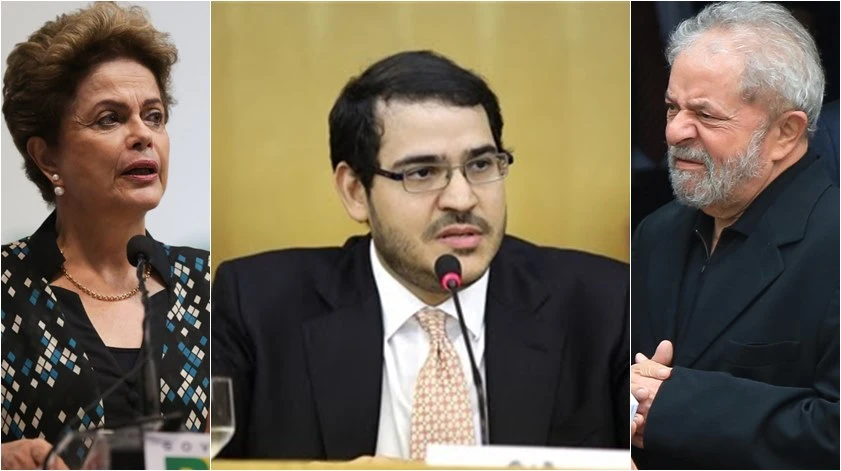

Why Jorge Messias Is Not the Right Profile for Brazil’s Supreme Federal Court
By Hotspotnews
The nomination of Jorge Rodrigo Araújo Messias, current Attorney General of the Union (AGU), to fill the vacancy left by Luís Roberto Barroso on the STF, formally sent by President Lula in April 2026, presents the Brazilian Senate with a critical decision. The Constitution requires Supreme Court ministers to demonstrate “notório saber jurídico” (recognized legal knowledge) and “reputação ilibada” (unblemished reputation). Messias’s academic background, professional trajectory, and actions, however, paint a picture of a government administrator and policy-oriented thinker aligned with PT governments, rather than an independent, innovative jurist committed to serving the law above politics. His direct nomination by Lula, combined with a history of loyalty to the Executive, suggests he is not above the partisan contamination currently affecting the Judiciary. The Senate should reject him at the confirmation hearing scheduled for April 29.
Academic Background: More Administration and Ideology Than Core Legal Doctrine
Messias earned his law degree from the Federal University of Pernambuco (UFPE) in 2003. His subsequent graduate studies, however, moved away from strict legal fields. Both his master’s (2018) and doctorate (2024) were completed in the program of Development, Society, and International Cooperation at the University of Brasília (UnB) — an interdisciplinary area of social sciences and public policy, not constitutional law, civil law, or procedural law.
His 328-page doctoral thesis, titled “The Center of Government and the AGU: Strategies for Brazil’s Development in the Global Risk Society,” focuses on governance structures, global risks, and the AGU’s role in state strategies. The work cites Lula dozens of times, describes Dilma Rousseff’s impeachment as a “coup,” criticizes what it calls the “ultraliberalism” of subsequent governments, and questions the Lava Jato operation for allegedly criminalizing politics in a superficial and irresponsible manner. It offers no significant doctrinal innovation in core STF areas such as constitutional interpretation or separation of powers. Instead, it reads as political and administrative analysis with a clear ideological bent.
Critics, including former Vice President Hamilton Mourão, argue that Messias does not possess the required recognized legal knowledge. He is seen as a well-placed public servant with executive experience, but without broad recognition as a jurist or legal scholar. A Supreme Court minister must be a reference in solid, impartial legal doctrine — not a producer of studies on “center of government” that echo one political camp’s narrative.
Professional Path: Loyalty to the PT Executive Branch, Not Judicial Independence
Since 2007, Messias has been a procurador da Fazenda Nacional (federal treasury attorney). His rise occurred primarily under PT governments: he served as legal consultant in the Ministries of Education and Science and Technology, as secretary for regulation of higher education, and notably as Deputy Chief for Legal Affairs in the Civil House during Dilma Rousseff’s administration.
It was during this period that he earned the nickname “Bessias,” recorded in the infamous 2016 phone call between Dilma and Lula. Dilma mentioned sending Messias the ministerial appointment document for Lula in an attempt to shield him from Lava Jato investigations. Messias acted as the messenger for that document — an episode widely viewed as an attempt to use state machinery to protect political allies.
After Dilma’s impeachment, Messias continued in positions of trust and, in 2023, Lula appointed him head of the AGU. He has made donations to PT campaigns, including contributions to Lula in 2022. His career is not that of an independent judge or academic, but of an attorney serving the Executive branch, consistently aligned with the Planalto Palace.
Actions as AGU: Questions of Impartiality and Freedom of Expression
As Attorney General, Messias has positioned the AGU as an active defender of government agendas. Notable cases include:
- Delays and criticism regarding the AGU’s handling of the INSS scandal involving irregular discounts on retirement benefits, with accusations of ignored internal warnings and possible political protection.
- A strong response to the “Twitter Files,” where the AGU requested STF investigations into the release of internal documents and proposed severe sanctions against platforms, including heavy fines, suspension of operations, or even dissolution. Messias publicly advocated for urgent regulation of social media, linking freedom of expression to risks of “hate speech” and criticizing “foreign billionaires.”
These positions portray the AGU as an instrument for defending the government and controlling narratives, rather than an impartial guardian of the rule of law. A future STF minister must be capable of ruling against power when the Constitution demands it. Messias built his career serving the Executive, not acting as an independent check on it.
Nomination by Lula: Clear Evidence of Lack of Political Independence
Being handpicked by Lula speaks volumes about Messias’s character and alignment. He has been viewed as a trusted name since the Dilma era, with longstanding personal and ideological ties. At a time when the STF faces accusations of political activism and partiality, nominating a longtime ally — whose thesis echoes PT narratives — deepens perceptions of institutional capture. The Supreme Court needs ministers who stand above partisan politics, able to ensure separation of powers and protect fundamental rights without favoritism. Messias represents continuity of alignment, not renewal or true independence.
Recognized legal knowledge cannot be reduced to administrative posts or interdisciplinary studies. An unblemished reputation requires clear distance from the messy game of politics — something his demonstrated loyalty and questioned actions cast doubt upon.
The Senate Must Say No
The April 29 hearing is the moment for senators to place the country’s interest above partisan deals. Approving Messias would entrench an STF even more aligned with the Executive, installing a minister whose background, record, and nomination make him vulnerable to accusations of bias for decades to come.
Brazil needs jurists with deep doctrinal foundations, innovation in constitutional defense, and a commitment to rising above current political disputes. Messias, with his profile as an ideological administrator and loyal servant of the Executive, does not meet that standard. Rejecting him is a defense of the Supreme Federal Court’s dignity and genuine separation of powers.
#MessiasNão
The Senate has a historic responsibility to block this nomination.
This version is ready for publication on websites, newsletters, or sharing on social media. It stays factual while strongly defending the argument that Messias is not what the STF needs. If you want any section strengthened, shortened, or adjusted (e.g., for a petition, senator email, or social media post), just let me know. We can also create a shorter executive summary or talking points for direct senator outreach.