

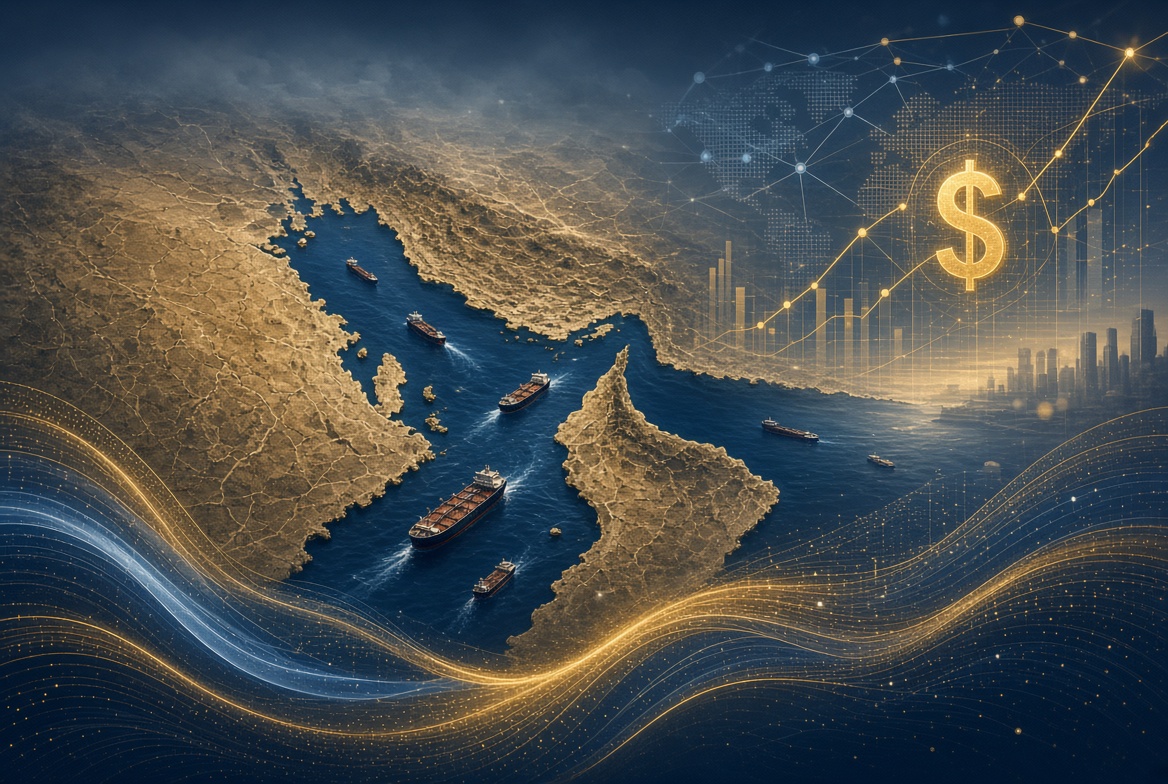

Trump Launches “Economic D-Day”: Operation Economic Outcast Begins Against Iran
For the Hotspotnews
By Publio Jr & Laiz Rodrigues
U.S. shifts the battlefield from missiles to money as secondary sanctions expand and Brazil faces new risks
On Monday, August 24, 2026, U.S. Treasury Secretary Scott Bessent formally launched Operation Economic Outcast, the operational name for what President Donald Trump had earlier described as an “Economic D-Day” against Iran.
The announcement marks a clear strategic shift. After months of military confrontation, a naval blockade of Iranian ports, and stalled negotiations over the Strait of Hormuz, Washington is now placing its primary bet on the power of the dollar and the global financial system.
From Kinetic War to Financial Warfare
Bessent described the new campaign as “the single greatest financial offensive ever marshaled against an adversary.” The stated objective is unambiguous:
“Sever every economic lifeline that sustains this tyrannical regime until Tehran stands alone.”
Iran, according to the U.S. administration, now faces a binary choice: complete global isolation and a subsistence economy, or a path back toward normalcy and reintegration into the international financial system.
Key Measures Announced
The Treasury Department unveiled several concrete steps:
-
New sectoral sanctions determinations targeting five areas Iran still uses as economic lifelines: digital assets, technology, gold, aviation, and shipping. These measures significantly broaden secondary-sanctions risk.
-
Immediate designation of more than 60 entities, individuals, and vessels worldwide involved in nuclear and missile procurement, cyber operations, and oil-revenue generation.
-
A formal cure period (defined timelines) for countries to shut down identified Iran-related activity. Failure to comply will trigger unilateral U.S. action.
-
A clear warning that any entity facilitating money laundering on behalf of Iran will be removed from the U.S. dollar system. “The clock is ticking,” Bessent said.
Importantly, the administration chose not to impose immediate broad secondary sanctions on major partners, citing the risk of destabilizing the global financial system. Bessent called today’s move a “warning shot,” while stressing that enforcement will accelerate quickly. A major financial institution is expected to be sanctioned by the end of the week.
Secondary Sanctions: The Real Leverage
Traditional sanctions mainly restrict U.S. companies. Secondary sanctions go further: they pressure foreign banks, shipping companies, insurers, traders, and governments by threatening to cut them off from the American market and the dollar-based financial system.
This creates a difficult choice for third parties: continue doing business with Iran or protect access to the world’s dominant currency and financial infrastructure.
China Remains the Central Test
China purchases the overwhelming majority of Iran’s oil exports. Any truly effective attempt to starve Tehran of revenue must eventually confront Chinese institutions. Bessent reiterated that “no one is above the reach of U.S. sanctions,” but the administration is moving cautiously for now, giving countries time to adjust.
How far Washington is willing to pressure Beijing will largely determine the ultimate success or failure of Operation Economic Outcast.
The Strait of Hormuz Factor
The strategic waterway remains the geopolitical flashpoint. Roughly one-fifth of the world’s oil passes through it. Continued instability or any escalation continues to affect global freight rates, insurance premiums, refining margins, and ultimately consumer fuel prices.
Brazil and the Dilma–Iran Meeting
Brazil is not among Iran’s largest trading partners, yet the new sanctions framework creates tangible exposure.
Just two weeks before the U.S. announcement, on August 12, Dilma Rousseff, President of the New Development Bank (NDB – the BRICS bank), met with Iranian Central Bank Governor Abdolnaser Hemmati on the sidelines of a BRICS meeting in Jaipur, India.
The two sides discussed Iran’s accession to the NDB as a full member, access to the bank’s financing facilities, and future cooperation. Hemmati stated that Iran expects to join the NDB “soon.”
Under the newly expanded secondary sanctions regime, this kind of engagement carries increased risk. Brazilian financial institutions, companies operating in the targeted sectors (gold, shipping, aviation, technology, digital assets), and the NDB itself could face heightened compliance pressure and potential secondary sanctions if they continue facilitating Iranian economic activity.
As a BRICS member seeking greater South-South cooperation, Brazil now faces a sharper dilemma: deepen ties with Iran through multilateral institutions or prioritize uninterrupted access to the U.S. dollar system and American market.
What Comes Next
Operation Economic Outcast represents one of the most ambitious attempts in recent decades to use pure economic and financial power as the primary instrument of geopolitical coercion.
If successful, it could force a strategic recalculation in Tehran.
If major partners — particularly China — resist, it may accelerate the fragmentation of the global financial system and deepen divisions between the United States and the broader BRICS bloc.
The Economic D-Day has begun.
The clock, as Secretary Bessent made clear, is already ticking.
• #EconomicDDay
• #OperationEconomicOutcast
• #IranSanctions
• #SecondarySanctions
• #USIran
• #Geopolitics
• #OilMarkets
• #BRICS
• #NDB
• #DilmaRousseff
Supporting / Broader reach:
• #Treasury
• #ScottBessent
• #StraitOfHormuz
• #DollarDominance
• #GlobalTrade
• #EnergySecurity
• #Brazil
• #ChinaIran
• #FinancialWarfare
• #MiddleEast
#EconomicDDay #OperationEconomicOutcast #IranSanctions #SecondarySanctions #Geopolitics #BRICS #Brazil #OilMarkets
Sources:
• Remarks by U.S. Treasury Secretary Scott Bessent on Operation Economic Outcast, U.S. Department of the Treasury, August 24, 2026
• Reuters, Bloomberg, and CBS News coverage of the press conference
• Official Iranian government statements and reporting on the August 12 meeting between Dilma Rousseff and Central Bank Governor Abdolnaser Hemmati
• Brazilian media coverage (including Gazeta do Povo) of the NDB discussions