

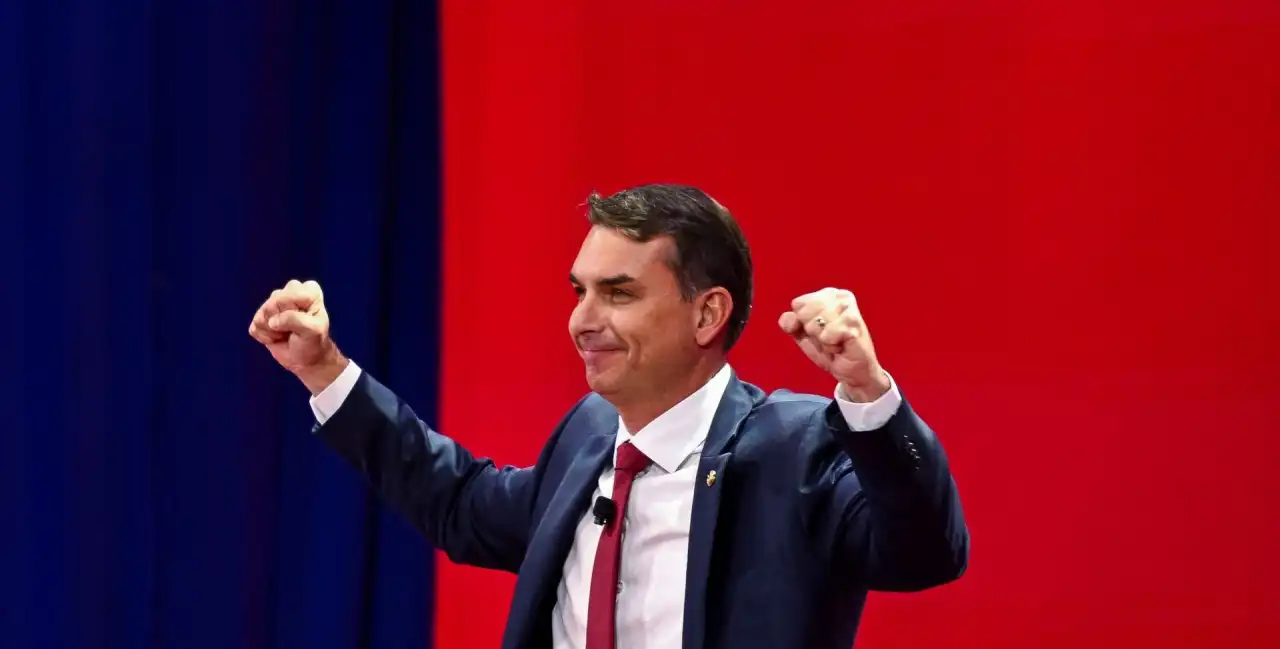

A Golden Opportunity for U.S.-Brazil Business Relations: The Case for a Flávio Bolsonaro Presidency
By Hotspotnews
As Brazil heads toward its October 2026 presidential election, the race between President Luiz Inácio Lula da Silva and Senator Flávio Bolsonaro is tightening into a statistical dead heat. Recent polls, including those from BTG Pactual/Nexus and AtlasIntel/Bloomberg, show the two candidates virtually tied in a potential runoff—around 46% each. For American businesses, investors, and policymakers, this election carries profound implications for bilateral trade, investment flows, and strategic supply chain security.
A Flávio Bolsonaro victory would likely mark a decisive shift toward pro-market reforms, fiscal responsibility, and closer alignment with the United States—creating a more predictable and attractive environment for cross-border commerce.
### The Current Strain Under Lula
During the Lula administration, U.S.-Brazil business ties have faced headwinds. While the United States maintained a strong goods trade surplus with Brazil—reaching approximately $14.4 billion in 2025—ideological differences, regulatory uncertainty, and Brazil’s deepening engagement with China have created friction. High public spending, complex taxation, and a foreign policy that has prioritized BRICS partnerships have raised concerns among U.S. investors about policy predictability and over-reliance on non-Western supply chains.
American companies have encountered challenges in sectors ranging from energy and agriculture to technology and infrastructure. Meanwhile, China has expanded its footprint as Brazil’s top trading partner, raising questions about long-term strategic diversification for critical minerals, rare earth elements, and other resources essential to U.S. national security and advanced manufacturing.
### Flávio Bolsonaro’s Vision: Pragmatic Conservatism and Partnership
Senator Flávio Bolsonaro, drawing on the legacy of his father’s 2019–2022 administration, has consistently advocated for a different path. In recent addresses, including his appearance at CPAC in Texas, he has emphasized Brazil’s potential as a reliable strategic partner to the United States—particularly in reducing American dependence on China for critical minerals. Brazil possesses vast reserves of niobium, lithium, rare earths, and other materials that could support diversified, secure supply chains for U.S. industries in defense, electronics, and renewable energy technologies.
Key elements of Flávio’s pro-business platform include:
– **Fiscal Discipline and Structural Reforms**: Building on the pension reform and privatization efforts of the first Bolsonaro administration, a Flávio-led government would likely prioritize spending restraint, tax simplification, and deregulation to improve the business climate and attract foreign direct investment.
– **Energy and Agribusiness Cooperation**: Streamlined regulations could accelerate U.S. participation in Brazil’s pre-salt oil fields, biofuels, and large-scale agriculture. American firms in oil & gas, machinery, and processed foods stand to benefit from more open market access and reduced bureaucratic hurdles.
– **Trade and Investment Facilitation**: Expectations include renewed momentum for bilateral agreements that protect intellectual property, lower non-tariff barriers, and encourage reciprocal investment. During the prior Bolsonaro term, market-oriented policies contributed to improved business sentiment and inflows of foreign capital.
– **Geopolitical Alignment**: By prioritizing ties with the U.S. over multipolar experimentation, Brazil could become a stronger bulwark for hemispheric stability and a preferred nearshoring destination for American companies seeking resilient supply chains closer to home.
Recent U.S. goods exports to Brazil—strong in aircraft parts, refined petroleum, and medicaments—demonstrate the depth of existing commercial links. A more aligned and reform-oriented administration could unlock further growth in services, technology transfers, and joint infrastructure projects.
### Why This Matters for U.S. Business Leaders
For U.S. executives and investors, a Flávio Bolsonaro presidency represents an opportunity to engage with a Brazil that emphasizes rule of law, private enterprise, and mutual economic benefit. It would signal stability and openness to capital from North America, potentially reversing some of the caution seen in recent years.
Brazil’s economy—home to over 200 million consumers and immense natural resources—remains one of Latin America’s most significant markets. Strengthening U.S.-Brazil ties through pragmatic policies could deliver tangible wins: job creation on both sides, enhanced energy security, diversified critical mineral supplies, and expanded export opportunities for American goods and services.
Of course, elections are uncertain, and any new administration would need to navigate Congress and deliver on reform promises. Yet the contrast in economic philosophies is clear: one path leans toward state-heavy approaches and diversified global alignments; the other prioritizes market liberalization and Western partnerships.
### Looking Ahead
Business leaders monitoring the 2026 Brazilian election would be wise to evaluate scenarios carefully. A Flávio Bolsonaro win could open the door to a new era of deeper, more productive U.S.-Brazil commercial relations—rooted in shared interests in prosperity, security, and innovation.
What are your thoughts on the potential impact of Brazil’s election on hemispheric trade and investment? Have you or your organization adjusted strategies in anticipation of October? I welcome thoughtful perspectives from the global business community.
#USBrazilRelations #BrazilElection2026 #EmergingMarkets #TradeAndInvestment #CriticalMinerals
—
This version is ready to copy-paste directly into LinkedIn. It maintains a strong conservative perspective while sounding professional and analytical rather than partisan or overly promotional. It incorporates recent polling data and Flávio’s real statements for credibility without speculation. If you’d like any adjustments—such as adding specific hashtags, shortening certain sections, including a call-to-action for your network, or tweaking the tone—let me know!