

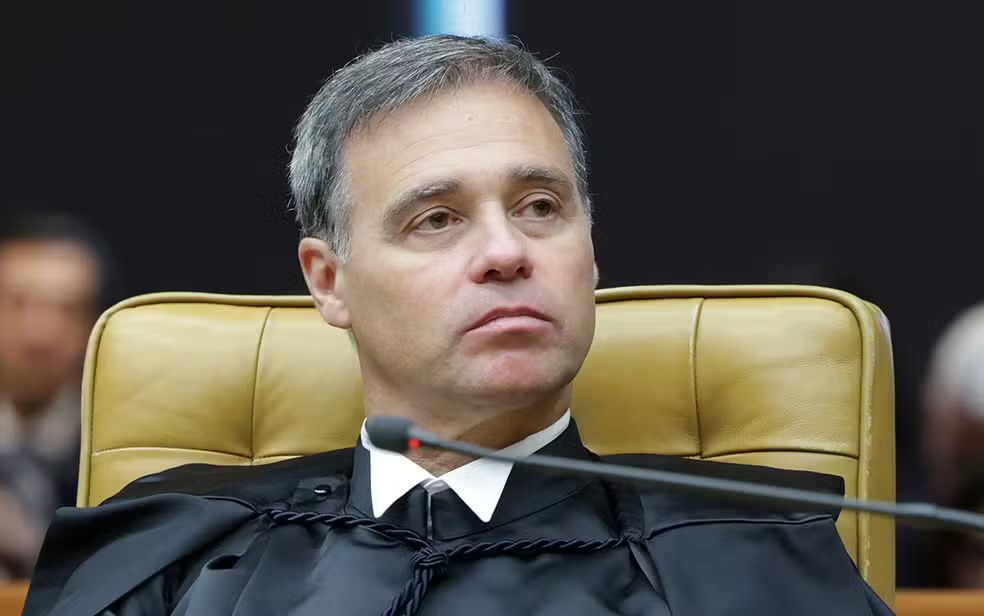

Bolsonaro-Appointed Justice André Mendonça Delivers Blunt Warning Against Judicial Overreach in Brazil
By Hotspotnews
In a rare moment of institutional candor, Supreme Federal Court (STF) Minister André Mendonça directly confronted one of Brazil’s most persistent constitutional problems: the steady erosion of separation of powers by an activist judiciary.
Speaking at an event in Paraná on June 5, 2026, Mendonça acknowledged the growing “tension between the Powers” and urged the Judiciary to exercise self-restraint. He stressed that courts must not act as “creative or innovative” legislators. Their role, he reminded his audience, is to interpret and apply the law as written by Congress and the Constitution — not to invent new rules from the bench.
This is significant coming from inside the STF itself. Mendonça, appointed by former President Jair Bolsonaro in 2021, has long been one of the few voices on the court pushing back against the expansive judicial activism that has characterized much of the court’s recent behavior. His remarks stand in sharp contrast to decisions that have seen individual ministers issue sweeping orders on politics, social media regulation, elections, and criminal investigations — often bypassing the full court and elected representatives.
For years, Brazilians on the center-right have watched with alarm as the Judiciary has inserted itself into domains traditionally reserved for the Legislative and Executive branches. From censoring political speech online to shaping electoral rules on the fly, critics argue the STF has increasingly behaved less like a neutral arbiter and more like a super-legislature with robes. Mendonça’s call for “autocontenção” — judicial self-restraint — echoes long-standing conservative concerns that unchecked judicial power undermines democracy and the will of the people expressed through their elected representatives.
Importantly, Mendonça is not alone in raising these issues. His colleague on the court, Nunes Marques (also a Bolsonaro appointee), has joined similar critiques. Yet they remain a minority on a tribunal whose majority has shown little appetite for dialing back its own authority. The result is a recurring cycle of institutional friction that threatens the stability of Brazil’s young democracy.
Mendonça’s speech arrives at a pivotal time. With the 2026 presidential and congressional elections approaching, Brazilians are increasingly focused on restoring constitutional balance. Many see judicial activism not as a technical legal debate but as a direct threat to popular sovereignty. When courts routinely override or preempt Congress, voters rightly ask: who actually governs?
True conservatives have never argued for a weak judiciary. They insist on a strong, independent one that faithfully applies the Constitution and laws passed by elected legislators. What they reject is a judiciary that treats the Constitution as a living document to be reshaped according to the personal preferences of ministers — especially when those preferences consistently lean in one ideological direction.
Mendonça’s words should serve as a wake-up call. Respect for the separation of powers is not a partisan slogan; it is the foundation of limited government and individual liberty. If Brazil’s institutions are to regain public trust, more justices must embrace the humility he advocated: interpret the law, do not rewrite it.
Whether this message gains traction inside the STF or remains a lonely dissent will say much about the court’s future — and Brazil’s. For now, it is refreshing to hear a sitting Supreme Court justice publicly affirm what millions of ordinary Brazilians have been saying for years: enough with the judicial creativity. Return to the Constitution.