

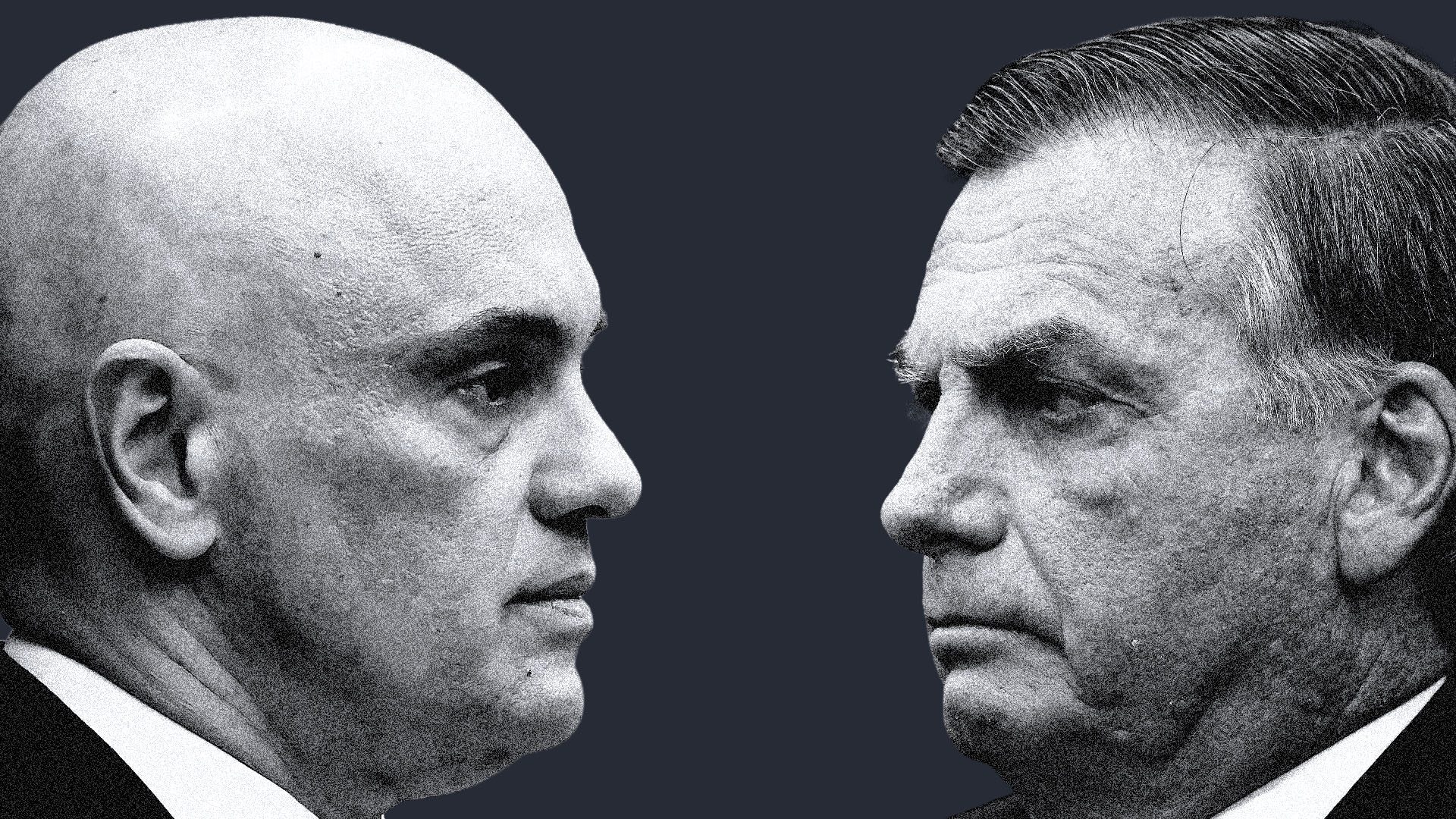

Judicial Overreach and the Silencing of Dissent: Bolsonaro’s Fight for Basic Freedoms
By Hotspotnews
In a democracy that still claims to value the Constitution, the latest restrictions placed on former President Jair Bolsonaro should alarm every citizen who believes in free thought and limited government power. While serving a lengthy sentence under humanitarian house arrest for health reasons, Bolsonaro has been hit with a new set of measures from Supreme Court Justice Alexandre de Moraes that go far beyond ordinary criminal punishment. After a private letter he wrote was publicly shared by his son, the justice banned most visits for 30 days, prohibited any visits with political or electoral purpose until after the 2026 elections, and barred the dissemination of any political-electoral statements—even through third parties.
Bolsonaro’s defense team has rightly challenged these orders. Their argument is straightforward and rooted in first principles: a criminal conviction and the automatic suspension of political rights (the ability to vote or run for office) do not authorize the state to police a man’s thoughts or prevent him from expressing ideas. The restrictions do not flow from the original sentence, from ordinary legislation, or from the Constitution itself. Instead, they expand the machinery of penal execution into a tool of ideological control. Freedom of thought and the manifestation of ideas are not privileges granted by judges; they are inherent rights that survive even a prison sentence.
House arrest is already a significant deprivation of liberty. Layering on top of it a near-total isolation from visitors (except lawyers and medical personnel) and a gag order on political expression turns a humanitarian arrangement into something closer to solitary confinement of the mind. The justification offered—that Bolsonaro somehow violated prior communication bans by writing a letter—does not justify transforming the rules of sentence enforcement into a prior restraint on speech. If a convicted person cannot share opinions about the direction of his country without risking further isolation, then the line between punishment and political censorship has been erased.
This episode fits a broader pattern in which the judiciary has assumed extraordinary authority over political life. Measures once presented as temporary safeguards against threats to democracy have hardened into permanent constraints on one side of the political spectrum. Supporters of strong judicial intervention may cheer the outcome when it targets figures they dislike. But the precedent is dangerous for everyone. Today it is a former president under house arrest. Tomorrow it could be any citizen whose views the powerful find inconvenient.
True conservatism does not demand that every convicted person retain the full public platform of a free citizen. It does demand that the state stay within the bounds of law and respect the core liberties that define a free society. Restricting visits for a limited period after a clear violation of existing rules may be defensible as discipline. Extending that logic into a sweeping ban on political expression until after an election crosses into something else entirely—an attempt to neutralize a political force by judicial decree.
Bolsonaro’s lawyers are correct to insist that freedom of thought cannot be suspended by judicial fiat. A nation that allows the courts to decide which ideas may circulate, even from someone serving a sentence, is no longer fully protecting the open contest of opinions that democracy requires. The appeal should be heard on its merits, and the broader principle should be reaffirmed: punishment is for crimes, not for inconvenient beliefs.