


Brazilian Supreme Court Doesn’t Respect Freedom of Speech
By Hotspotnews
Brazilian Supreme Court Doesn’t Respect Freedom of Speech
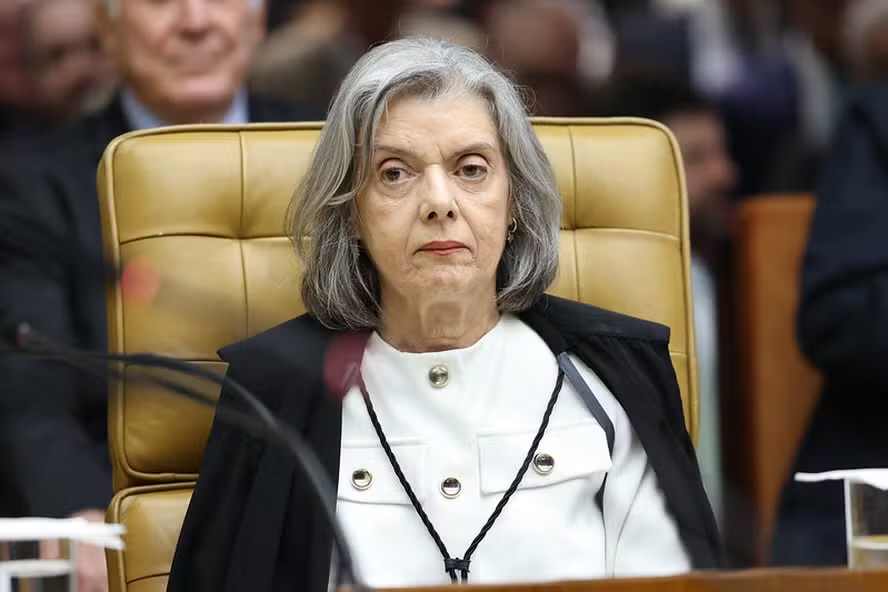
In a troubling echo of 2022, Brazil’s Supreme Federal Court (STF) minister Carmen Lúcia has signaled support for delaying or restricting another documentary critical of former President Jair Bolsonaro. This move comes just as Brazilians prepare for another pivotal election cycle, raising fresh alarms about judicial overreach and the selective silencing of conservative voices in Latin America’s largest democracy. What would be considered a blatant violation of the First Amendment and outright prior censorship in the United States is openly practiced by Brazil’s own Supreme Court. Freedom of speech is sacred, yet the STF has applied selective censorship against the Right’s videos and documentaries since 2022. It is increasingly obvious that these are partisan decisions designed to tilt the electoral playing field and undermine fair elections.
Back in 2022, amid the heated presidential race, Justice Lúcia voted to uphold a temporary ban imposed by the Superior Electoral Court (TSE) on a Brasil Paralelo documentary examining Bolsonaro’s record. She described the case as “extremely exceptional,” framing the censorship as a necessary safeguard for “electoral integrity” and voter rights. While she paid lip service to opposing general censorship, the practical effect was clear: a film unflattering to the establishment’s preferred narrative was sidelined until after the second round of voting. Bolsonaro, the populist leader who challenged the entrenched leftist machine, was denied a full platform to counter his critics through independent media.
Now, in 2026, history appears to be repeating itself. Petitions are circulating to delay yet another Bolsonaro-related production, and Lúcia’s past stance looms large. Conservatives see this not as neutral jurisprudence but as a pattern of ideological gatekeeping. When powerful institutions feel threatened by scrutiny—whether over pandemic policies, economic failures, or alleged corruption—they reach for the censorship button rather than trusting voters to weigh the evidence themselves.
This is the same judiciary that has spent years pursuing Bolsonaro and his supporters with lawfare tactics, while turning a blind eye to scandals plaguing the current regime. And it raises a broader, more disturbing question: Is the STF even respecting freedom of speech anymore?
Brazil’s 1988 Constitution explicitly protects freedom of expression and prohibits prior censorship. Yet under the STF—particularly through activist justices like Alexandre de Moraes—the court has expanded its powers in ways that amount to de facto prior restraint. Thousands of social media posts and accounts have been blocked, often with little transparency or swift appeal, disproportionately targeting right-leaning voices, journalists, and Bolsonaro allies. In June 2025, the STF weakened key internet protections, making platforms liable for user content in vague categories like “disinformation” or “hate speech,” pushing companies to over-censor to avoid punishment. The temporary suspension of X (formerly Twitter) in 2024, raids on private conversations, and extraterritorial orders targeting users abroad have only intensified the chilling effect.
Justice Lúcia’s record fits this selective pattern. She backed delaying the 2022 Bolsonaro documentary as an “exception,” but has shown flexibility when it suits other narratives. Speech challenging the establishment faces swift judicial hammers, while pro-government content sails through. This two-tiered justice isn’t protecting democracy—it’s curating it.
Defenders claim the STF is merely guarding against “threats” like election denialism or unrest. But that rationale has become a blank check for control. True democracy thrives on open debate, not black-robed arbiters deciding what voters can see or say. When courts prioritize “protecting” citizens from information over letting them judge it for themselves, they undermine the very republic they claim to defend.
Brazil’s conservatives and liberty-minded citizens recognize this for what it is: an attempt to tilt the electoral playing field. Jair Bolsonaro, despite relentless attacks from media, courts, and international pressure, remains a potent symbol of resistance against socialist overreach, inflation-fueled poverty, and cultural erosion. Efforts to muzzle documentaries about his tenure only amplify suspicions that the establishment fears the truth.
Free speech, once a hard-won cornerstone of Brazil’s post-dictatorship era, is being eroded by judicial fiat. Brazilian patriots must push back against this censorship before it becomes permanent. The right to watch, discuss, and judge films critical of any politician—left, right, or center—belongs to the people, not to ministers on the STF. Anything less is not protection; it is control.