


Brazil’s Sovereignty Under Siege: Lula Government’s Alarm Over U.S. Crackdown on Terrorist Criminal Gangs
By Hotspotnews
In a stark reminder of the escalating battle against transnational crime, Brazil’s Ministry of Foreign Affairs (Itamaraty) has issued a formal warning that highlights the profound risks to national sovereignty posed by aggressive American action against powerful criminal organizations. Signed by Foreign Minister Mauro Vieira, the document responds to inquiries from the Chamber of Deputies and explicitly cautions that the United States’ recent designation of Brazil’s notorious factions—the Primeiro Comando da Capital (PCC) and Comando Vermelho—as foreign terrorist organizations could open the door to direct U.S. military intervention on Brazilian soil, alongside expansive extraterritorial measures in finance, immigration, and law enforcement.
This development underscores a growing rift between a tough-on-crime United States under President Donald Trump and the left-leaning administration of President Luiz Inácio Lula da Silva. For conservatives who prioritize law and order, secure borders, and the unyielding defense of citizens against narco-terrorism, the contrast could not be clearer. While the Trump administration moves decisively to dismantle threats that transcend borders, the Lula government appears more preoccupied with abstract notions of sovereignty than with the brutal reality of gangs that have turned parts of Brazil into war zones.
The Menace of PCC and Comando Vermelho
The PCC and Comando Vermelho are not mere street gangs; they are sophisticated, heavily armed criminal empires with tentacles reaching across Latin America and into Europe, Africa, and beyond. Responsible for thousands of murders, widespread drug trafficking, prison riots, and attacks on civilians and security forces, these organizations operate with the ruthlessness of terrorist networks. They control lucrative cocaine routes, engage in money laundering on an industrial scale, and routinely challenge the state’s monopoly on violence. Their tactics—massacres, beheadings, and coordinated assaults—mirror those of groups like ISIS or Hezbollah, making the U.S. terrorist designation not only justified but long overdue.
Under President Trump, the United States has taken a firm stand, formally classifying these factions as foreign terrorist organizations. This move equips American authorities with powerful tools: asset freezes, enhanced surveillance, travel bans, and the potential for targeted operations against leaders and facilitators. Conservatives argue this reflects a realistic foreign policy that puts American interests—and by extension, hemispheric security—first. Transnational crime fuels fentanyl flows into the U.S., destabilizes allies, and erodes the rule of law. Ignoring it under the guise of “non-intervention” is a recipe for chaos.
Lula’s Opposition and the Itamaraty Warning
The Lula government has vocally opposed the U.S. designation from the outset. In the Itamaraty document, Minister Vieira lays out explicit concerns: such labeling could “justify” American military force within Brazil and enable unilateral actions that bypass Brazilian authorities. The warning draws uncomfortable parallels to past U.S. interventions in the region, including pressures applied in Venezuela, where criminal-political nexuses have long blurred the lines between governance and narco-state activities.
Critics on the right see this response as emblematic of ideological blindness. Rather than welcoming international pressure that could bolster Brazil’s own faltering anti-crime efforts, the administration frames robust action against terrorists as a threat to sovereignty. Brazilian prisons overflow with PCC and Comando Vermelho members who continue directing operations from behind bars. Major cities suffer under waves of violence, with innocent families caught in the crossfire. Yet the government’s priority, it seems, is shielding against hypothetical foreign boots on the ground while domestic criminals run rampant.
This stance risks portraying Brazil as a safe haven or unwilling partner in the global war on terror and organized crime. Sovereignty is a vital principle—rooted in self-determination and the protection of a nation’s territory and people—but it cannot serve as a shield for barbarism. True sovereignty demands the ability and will to control one’s borders, enforce laws, and neutralize threats. When a government fails or refuses to do so effectively, appeals to non-interference ring hollow to those suffering the consequences.
Dramatic Tensions and Public Reactions
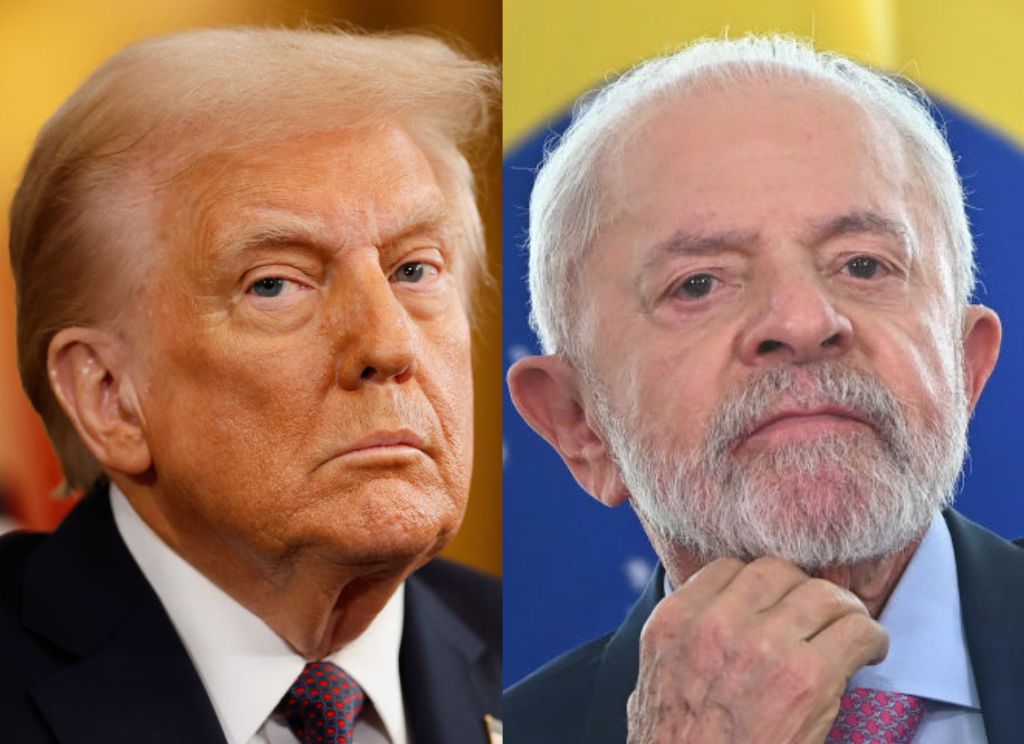
The story gains visual potency from images circulating in Brazilian discourse: President Lula addressing audiences with his characteristic rhetoric, juxtaposed against President Trump at his desk, signing orders or reviewing intelligence briefings. These visuals capture the ideological divide. Trump embodies a no-nonsense approach—America First, but with clear benefits for allies willing to confront shared enemies. Lula’s Brazil, by contrast, often aligns with globalist forums and leftist governments wary of U.S. power, even as criminality erodes the very nation they claim to protect.
Reactions within Brazil reflect deep divisions. Many citizens, exhausted by decades of violence and corruption scandals linking politicians to these gangs, express support for external pressure if it forces genuine reform. Conservative voices, military analysts, and law enforcement professionals argue that cooperation with the U.S.—intelligence sharing, joint financial tracking, and capacity-building—strengthens rather than weakens Brazil. Others, aligned with the current government, reject any perceived intervention outright, prioritizing anti-imperialist narratives over practical security gains.
A Conservative Perspective: Security Before Sentiment
From a conservative viewpoint, this episode reveals the perils of weak governance in an era of borderless threats. Criminal organizations like the PCC and Comando Vermelho thrive where states hesitate. Designating them as terrorists is a logical evolution of policy, akin to treating cartels in Mexico or jihadist networks elsewhere as the hybrid threats they are. Financial sanctions can starve their operations; law enforcement coordination can dismantle networks; and, in extremis, targeted actions deter escalation.
Brazil faces a choice: double down on defensive sovereignty that tolerates internal collapse, or pursue assertive partnerships that restore order. Conservatives emphasize that genuine national strength comes from defeating enemies within—corrupt officials, complicit elites, and violent gangs—rather than railing against potential allies. The United States, under Trump, has signaled readiness to confront these challenges head-on. Brazil’s long-term interests, and those of its people, would be better served by matching that resolve instead of issuing warnings that embolden criminals.
The Itamaraty document serves as a wake-up call. The fight against these terrorist factions will not wait for perfect diplomatic consensus. Brazil must lead in securing its sovereignty through strength, or risk ceding ground to those who would exploit its vulnerabilities. Law-abiding Brazilians, and indeed the hemisphere, deserve nothing less.