

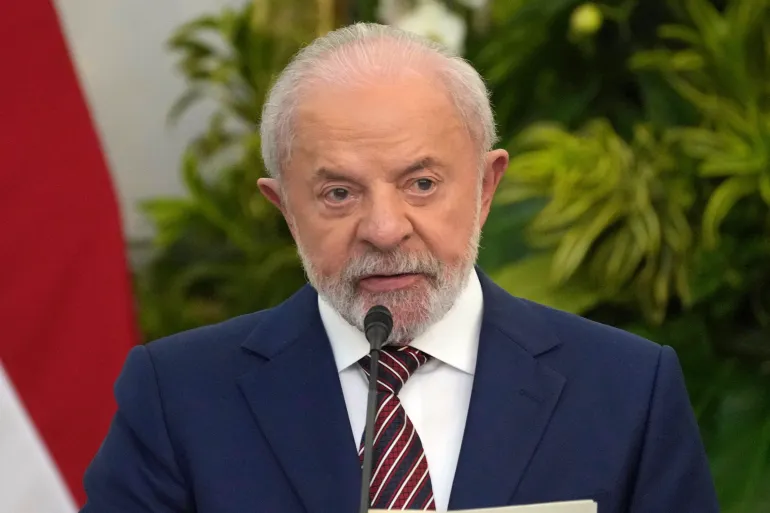

URGENT: Lula’s Radical Pivot – PT Declares War on Brazil’s Economic Stability Ahead of 2026 Elections
By Hotspotorlando News Editorial Team – February 9, 2026
In a shocking turn that threatens the very foundations of Brazil’s fragile economic recovery, President Luiz Inácio Lula da Silva and his Workers’ Party (PT) have officially abandoned the facade of moderation that propelled them back to power in 2022.
At a recent party gathering in Salvador to mark the PT’s anniversary, the party approved a resolution that lays bare their true intentions: a full-throated embrace of big-government spending, attacks on institutional independence, and unwavering support for socialist regimes abroad. This isn’t just a policy tweak—it’s a declaration of war on fiscal responsibility, free markets, and the Brazilian people who trusted Lula’s promises of unity and prudence.
Gone is the “Lulinha paz e amor” (peace and love) persona that Lula peddled during his campaign, where he vowed to respect institutions, foster dialogue with the business sector, and maintain a balanced approach to governance. Instead, as Lula himself proclaimed at the event, there’s “no more peace and love”—only confrontation. The PT’s resolution, dated February 6, 2026, outlines a re-election strategy centered on exploding public expenditures, dismissing fiscal frameworks as mere “obstacles,” and undermining the autonomy of the Central Bank (Banco Central). This is nothing short of a recipe for disaster, harkening back to the failed socialist experiments that plunged Brazil into recession during previous PT administrations.
Economically, the shift is alarming. The resolution prioritizes massive state-led stimulus over sustainable growth, labeling the Central Bank’s independence—a hard-won reform under previous conservative leadership—as a “blockade” to their agenda. By pushing for artificially low interest rates and looser inflation targets, Lula’s PT risks reigniting hyperinflation, devaluing the real, and scaring away investors who have only just begun to return. Conservative economists have long warned that such interventionist policies erode market confidence and burden future generations with unsustainable debt. This isn’t progress; it’s a retrograde march toward the economic populism that bankrupted nations like Venezuela—ironically, one of the regimes the PT now defends without reservation.
On the institutional front, the PT’s rhetoric frames the Central Bank and fiscal rules as enemies of the “elected project,” implying that democratic checks and balances are dispensable when they inconvenience leftist ambitions. This assault on independence echoes the authoritarian tendencies we’ve seen in other left-wing governments, where power consolidation trumps the rule of law. Brazilians who voted for Lula expecting a unifier are now witnessing a divider-in-chief, ready to polarize the nation for electoral gain.
Foreign policy takes an equally dangerous turn. The resolution offers blanket support for the dictatorships in Venezuela and Cuba, condemning any international “interference” (read: accountability) as imperialistic. This not only alienates Brazil’s key allies in the West but also signals a return to the ideological alliances that isolated the country under past PT rule. At a time when global threats demand strong, principled leadership, Lula’s pivot weakens Brazil’s standing and emboldens anti-democratic forces in the region.
This urgent development should serve as a wake-up call to conservatives, moderates, and all Brazilians who value prosperity and freedom. Lula’s betrayal of his campaign promises risks undoing years of progress toward a stable, market-oriented economy. As the 2026 elections loom, the opposition must rally to expose this radical agenda and offer a vision of fiscal discipline, institutional integrity, and true national unity. The stakes couldn’t be higher—Brazil’s future hangs in the balance. Stay vigilant, and demand better from your leaders.