

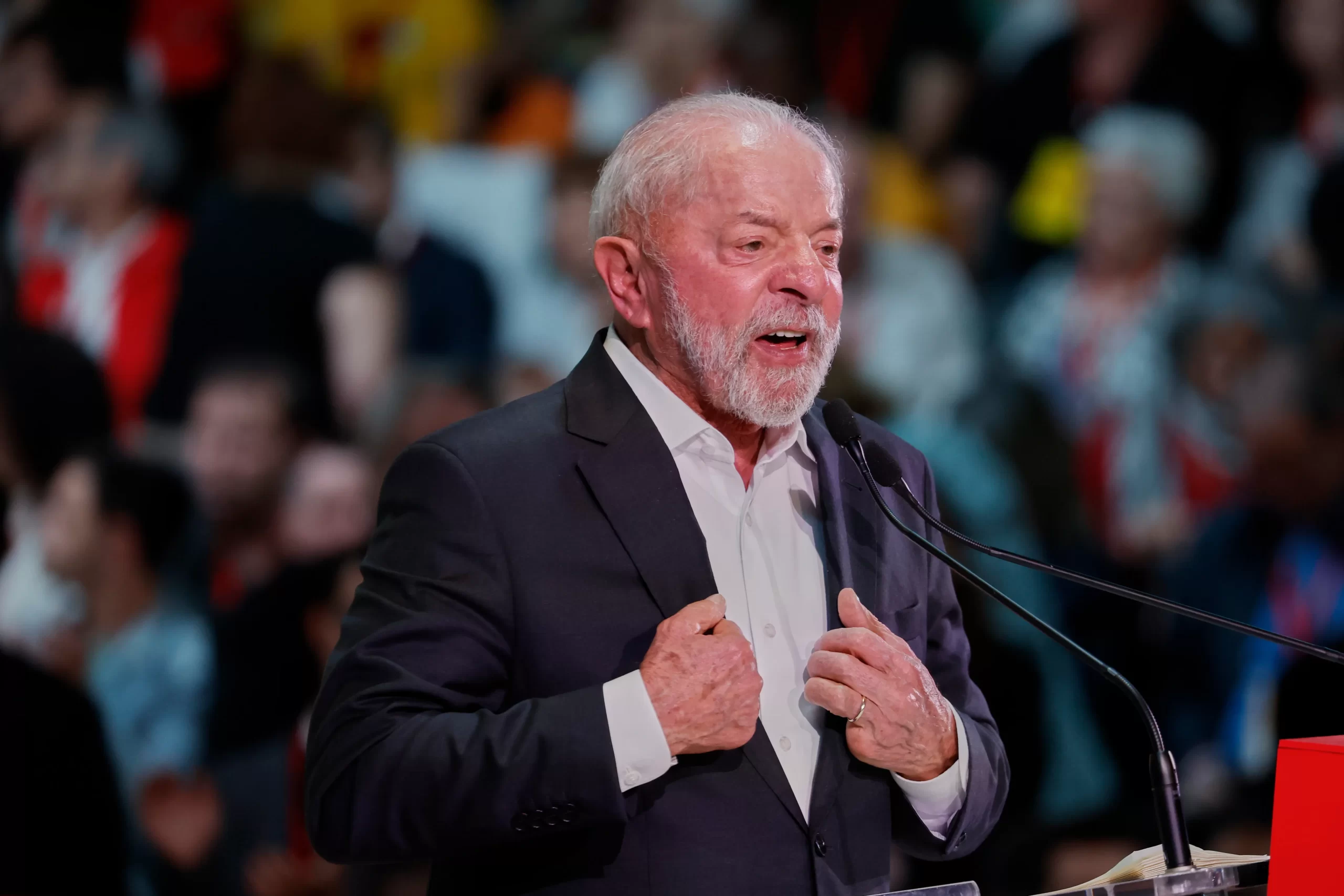

Lula’s Digital Militia: The PT’s Coordinated Assault on Free Speech
By Hotspotnews
- In a move that reeks of authoritarian coordination, Brazil’s Workers’ Party (PT) has officially launched “Porta-Vozes do Lula” — a national network of trained digital foot soldiers tasked with defending President Lula, pushing government narratives, and battling perceived enemies on social media. Far from a spontaneous grassroots effort, this is a top-down operation complete with workshops, daily “missions,” rankings for engagement, and scripted content to “combat fake news” while amplifying the regime’s version of reality.
- This isn’t organic advocacy. It’s organized propaganda. Party leaders, ministers, and allies from satellite groups gathered in Brasília for the launch, clapping as they trained militants, influencers, and supporters to flood WhatsApp groups, X, Instagram, and beyond with unified messaging. Participants receive pre-packaged “truths” about government achievements, instructions on how to dispute opposition voices, and incentives to climb leaderboards. Lula’s own granddaughter has been roped into the training sessions. The goal? Dominate the digital battlefield ahead of the 2026 elections and neutralize conservative voices.
- The Hypocrisy of “Digital Militias”
For years, the left and mainstream media have hysterically labeled any organized online support for Jair Bolsonaro or conservative causes as “milícias digitais” — dangerous digital militias threatening democracy. They’ve demanded investigations, censorship, and deplatforming, painting right-leaning Brazilians as a threat to the republic. Yet here we have the ruling party openly building exactly that: a centralized apparatus for narrative control, funded in part by the public purse.
The PT has long mastered these tactics. Their projects have been laying the groundwork for coordinated influencer networks. Now it’s scaled up into a full “Porta-Vozes” machine. When conservatives do it, it’s an existential danger. When the PT does it from the halls of power, it’s “defending democracy.” This double standard exposes the selective outrage that defines Brazilian leftism.
Who Foots the Bill?
Brazilian taxpayers, naturally. The PT draws heavily from public money distributed to parties based on electoral performance, plus resources from party-linked foundations that also benefit from state allocations. You have a government-adjacent machine using citizen funds to propagandize citizens. While everyday Brazilians struggle with inflation, crime, and economic headaches, their tax dollars help bankroll an army of online defenders to tell them how great everything is.
This isn’t neutral political organizing. It’s pre-election mobilization dressed up as civic duty, complete with calls to “occupy the networks” and defeat the “extreme right.” The language is revealing: unify narratives, share “truth” (as defined by the Planalto), and counter dissent. In practice, it means flooding platforms with attacks on critics while shielding the administration from scrutiny over scandals, policy failures, and broken promises.
A Warning for Brazilian Democracy
True democracy thrives on open debate, not state-adjacent echo chambers. When a ruling party trains thousands to act as synchronized voices — complete with missions and metrics — it chills free expression. Independent voices, especially conservative ones, face algorithmic suppression, coordinated reporting, and smears as “disinformation.” Meanwhile, the official militia gets a pass.
Brazilians deserve better than this managed consensus. Conservatives have long warned that power concentrated in Brasília, paired with ideological control of information flows, leads to exactly this: a government that doesn’t just govern but scripts the conversation about its governance. The Porta-Vozes program is less about “spreading truth” and more about maintaining control in an era when citizens are increasingly skeptical of official stories.
As the 2026 campaign heats up, expect more of this. The PT isn’t hiding it — they’re celebrating it. The question for every Brazilian is whether they’ll accept a digital one-party state or demand genuine pluralism where all voices compete freely, without taxpayer-backed battalions tilting the scales. Freedom of speech isn’t a luxury; it’s the foundation. The left’s selective defense of it should alarm anyone who values liberty over loyalty.