



The Price of Solidarity: How Lula Used BNDES Credit to Underwrite Allied Regimes
By Hotspotnews
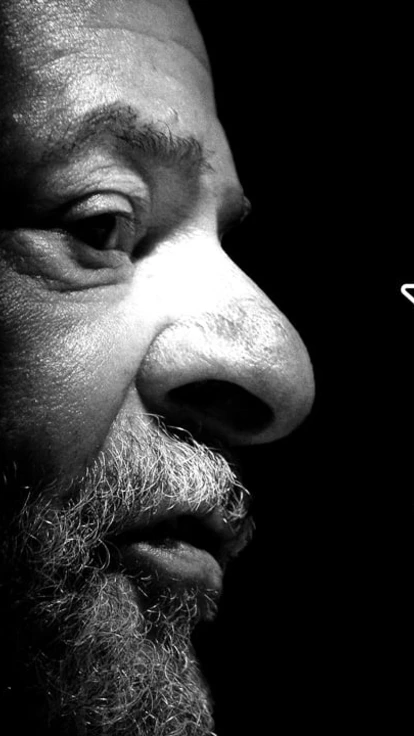 Lula has accumulated a Historical influence over the Socialist and Communist countries with Dictatorial principles .
He converts the votes of the poor—secured through government social programs—into political capital for a larger project: pulling Brazil toward socialism while using the same public purse to underwrite like-minded governments abroad. The central abuse is this: hard-earned taxpayer money is recycled into a vicious cycle. Social spending buys domestic loyalty; BNDES credit then helps sustain and elect socialist administrations elsewhere. Brazilians now have a duty to break that cycle and refuse to pay, ever again, for other people’s suffering, corruption, and failed experiments.
For more than a decade, Workers’ Party governments treated BNDES as more than a development bank. They used it as a foreign-policy weapon. Under the language of South-South cooperation, the bank financed Brazilian contractors to build metros, ports, pipelines, highways, and steel mills for governments that shared the PT’s ideological map. The cash was paid in Brazil, in reais. The political benefit accrued abroad. When the “partners” stopped paying, the risk did not stay with BNDES. It was shifted, through the Export Guarantee Fund, onto the Union—and therefore onto the Brazilian taxpayer.
That is the core of the conservative case. It is not that export credit is illegitimate in principle. It is that this particular program was concentrated in time, in firms, and in regimes in a way that looks less like commercial diplomacy and more like subsidized solidarity.
The Timing Gives the Game Away
The engineering-export window was created in 1998, under Fernando Henrique Cardoso. The flood came later. Of roughly US$10.5 billion disbursed for these operations, 88 percent left the bank between 2007 and 2015—Lula’s second term and Dilma Rousseff’s presidency. That is not a coincidence of market demand. It is the period in which Brasília most aggressively promoted “national champions” and a Latin American left bloc.
Five contractors took 98 percent of the money. Odebrecht alone absorbed 76 percent. Andrade Gutierrez took 14 percent. These were the same companies later shown by Lava Jato to have run a continental bribery machine. The projects BNDES financed were not a separate, clean universe. They were often the same works through which slush funds moved to foreign officials and, in some cases, back into Brazilian politics. A serious conservative analysis does not treat the credit line and the corruption as unrelated accidents. It treats them as a single political economy: public credit, private capture, and ideological alignment reinforcing one another.
The Map Was Ideological, Not Commercial
Six countries received 89 percent of the disbursements: Angola (US$3.273 billion), Argentina (US$2.006 billion), Venezuela (US$1.507 billion), the Dominican Republic (US$1.215 billion), Ecuador (US$685 million), and Cuba (US$656 million).
Angola under José Eduardo dos Santos received dozens of roads, airports, water systems, housing tracts, and the Laúca hydroelectric complex. Venezuela under Chávez and Maduro received metro lines in Caracas and Los Teques, the National Steel Mill, and the Astialba shipyard. Cuba received the Port of Mariel on a 25-year tenor—the longest in the program—with cigar export revenues offered as collateral. Argentina under the Kirchners received major gas-pipeline expansions.
A credit officer maximizing recovery would not have clustered this much long-term exposure in petro-states, one-party systems, and serial defaulters. A political officer building a friendly periphery would. Camex and the Planalto approved the largest operations. BNDES technicians did not invent the destination list in a vacuum.
The Soft Terms Were the Subsidy
The conservative critique is not only “who got the money.” It is how cheap and how long the money was.
Cuba’s Mariel financing stretched to 25 years. Venezuela received some of the lowest rates in the portfolio. Collateral was often weak by private-bank standards. The TCU later found that, on a sample of overseas road projects from 2006 to 2013, BNDES disbursed about twice what the exported Brazilian content justified. Excess credit leaked into local works that the program was not supposed to finance. That is not export promotion. That is over-lending dressed up as industrial policy.
Private lenders price dictatorship risk, sanctions risk, and expropriation risk. BNDES, directed by a government that called these regimes “friends,” underpriced them. The difference between a commercial spread and a political spread is a hidden transfer from Brazilian savers and taxpayers to foreign governments and to the contractors who built for them.
Venezuela and Cuba: The Bill That Never Comes Due
Venezuela stopped paying in January 2018. BNDES figures as of 30 September 2025 show US$813 million already indemnified by the FGE for Venezuelan operations. Finance Ministry data reported in early 2026 put the total Venezuelan debt to Brazil, including late interest, near US$1.856 billion—more than R$10 billion. There is no credible repayment plan. Formal collection efforts have been ignored.
Cuba is not better. Of US$656 million disbursed, hundreds of millions have already been covered by the FGE, with hundreds of millions still outstanding. Havana has admitted the debt and said it cannot pay. The TCU called the cigar-revenue guarantee fragile. Lula’s public line—that friends would settle because they are friends—has been tested for years. Friendship did not produce dollars.
Mozambique added another default. The losses are concentrated, not random. They sit in the same political neighborhood the PT spent two decades cultivating.
The FGE Trick: “The Bank Didn’t Lose”
Officials repeat that BNDES itself was made whole. That sentence is designed to end the argument. It should start it.
When a foreign government defaults, export-credit insurance and the FGE pay the bank. The Union then owns the claim. BNDES’s balance sheet looks clean. The public sector’s does not. The FGE is not a private insurer charging a market premium. It is a state backstop. Using it to socialize losses on politically chosen counterparties is the definition of moral hazard. Contractors collected in reais. Allied governments delayed or defaulted in dollars. The residual risk stayed in Brasília.
Across the whole portfolio, cash returned—including FGE payouts from performing countries—exceeded cash disbursed. Angola and Argentina paid. That fact is used as a shield. It should not be. A portfolio can be “profitable” in accounting terms while still being a bad use of scarce public risk capacity if the defaults are large, expected, and ideologically clustered. Profit on the good names does not justify underwriting the bad ones at concessional terms.
Opportunity Cost Is the Missing Line in Every PT Defense
Every real of long-term public credit committed to a Caracas metro or a Cuban port was a real not available, at the margin, for sanitation, logistics, or industry inside Brazil. The Northeast—the region the original viral post invoked—has spent decades with worse infrastructure, lower private credit, and higher poverty than the Southeast. BNDES regional data have long shown the Southeast absorbing the largest share of total disbursements because that is where the industrial base sits. That makes the foreign program even harder to defend in political terms: a Northeastern-born president championed cheap, long credit for Havana and Caracas while the domestic regional gap remained a campaign speech rather than a binding constraint on the bank’s overseas appetite.
The PT answer is that these were export operations that employed Brazilians. Some did. The question is whether the same employment could have been generated by projects whose sovereign risk sat in Brazilian states rather than in insolvent ideologically aligned capitals. Conservatives do not have to deny that contractors hired workers. They have to insist that public banks exist to ration scarce long-term capital, not to run a friendship ledger.
Lava Jato Makes the Innocence Story Untenable
Odebrecht’s guilty pleas and the Car Wash record showed bribes paid around the same overseas works that BNDES was financing. The “we only paid Brazilian companies for Brazilian services” line treats the contractor as a black box. Inside that box were slush funds, offshore accounts, and payments to foreign decision-makers who awarded the jobs. Public credit lowered the cost of those jobs. It also made the Brazilian state a silent partner in a business model that mixed construction, diplomacy, and corruption.
After Lava Jato, BNDES froze billions in planned disbursements and demanded compliance terms. That freeze is an admission. If the pipeline had been clean technical lending, it would not have required a political and prosecutorial emergency brake.
Argentina 2023: The Method Without the Old Window
When the old BNDES engineering line was shut, the method migrated. In August 2023 Lula pushed CAF, where Brazil is the largest shareholder, to approve a US$1 billion bridge loan so Argentina could clear an IMF hurdle weeks before a presidential election. The beneficiary of the breathing room was Sergio Massa, the Peronist candidate. Brazilian campaign operatives from Lula’s own 2022 race were sent to help. The loan was repaid. The intent was not commercial neutrality. It was an attempt to keep a friendly government in Buenos Aires.
That episode matters because it shows the continuity. When one tap is closed, another multilateral tap is opened. The constant is the willingness to use Brazilian financial weight to protect allied left governments.
The 2026 Relapse
In 2026 the Lula government sanctioned a law reopening engineering-export finance even while Venezuela and Cuba remain in default and while FGE money is still covering old installments. The official pitch is competitiveness and jobs after a period of commercial retreat. The conservative reading is institutional amnesia. A state that has not collected from Maduro or Havana is volunteering to underwrite the next round of politically convenient works. That is not prudence. It is the return of the same reflex: ideology first, credit analysis second, taxpayer residual last.
What a Serious Country Would Have Done
A conservative standard is simple. Export credit should be available on transparent, priced terms to any solvent buyer. It should not be concentrated in a club of allied regimes. Tenors and collateral should look like those a private bank would accept, or the subsidy should be voted in Congress as foreign aid—so voters can see it. Defaults should halt new exposure to the same sovereign until arrears are cured. Contractors caught in bribery schemes should be locked out, not recycled. Regional development at home should outrank monumental projects for dictatorships.
PT governments inverted that order. They called it solidarity. The invoice is still open in Caracas and Havana, compounding in a public fund Brazilians did not vote to turn into a collection agency for failed experiments in 21st-century socialism.
Sources: BNDES transparency tables on engineering-service export operations, position 30 September 2025; BNDES official notes on the Exim Pós-Embarque program; Ministry of Finance figures on Venezuelan arrears reported by CNN Brasil; TCU audit of overseas road financing, 2006–2013; IPEA Discussion Paper 2297; Estadão reporting on the 2023 CAF operation and Lula’s intervention with the Planning Ministry; Gazeta do Povo reconstructions of Camex approvals, project lists, and Cuban collateral; contemporaneous Lava Jato case records on Odebrecht’s overseas payments.
#BNDES #Lula #FGE #Venezuela #Cuba #Odebrecht #LavaJato #DinheiroPublico #PoliticaExterna #ContribuinteBrasileiro #Calote #ForoDeSaoPaulo #NordesteEsquecido