

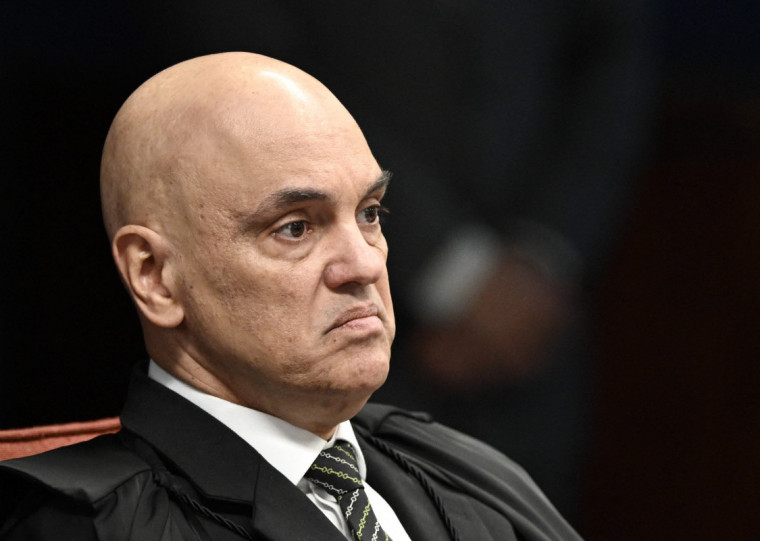

When Justice Meets Private Millions: The Moraes Family Contracts and a Convicted Company
By Hotspotnews
Brazilians have a right to expect that the highest court in the land remains above suspicion. That expectation is strained by the growing record around Supreme Court Justice Alexandre de Moraes, his wife’s law firm, and banker Daniel Vorcaro.
Federal Police reports and contemporaneous messages describe a first contract between Banco Master and the Barci de Moraes office, led by Viviane Barci de Moraes. The agreement contemplated roughly R$131 million over three years for legal and strategic consulting. Public tax data later showed the office received about R$80 million before the bank was liquidated. Metadata on a draft of that contract listed a user identified as “Ministro Alexandre de Moraes” as the last person to edit it. The firm says the justice was asked only whether any legal impediment existed and that none did, because he had never judged a Master case.
A second arrangement then surfaced. Police recovered minutes and messages about a R$50 million deal dated May 2025 between the same office and Viking Participações, a Vorcaro holding company. Part of the payment was structured as shares in two special-purpose companies that owned or were acquiring a Legacy 650 jet and an Airbus helicopter. The law firm states that this second contract was never signed and that the original Master relationship ended with the bank’s liquidation. Investigators, however, found invoices, payment discussions, and references to use of the aircraft.
Days later came another fact that should trouble anyone who cares about public integrity. Brazil’s securities regulator, the CVM, convicted Viking Participações of acting as a pass-through vehicle in a fraudulent real-estate fund issuance sold to pension funds. The company was fined R$10 million; Vorcaro was fined R$20 million in the same proceeding.
A conservative view of institutions starts with a simple rule: power and private fortune should not mix so easily. When a sitting justice’s household stands to receive tens of millions from a banker whose companies later face fraud findings, the appearance of conflict is not a partisan talking point. It is a threat to the legitimacy of the Court. Citizens who must obey rulings on speech, elections, and investigations are entitled to know that those rulings are not shadowed by family business with the same circle of financiers.
Defenders will say no case involving Master ever sat on Moraes’s docket and that lawyers are free to take clients. That is formally true and practically insufficient. High office carries a higher duty. Editing a family contract, discussing aircraft as payment, and maintaining close contact with a banker under investigation all erode the distance that judicial independence requires. Pension funds that bought the inflated paper were not abstract entities; they held the retirement savings of ordinary workers.
Accountability here is not revenge. It is the minimum price of a functioning republic. Courts that police everyone else must themselves be subject to sunlight. If the second contract was only a draft, the public still deserves a complete accounting of who used the planes, who issued the invoices, and why a company later condemned for fraud was the chosen vehicle. Until those questions receive answers that match the scale of the sums involved, trust in the institution will keep leaking.
#RuleOfLaw #JudicialAccountability #Brazil #STF #Transparency #PublicTrust
Sources: Federal Police reports unsealed in September 2026; CVM collegiate decision of September 8, 2026; contemporaneous coverage and documents published by O Globo (Malu Gaspar), G1, Estadão, CNN Brasil, Folha de S.Paulo, Valor Econômico, and Gazeta do Povo.