


When the Court Refuses to Finish the Fight
By Hotspotnews
Brazil’s Supreme Court did not resolve the Banco Master crisis on September 15. It staged it, interrupted it, and then parked it. What remains is not a legal mystery so much as a political one: a president of the Court who would not confront a bloc inside his own building, a 90-day pause that runs straight through a presidential election, and a country that is now being asked to settle in October what eleven justices would not settle in one afternoon.
The session was supposed to decide a preliminary question with enormous downstream effects: whether the petition built on Police Federal material about Alexandre de Moraes and banker Daniel Vorcaro would travel alone, or be glued to the parallel attack on André Mendonça’s conduct as rapporteur. Keep them separate and Fachin keeps the docket. Join them and the Moraes-aligned ministers gain time, a new frame, and a chance to put Mendonça—and by extension the president who accepted the file—on the defendants’ bench. That inversion was already the headline in O Globo before the votes were counted.
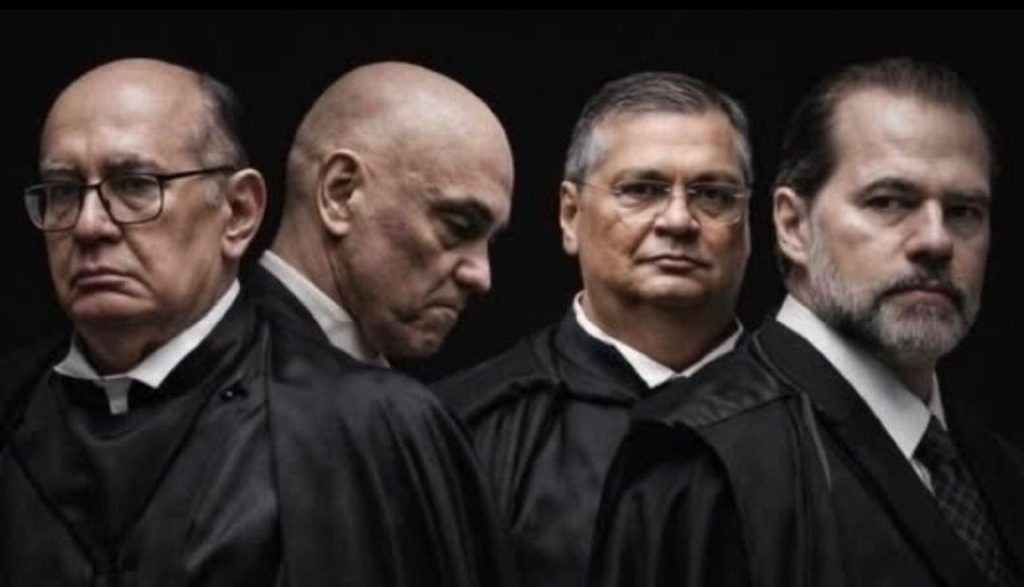
The incomplete tally told the story. Fachin, Mendonça, Luiz Fux and Cármen Lúcia voted to keep the cases apart. Gilmar Mendes, Cristiano Zanin and Moraes voted to join them. Flávio Dino spoke as if he belonged with the second group, then converted the speech into a request for vista. Under the Court’s practice, a vista taken before proclamation suspends the judgment. Votes already uttered are not carved in stone. The file can sit for up to 90 days. The political calendar does the rest.
That is the session dynamic that matters. It was not a quiet legal disagreement. It was a contest over who controls the question. Gilmar presented the joinder as a matter of coherence and risk of contradictory rulings. Moraes used the floor to deny that any investigation against him even existed. Dino attacked the presidency’s conduct as disastrous and then took the papers home. Mendonça and Fux answered that the factual bases were not the same. Cármen Lúcia, in the vote that completed the 4–3 for separation, sounded less like a factional recruit than an institutionalist in distress. She spoke of civic malaise, of a Court that had made the country uneasy twenty days before an election, and of deference to the rapporteur. Her alignment is real for now and explicitly provisional. When the file returns she can hold, switch, or attach conditions.
The presidency of the Court is not a ceremonial chair. Fachin can demand the stenographic notes. He can treat questions of order as his to organize. Article 13 of the internal rules gives him a quality vote when a tie is produced by impediment or suspicion. Ludmila Lins Grilo, writing from exile the same night, laid out a five-step path: lock Dino’s spoken position as a completed vote, set Moraes aside as an interested party or break the tie from the chair, and issue a clarifying order that the next session has one object only—whether to authorize a criminal investigation of Moraes. Parts of that script are ordinary tools of the presidency. The aggressive parts are not. A vista before proclamation is designed to allow further study and possible revision. Retroactively voiding a colleague’s vote after the room has emptied is a power play that would itself become the next fight. The useful distinction is the one the session already revealed: Fachin still holds the docket; he chose not to use it as a weapon in real time.
Why? Fear is a plausible answer, not a proven one. The bloc across the table has three firm votes, the loudest tactics, and now custody of the file. They have shown they will reframe the question, interrupt the chair, and turn the rapporteur into the accused. A president who wants a quiet close to his term, or who understands that any precedent about investigating sitting justices will outlive this particular scandal, has reason to avoid an open rupture. Institutional self-preservation and simple conflict-avoidance explain the same conduct. From outside the building it is impossible to separate the motives. The record of the sitting only shows the choice: politeness over proclamation.
History makes the skepticism sharper. In 2021 Fachin, as rapporteur, annulled Luiz Inácio Lula da Silva’s Lava Jato convictions on competence grounds. The plenary later confirmed the decision. Lula’s eligibility returned as a direct consequence. That is not a theory about hidden loyalty; it is a public act that still frames how large parts of the country read the man in the chair. Combined with a style that colleagues and critics alike described as excessively courteous, it feeds the conclusion that he will keep the file moving in form—notes, a later date, a clarifying paragraph—without picking the fight that would force the Court to finish.
The legal ceiling is lower than the political temperature. Sitting justices are not easily arrested. Common crimes stay inside the Court. Crimes of responsibility go to the Senate, where removal requires two-thirds and produces loss of office plus eight years of ineligibility, not automatic jail. Flagrante arrest is limited to unbailable crimes and still needs judicial authorization. No modern sitting STF minister has been taken into custody. The present dispute is still upstream of all that. It is about whether investigations open at all, who reports them, and whether two files travel together. Calling the episode a “return to the crime scene” is a political metaphor for a Court using against its own members the same machinery of inquiries, docket control and public accusation that it has used in other high-stakes cases. The machinery is real. The destination is not yet a prison van.
What the delay does is move the cost. Ninety days from mid-September lands in mid-December. The first round of the 2026 election is October 4; any runoff is October 25. A new president takes office in January 2027. The vista therefore covers the campaign, the vote, and the immediate aftermath. If the political camp associated with the delaying bloc prevails, time is an asset. If Flávio Bolsonaro prevails, time becomes a trap. His campaign has already folded the session into a single sentence: a vote for Lula is a vote for Moraes. After internal tracking showed a large second-round advantage, the same campaign began asking voters of other right-of-center names to treat Flávio as the first-round voto útil. The Court did not create that strategy. It supplied the timing and the symbol.
That is the transfer the session accomplished. The justices left an incomplete 4–3, a file in Dino’s hands, and a president who would not convert procedural power into a finished result. Brazilians who believe the public is “stronger than before” are not waiting for Fachin to discover a harder voice. They are being invited to treat the October ballot as the remaining forum. Courts can delay. They cannot, in this configuration, hide the delay. The 90 days are now part of the campaign. The campaign is now part of the case.
None of this requires a cartoon of villains and heroes. Cármen Lúcia’s apology to the country was the most honest sentence spoken in the room: the Court produced civic unease and then failed to dispel it. Fachin’s caution may be temperament, calculation, or both. The Moraes group’s tactics may be self-defense, delay, or both. The public does not need a final psychological diagnosis. It needs to see the structure. A Court that will not finish a fight about one of its own members has handed the unfinished fight to an election. That is not a theory about what Fachin fears. It is a description of what he allowed.
When Dino returns the file, the legal questions will still be there: joinder or separation, impediment or not, investigation or archive. They will not return to the same country. The votes that matter next are not only the ones in the black robes. They are the ones cast while the robes are waiting. The session of September 15 did not decide the Master case. It decided that politics would have to.