

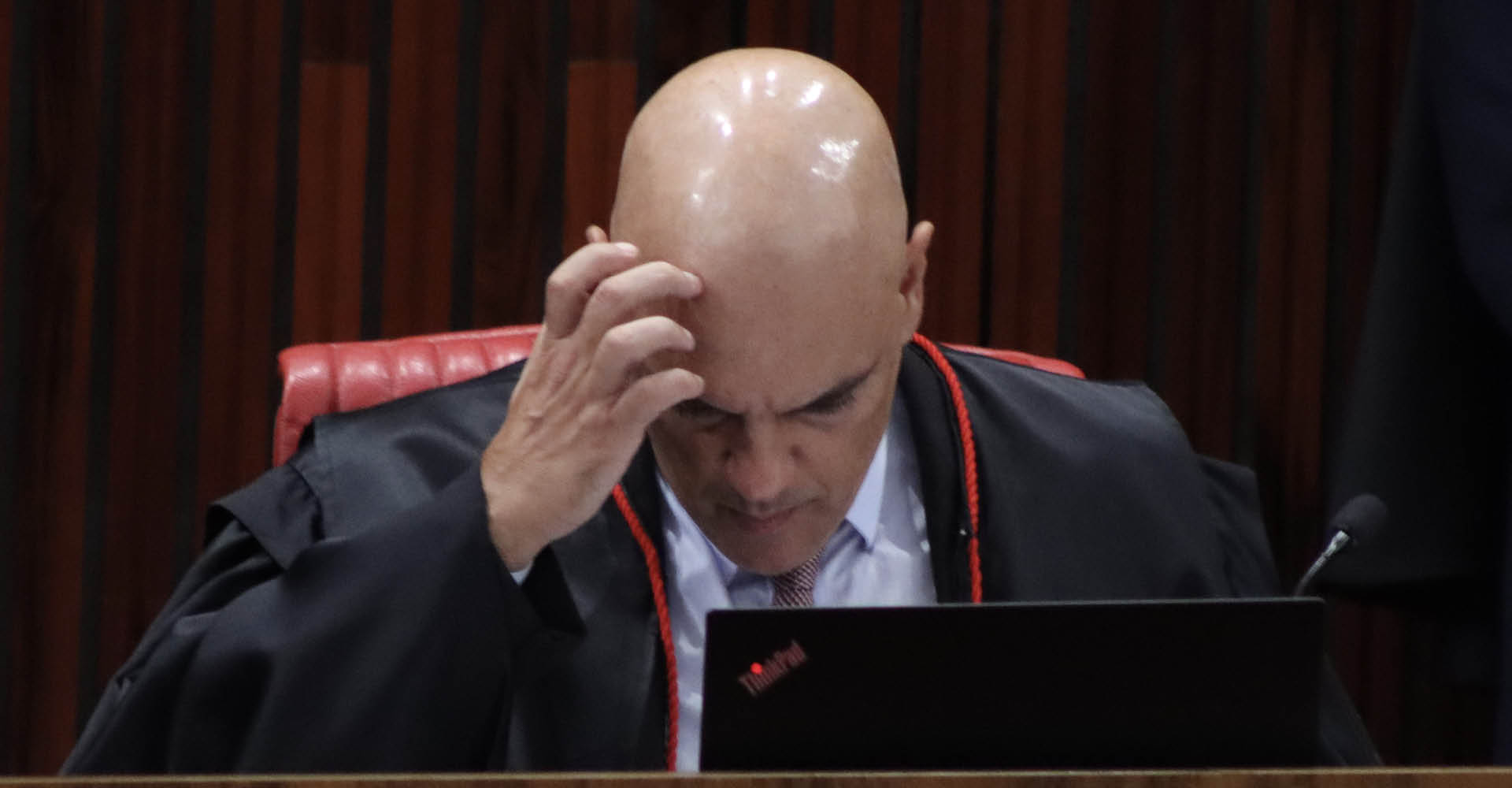

ALEXANDRE DE Moraes: The People’s Sentence Is Much Harder By Hotspotnews
Alexandre de Moraes has spent years issuing rulings, restrictions, and inquiries that have constrained Jair Bolsonaro and anyone close to him. He has limited communications, barred visits between father and son, and created legal traps around letters and AI-generated videos meant to keep a silenced voice present in the public square. Each step has been justified as enforcement of the law, protection of institutions, or defense of democracy. Yet the cumulative effect is something else entirely: a visible demonstration of power that large parts of the Brazilian public now experience as personal, excessive, and disconnected from ordinary moral sense.
The latest episode follows a familiar pattern. First the letter that Flávio Bolsonaro publicized. Then the AI video at the convention that launched his candidacy. In both cases the intent was transparent—to honor a father whose political rights have been suspended and whose image remains the strongest asset of the movement he built. Filial duty is not a loophole; in a culture that still understands the commandment to honor father and mother, it is a basic human obligation. When courts treat that obligation as a threat to be managed and punished, they do not merely apply rules. They open a wound.
Moraes has answered each act of continuity with tighter restrictions and sharper dilemmas. The result is predictable. A significant share of Brazilians looks at the spectacle of a son prevented from visiting his father, or forced into legal contortions simply to keep a family political legacy alive, and feels aversion. Polling on the visit ban already showed majority disapproval. That sentiment does not require sophisticated legal analysis. It is the instinctive reaction of people who still believe family loyalty and political inheritance are not crimes.
This is where the deeper sentence is being written. Moraes may hold formal authority inside the judiciary. He can issue orders, demand explanations within 48 hours, and signal consequences that reach from house arrest conditions to electoral risks. But authority without perceived legitimacy is brittle. When a large portion of the public concludes that power is being exercised to diminish a name, to erase a political current, and to punish defiance rather than simply uphold neutral rules, the judgment that follows is harsher than any prison term. It is the slow, stubborn withdrawal of respect. It is the transfer of emotional and political loyalty toward the very legacy the restrictions aim to contain.
Critics of Moraes have long argued that vanity and an inflated sense of mission have shaped the style of enforcement—swift, expansive, and highly personalized. Whether one accepts that diagnosis or not, the practical outcome is clear. Each doubling down supplies fresh evidence for those who already see overreach. Each new restriction generates empathy for the restricted and hardens the conviction that the real contest is no longer only legal but moral. People begin to measure the court less by its formal powers and more by the distance between its decisions and their own sense of justice, family, and popular will.
Flávio Bolsonaro’s candidacy illustrates the paradox. The attempts to keep his father’s presence alive have invited institutional pressure. That pressure, in turn, has reinforced the narrative of resistance and continuity that his base values. The more the machinery of restriction is displayed, the more some voters experience the campaign as a defense of something larger than one man’s legal status. Empathy becomes political energy. The legacy that was supposed to be managed or diminished becomes a rallying point precisely because it is under sustained attack.
None of this means the law is optional. Convictions exist. Restrictions were imposed. Courts have the duty to enforce them. But law that repeatedly collides with deep cultural attachments to family and with the political identity of millions eventually pays a legitimacy cost. When citizens start to feel that power is being used to prove it can be used, rather than to serve a shared constitutional order, they do not simply submit. They keep the ledger in their own way.
The sentence being written by a substantial part of the public is not delivered in a courtroom. It appears in the stubborn refusal to grant moral authority, in the preference for legacy over the latest order, and in the quiet certainty that no concentration of judicial power is permanent. Power that loses the ability to persuade eventually confronts the limits of coercion. Whether that reckoning arrives through political change, institutional correction, or the longer judgment of history remains to be seen. What is already visible is the gap: the more forcefully the restrictions are applied, the more clearly many Brazilians record their dissent.
Moraes and the institutions around him would do well to notice that gap. Authority that must continually demonstrate its strength often reveals its fragility. The people’s judgment, once formed, is slower to lift than any formal ruling, and in the end it is the one that endures.