


Fachin’s Institutional Sermon Cannot Hide the STF’s Rot
By Hotspotnews
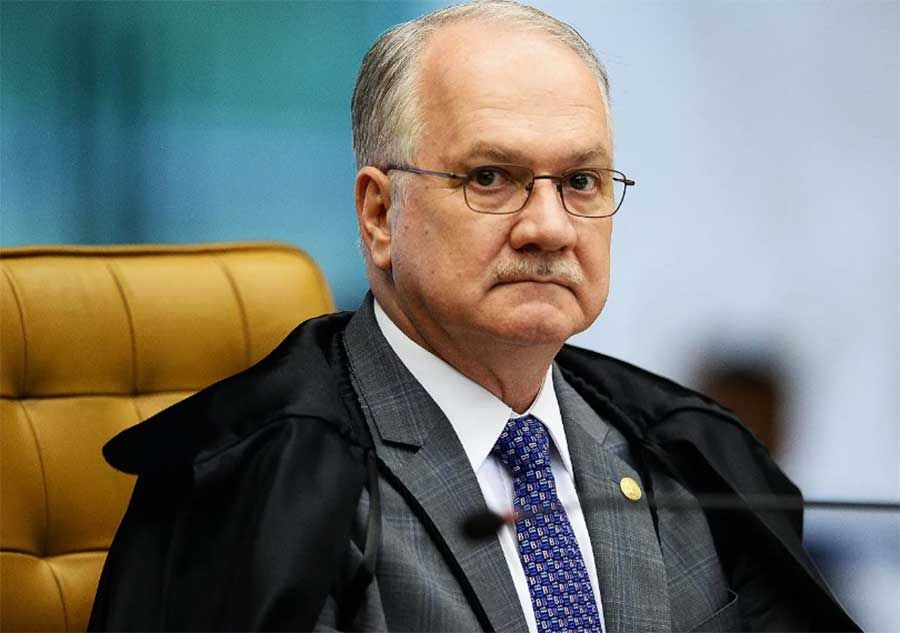
Edson Fachin’s latest intervention in the Supreme Court’s unfolding scandal is being sold as statesmanship. It is not. It is damage control by a president of the Court who inherited an institution already swollen with power, secrecy, and personal feuds—and who now finds that the same methods used against political opponents have reached the justices themselves.
On September 15, Fachin opened an extraordinary plenary with solemn language. The Court, he said, was living through a “difficult period of its history.” Ministers must judge facts and legal questions, not people. They have no right to hand future generations a “smaller” Supreme Court than the one they received. The country is watching. History will watch too.
Fine words. They arrived after years in which the same Court treated procedure as optional when the target was convenient. The Fake News inquiry, opened in 2019 and long controlled by Alexandre de Moraes, became a permanent investigative machine with little visible end date, little ordinary prosecutorial filter, and enormous collateral effects on speech and opposition politics. Fachin himself later listed ending that inquiry as one of three urgent goals of his presidency, alongside an ethics code and modernization of the justice system. That admission is itself an indictment of what the Court allowed to persist.
The present crisis is not an accident. It exploded when Justice André Mendonça lifted secrecy on a Federal Police report describing messages from imprisoned banker Daniel Vorcaro to Moraes. Competing orders followed. Mendonça moved against the Federal Police leadership. Flávio Dino moved the other way. Fachin then pulled matters toward the presidency, took the Fake News inquiry away from Moraes, suspended conflicting measures, and forced a plenary confrontation. That is what a Court president is supposed to do when individual ministers start issuing dueling commands. It does not make the underlying facts disappear.
Those facts matter. A sitting justice appearing in communications with a banker now at the center of a massive alleged fraud scheme is not a “narrative.” It is a conflict-of-interest question of the highest order. Conservatives who spent years warning that concentrated judicial power would eventually consume its own guardians were not being hysterical. They were describing institutional logic. When a court claims extraordinary tools against “threats to democracy,” those tools do not stay locked in a box labeled “only for the other side.”
The September 15 session proved the point. Fachin’s appeal for serenity and collegiality lasted until the ministers started talking. Personal accusations flew. A vista request by Dino froze the proceeding with a 4-3 split on whether the Moraes and Mendonça tracks should travel together or apart. Jurists who had signed a letter supporting Fachin’s effort to restore order later called the session disastrous for the Court’s public standing. That is the polite version. The televised spectacle showed a tribunal arguing about itself, not about the law.
On September 16, reporting indicated Fachin is likely to postpone the next sitting, previously eyed for September 23, on Mendonça’s conduct. After Dino’s vista, delay is the path of least immediate embarrassment. It is also a familiar STF habit: when the political cost rises, time becomes the remedy. Time, however, does not equal accountability. It often equals burial.
President Luiz Inácio Lula da Silva then assigned Fachin a political task: keep the crisis from interfering with the 2026 elections. That request should alarm anyone who still believes in separation of powers. The head of the Executive telling the head of the Judiciary that electoral timing is a governing constraint on internal investigations is not “institutional dialogue.” It is pressure. A conservative reading is straightforward. The Court spent years presenting itself as the last barrier against democratic rupture. It now looks like a body whose members are negotiating how much sunlight their own conduct can bear before the campaign season.
Fachin’s earlier line—“the gravity of the facts does not authorize shortcuts”—is correct as principle and incomplete as practice. Shortcuts are exactly what a seven-year special inquiry, sealed files, minister-specific investigative empires, and last-minute secrecy fights look like. An ethics code is necessary because informal norms already failed. Ending the Fake News inquiry is necessary because perpetual process is not justice. Separate, transparent examination of every minister implicated in the Master affair is necessary because equality before the law cannot stop at the palace steps of Praça dos Três Poderes.
None of this requires pretending Mendonça is a saint or that every conservative criticism of the STF has been equally rigorous. It requires a simpler standard. If messages, contracts, family links, travel, or investigative tactics would be treated as disqualifying against a governor, a deputy, or a former president, they cannot become “complex institutional questions” when the name on the door is a justice. Moraes’s defenders will call any inquiry persecution. Moraes’s critics will call any delay a cover-up. The only adult position is that the evidence should be public enough to test, the procedure regular enough to survive appeal, and the outcome binding enough that the Court cannot claim moral authority it refuses to apply to itself.
Brazil does not need a smaller STF in the sense Fachin meant—weaker, humiliated, captured. It needs a smaller STF in the sense the Constitution actually wrote: a court that decides cases, not one that runs parallel police work, manages political speech, and then lectures the country about dignity when its own members fall under suspicion. Fachin’s speech recognized the danger of decline. His calendar of postponements will show whether he meant it.
Sources: G1, O Globo, CBN, CNN Brasil, VEJA, Folha de S.Paulo, Agência Brasil, Correio Braziliense, Metropoles, Revista Oeste (coverage from early to mid-September 2026).
#STF #Fachin #AlexandreDeMoraes #AndreMendonca #BancoMaster #Vorcaro #FakeNews #CriseNoSTF #EstadoDeDireito #SeparacaoDePoderes #CodigoDeEtica #Eleicoes2026 #Brasil #Judiciario #DueProcess