

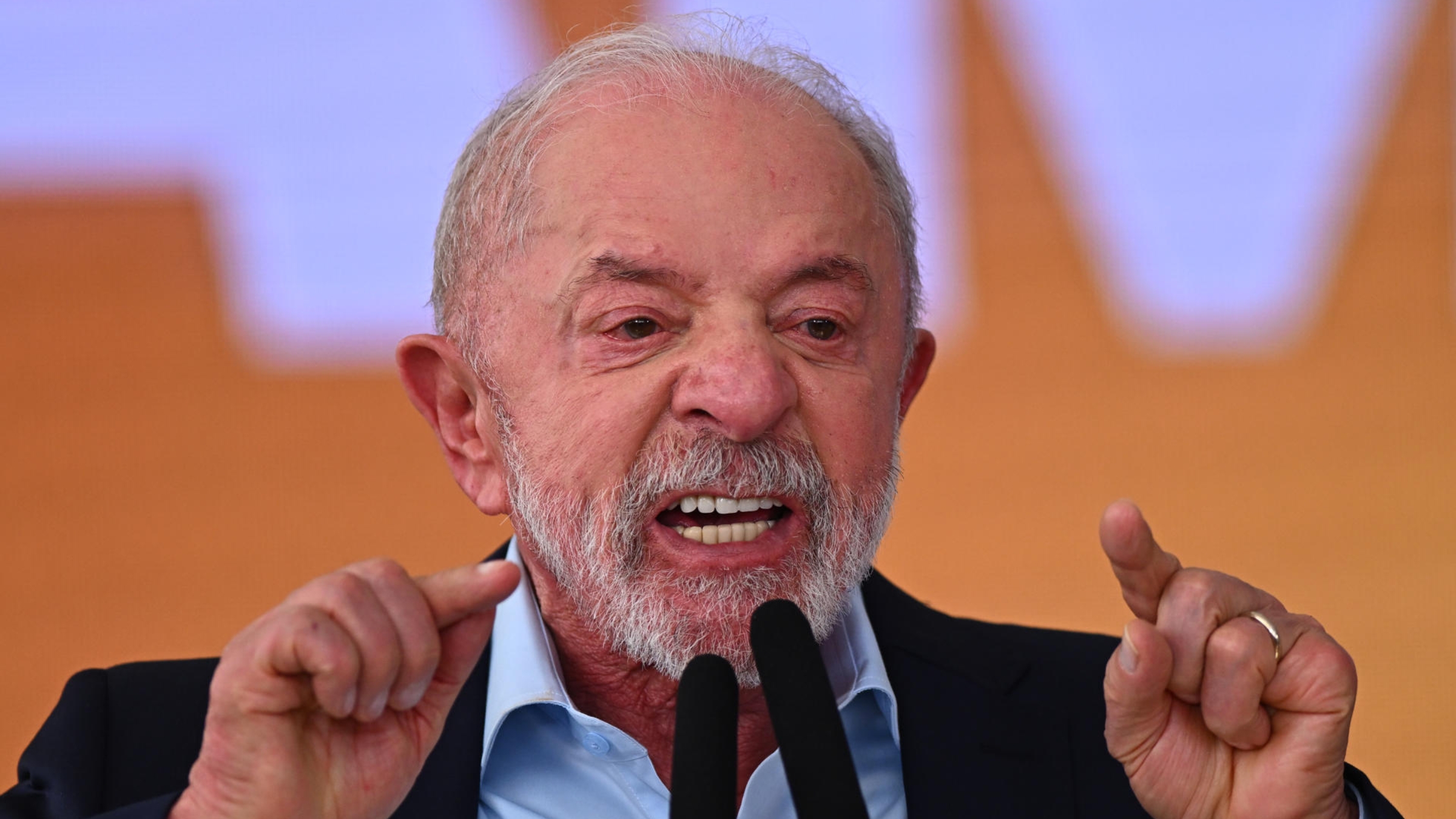

This is Lula’s Brazil:The whistle at the 45th minute
When the state sells the rule, cashes the fee, then declares the rule invalid
There is a kind of fraud that needs no suitcase and no front man. It is fraud against the word of the state. A government writes a rule, charges admission to that rule, lets companies, clubs, and workers organize their lives around it — and the moment the rule becomes an electoral liability, it tears up the contract and keeps the money.
That is what Flamengo president Luiz Eduardo Baptista, known as BAP, described on Flamengo TV. It was not fan talk. It was an institutional warning. Flamengo, he said, does nothing outside the law, owes nobody a cent, and does not need a government bailout. Then came the line that should embarrass any administration still willing to speak of legal certainty: the state collected more than R$9 billion in taxes, charged for the concessions, and now, astonishingly, says the activity is illegal and will not return the money.
The video is real. So is the arithmetic.https://x.com/hotspotorlando/status/2104750207875346932?s=61
The sequence that exposes the motive
In 2018, Congress legalized fixed-odds betting. In 2023, Law 14.790 regulated the market. Lula’s government was not a bystander. It charged a R$30 million grant fee per license, valid for five years, with up to three brands per authorization. Eighty-five licenses were issued. That is about R$2.55 billion into public coffers. In 2025 the sector generated roughly R$9.95 billion in taxes. From January to July 2026 it had already paid R$8.75 billion.
While the money was coming in, the activity was a “regulated market.” There was oversight, advertising, club sponsorships, contracts, jobs, and official talk of fighting illegal gambling. Flamengo, like other clubs, did what the state asked: it operated inside the legal framework. Its master sponsor was a betting house. BAP estimated an immediate hit of R$400 million to R$430 million in 2027 if the table were flipped overnight.
The table was flipped on September 25, 2026.
Provisional Measure No. 1.394 banned the operation, offering, intermediation, and advertising of sports bets nationwide. Sites and apps were to go dark from October 6. The licenses would be extinguished within 30 days. The first round of the election is October 4. The stroke of the pen came nine days before the ballot.
It was not only a ban. The text of the measure was written to shield the Treasury. The extinction of the licenses, the government says, serves the “public interest” and gives the operator no right to full or partial reimbursement of the grant fee, nor any compensation. Finance Minister Dario Durigan was explicit: the authorization was “precarious” in nature; therefore “there will be no return of the grant fees.”
Plain translation: the state sold a five-year license, collected cash up front, used the market while it was convenient, and then reclassified its own product as precarious so it would not have to give the price back.
That is not regulation. It is bait.
The merits and the method are not the same thing
There is a legitimate debate about addiction, household debt, and the effect of betting on a worker’s income. That debate exists in any serious country. A conservative is not obliged to defend a betting shop, nor to pretend that gambling addiction is a noble freedom. A family in debt is not a footnote. Unproductive consumption that drains savings is not a detail.
The problem is not recognizing the harm. The problem is the method.
If the government concluded that the model had failed, it had a duty to give notice, open a transition, refund or prorate the unused portion of the license, and separate the bettor from the operator. It did the opposite. It returns balances to bettors — correctly — and confiscates the license the company paid for. It keeps the obligations of the past and cuts off the rights of the future. It calls this the public interest. In practice, it is the state using the language of morals to legitimize a default on its own rule.
Worse: the same political camp now staging a moral crusade has already stood on the other side of the counter. In 2004, Lula shut down bingo halls by provisional measure. Decades later the Workers’ Party regulated sports betting, charged for it, taxed it, celebrated the revenue, and, on the election stretch, rediscovered moralism. That is not consistency. It is a repertoire. The script changes with the audience.
Why the timing is not a coincidence
A policy correction at the beginning of a term is a decision. A correction nine days before the first round, after polls showed majority support for restricting bets, is a campaign.
The measure is popular. It speaks to evangelicals, to women worried about the household budget, and to voters who associate betting with family ruin. The government paired it with a debt-relief program and a speech about protecting the poor. In the same period, Lula accused football clubs of living off the ordinary fan and said they would have to “find another way” to make money because “the beta is going to end.”
A voter can support an end to sports betting and still see the cynicism. Regulate, collect, let sport sign contracts on the back of the rule, then treat the rule as original sin on the eve of the election: that is the 45th minute of the second half. It is not prudence. It is opportunism aimed at votes.
BAP got the institutional diagnosis right. An associative club that pays taxes, wages, and contracts does not need a sermon from the people who rewrote the law at the death. Flamengo did not ask for a bailout. It asked for predictability. In a country where the government likes to promise “legal certainty” to foreign investors, the domestic message was different: obey the rule until the day it stops producing votes. Then the rule becomes illegal, and the fee stays.
Criminal fraud or bad faith by the state?
Calling this fraud in the penal sense requires specific intent, diversion, and a statutory offense. The natural path now is the courts: acquired rights, perfected legal acts, proportionality, unjust enrichment of the Union, misuse of purpose in a provisional measure, and the electoral use of the regulatory machine.
What is already visible, without a verdict, is regulatory bad faith. The state cannot sell a five-year authorization and then discover, midway, that the authorization “was always precarious” only so it need not open its hand. If it was precarious, why charge a concession price? If it was solid enough to tax, supervise, and let football sign contracts, why did it become wet paper during the campaign?
The clause that bars compensation is the tell. A government confident in the lawfulness of its own conduct does not need to write into the decree that nobody will be reimbursed. That sentence is written by someone who anticipates the lawsuit and wants to turn the burden of proof into a wall.
There is also the side effect that electoral moralism pretends not to see. Closing the legal market does not extinguish the bet. It pushes part of it underground, where there is no grant fee, no tax, and no supervision. The government keeps the R$2.55 billion from dead licenses, loses the recurring revenue, and delivers the addiction to the environment it controls least. Calling that protection of the people requires a heroic amount of propaganda.
The conservative lesson
Serious conservatism is not nostalgia for a casino and not hatred of a football club. It is the simple idea that the state must be predictable. A law is not a slogan. A paid license is not a tip. Tax collected under one rule does not authorize a ruler to rewrite the past in election week.
One can oppose sports betting and still favor the return of the grant fee. One can want advertising restricted and still refuse confiscation dressed up as a provisional measure. One can defend the family budget without accepting that the Treasury keep the price of a license it has just invalidated.
The smell that bothers people is not BAP’s video. The video only showed the obvious. The smell comes from the classic Brazilian combination: cash first, morals later, the ballot box at the end. Whoever changes the rule at the 45th minute of the second half is not saving the country. He is saving the campaign.
Sources
Provisional Measure No. 1.394/2026; Law 14.790/2023; statements by Finance Minister Dario Durigan on September 25, 2026; Agência Brasil; Senate News Agency; Estadão; Folha de S.Paulo; InfoMoney; O Antagonista; SBT News; UOL Economia; Poder360; Máquina do Esporte; remarks by Luiz Eduardo Baptista on Flamengo TV and Flamengo’s official note; TSE electoral calendar (first round on October 4, 2026); license data (85 authorizations at R$30 million each) and sector tax receipts for 2025 and 2026 reported by ANJL, the Finance Ministry’s betting secretariat, and the press.
#RuleOfLaw #LegalCertainty #BetsBan #ElectoralOpportunism #Lula2026 #Flamengo #BAP #GrantFees #RegulatoryDefault #BrazilVotes #NotACoincidence #StateBadFaith